Alcohol & Sleep
Pete and the Only Beer: One Drink Honest Math
By Nora Vale · January 10, 2026 · 7 min read
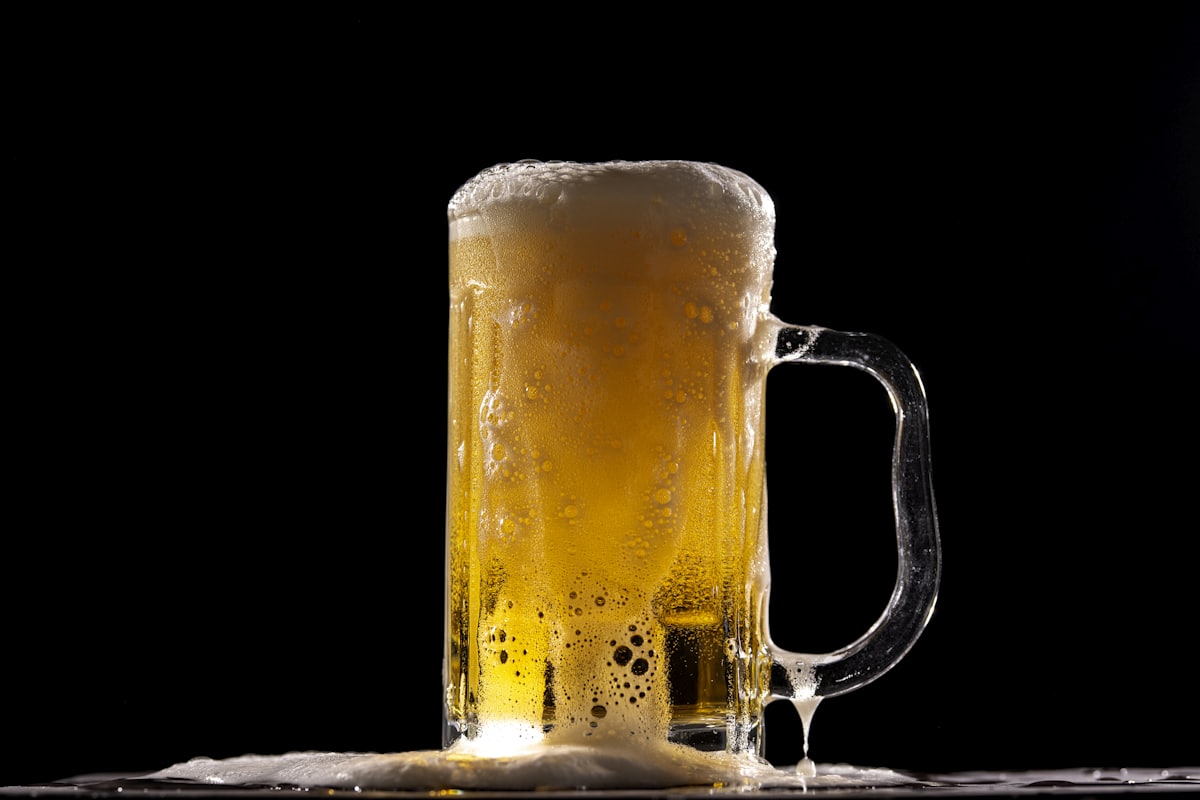
Pete drinks beer. Only beer, he’d want that on the record, and the record is exactly where the pete only beer story gets interesting. Two lagers most evenings, between getting home from the warehouse and dinner, taken on the back steps when the weather allows, and he will tell you with complete sincerity that he doesn’t really drink. Beer barely counts. It’s practically a soft drink with a tax. His body keeps different books, and if your own excuse has the same shape, this one’s for you. The wider mechanism lives in the alcohol and sleep guide; this post is just Pete’s math.
Key takeaways
- A standard beer carries about as much alcohol as a glass of wine or a shot.
- The liver doesn’t read the label; it processes alcohol identically from any container.
- Two lagers at eight put the sedative’s exit around 3 a.m., which is when Pete woke.
- Moving the beers to dinner, ninety minutes earlier, moved his wakeup to 5:30 in two weeks.
- Timing and food change the bill without requiring total abstinence.
“It’s practically a soft drink with a tax”
Pete’s claim deserves a fair hearing, because it’s extremely common and not crazy on its face. Beer is lighter than whiskey, it comes in larger volumes, nobody sips a lager the way they sip a cognac. But the active ingredient in this entire story is ethanol, and a standard beer carries about as much of it as a glass of wine or a shot of anything. The liver doesn’t read the label. The body processes the alcohol identically no matter what it arrived in, and the sleep architecture gets redrawn the same way too.
I like Pete’s case because I ran the same accounting myself for years. The Merlot felt like a drink; beer had always felt like a beverage. Neither distinction survives contact with the clearance curve, which is indifferent to packaging, occasion, and the sincerity of the person holding the glass.
The honest math of two lagers
Here’s the actual arithmetic. The liver clears alcohol at roughly one drink per hour, steady as a metronome and completely indifferent to your plans. Pete’s lagers land between getting home and dinner, so by bedtime the count is mostly processed, which is why he falls asleep fine. But the tail of the curve is what matters. The sedative thins out fully in the small hours, and when it does, the body reacts the way it reacts to a stimulant arriving: arousal, warmer skin, a faster pulse, a brain that surfaces and decides to stay up.
His wakeup is 3:15. Dry mouth, that specific post-beer warmth, ceiling. He has blamed the warehouse, his age, and once, memorably, the dog. The beer never made the list, because the beer was the thing that helped him fall asleep on the couch in front of the television, and you don’t audit the thing that produces your best effect. First half deep. Second half wrecked. It isn’t bad luck. It’s a timetable, and the timetable doesn’t care that it was only beer.
If the shape of this is familiar but wine is your container, why wine makes me wake up at night is the same mechanism with a different glass, and why alcohol wakes you at 3am covers the small-hours mechanics directly.
The intervention: ninety minutes, not abstinence
Nobody took Pete’s beer away, and that’s the part worth copying. The whole intervention was moving the two lagers to dinner, about an hour and a half earlier, same beers, same quantity, with food underneath them instead of an empty evening. The clearance curve starts when the drinking starts, so shifting the start shifted everything downstream, including the hour the sedative exits.
Two weeks later the 3:15 had become a sleepy 5:30, the kind of wakeup that rolls back under or stretches into the start of the day instead of starting a two-hour ceiling session. Same man, same job, same back steps, just earlier. That’s the honest math in one line: the drink’s cost isn’t fixed, it’s a function of when you pour it, and dinner isn’t a shield so much as a head start.
If you want to test your own version of this rather than take Pete’s word for it, run the experiment lays out the two-week log, and how long before bed to stop drinking gives the timing rules for whatever your container is.
What Pete’s case can’t tell you
The limits, plainly. Pete’s fix worked because his drinking was habit-shaped, not need-shaped, and because two beers moved ninety minutes earlier genuinely changes the clearance curve. If your evening drink is holding a hard day together, moving it earlier may change the hour of the wakeup without changing anything that matters, and that’s a doctor conversation, not a scheduling problem. No shame in the sentence; it’s just a different door.
And some people move the drink, log the nights honestly, and find the wakeups don’t care. Beer was never their thief. The book’s line on this is the right one: an experiment that clears a suspect is still a good experiment, and the effort belongs to the light, the room, or the schedule instead. 3 a.m. has more than one employer, and I cover the main alternative in why do i wake up at 3am every night.
Frequently asked questions
Does beer count as drinking when it comes to sleep?
Yes. A standard beer carries roughly the same alcohol as a glass of wine or a shot, and the liver processes ethanol identically regardless of the delivery vehicle. “Only beer” is an identity claim, not a metabolic one, and the night’s sleep architecture responds to the ethanol, not the brand.
Why does Pete wake around 3:15 after two lagers?
Timing. The liver clears alcohol at about one drink per hour, so lagers finished between getting home and dinner leave the sedative’s exit in the middle of the night. When the blood level dips below the sedative line, the body reacts as if a stimulant arrived, with arousal, warmth, and a fast pulse. The wakeup lands on schedule.
What fixed Pete’s 3:15 wakeups?
Moving the two beers to dinner, roughly ninety minutes earlier. The clearance curve shifted with them, so the sedative’s exit moved out of the deepest part of the night. Within two weeks the wakeup had drifted to a drowsy 5:30. Quantity unchanged, abstinence not required.
Is one or two beers a night actually a problem?
It’s a trade you’re allowed to make, priced honestly. The sedation buys a fast fall-asleep and a heavy first half. The second half pays in fragmented hours, and interest gets collected in REM. Moving the drink earlier and taking it with food shrinks the bill substantially without anyone having to quit anything.
Why did Pete blame everything except the beer?
Because the beer produced his best effect, the fast couch-asleep in front of the television, and you don’t investigate the thing that works. He blamed the warehouse, his age, and once the dog. A suspect with that kind of alibi doesn’t get investigated. It gets thanked.
The whole accounting, Pete’s and Lisa’s and the author’s own Merlot ledger, is one chapter of Sleep, Finally. Move the drink before you debate deleting it.
This guide is educational, not medical advice. If drinking feels like a mechanism you need rather than a habit you enjoy, a doctor is the right door, without any shame attached.