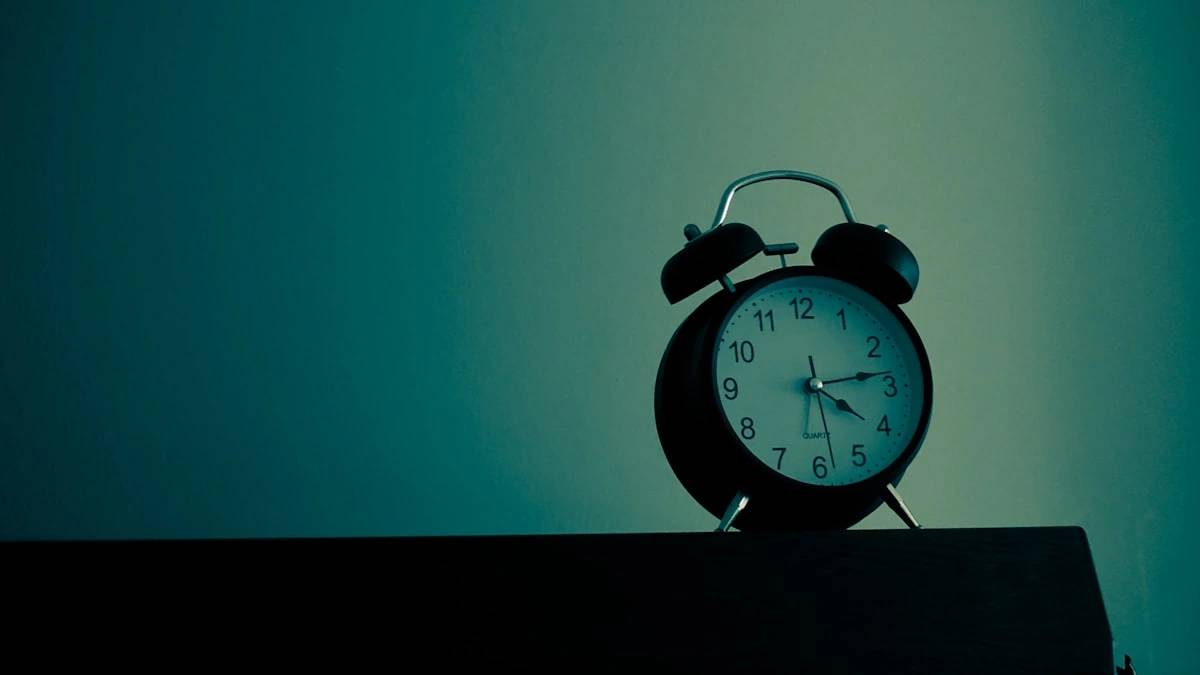
Waking Up at 3 A.M.
Middle-of-the-Night Insomnia: Why You Can't Fall Back Asleep
By Nora Vale · June 26, 2026 · 7 min read

The night I finally understood my own insomnia, I was awake at 3:20 doing pension math I don’t have. Not real pension math, the Kevin kind, the ceiling kind, where the shoes-through-college invoice sits next to a forgotten 2019 filing and the question of whether the job will exist in a decade. My wake-ups had outlived the stressful year that started them by about two years, which is the part nobody tells you: middle-of-the-night insomnia has a shape, it can be learned by a perfectly ordinary brain, and what got learned can get unlearned. The full map is in the waking up at 3am guide.
Key takeaways
- Waking briefly at night is standard equipment. Staying awake is the problem, and it’s separate from the waking.
- By 3 a.m. your deep sleep is banked and sleep pressure is spent, so the remaining sleep is shallow and easy to pop out of.
- A surfacing sticks when something attaches to it: the clock, the phone, or a spiral riding the cortisol wave.
- Stimulus control is the first-line treatment, it works, and it charges a rough week or two as the price.
Why 3 a.m. specifically
It isn’t a curse, and the explanation is almost insultingly mechanical. A night runs four to six laps of roughly ninety minutes, deep sleep concentrated in the early ones, REM stretching toward the better part of an hour by morning. Between the laps, everyone surfaces. Most surfacings last under three minutes and get forgotten by breakfast. The trouble starts when the second half of the night rolls around, because by then the deep sleep is banked, the sleep pressure you accumulated all day is spent, and what remains is lighter, REM-heavy sleep you can pop out of like a cork. Underneath it, cortisol begins climbing around 2 or 3 a.m. toward its morning peak, so your body is already drifting toward the exit without consulting you.
Three in the morning isn’t cursed. It’s the shallow end of the pool.
Which means the question was never “why am I waking,” because the waking is the design working. The question is why the surfacing sticks, and the things that make it stick are specific enough to name. The clock check, and the instant you know it’s 3:14, the math starts, hours before the alarm, hours already gone, tomorrow mortgaged minute by minute. The phone grab, which is a light source aimed at your face, a feed engineered to be more interesting than sleep, and a job, all in one rectangle. And the cortisol wave meeting your anxiety halfway through, so whatever worry it finds gets performed on a stage with excellent acoustics.
Here’s the part worth sitting with. None of the three is required. The waking is automatic, but the clock check is a choice, the phone grab is a choice, and treating the waking as a problem to be solved on the spot is also a choice.
The method, plainly
The fix has an unlovely clinical name, stimulus control, and it has sat at the core of cognitive behavioral therapy for insomnia since sleep researchers developed it in the 1970s. The American College of Physicians lists it as a first-line treatment for chronic insomnia, and guidance from the American Academy of Sleep Medicine points the same direction. The most credentialed bodies in sleep medicine endorse a method whose central prop is a chair in another room.
The whole idea is one line: the bed is for sleeping, and everything else in your life has somewhere better to happen. Working rules, four of them. No clocks visible from the bed, because time math is fuel. After an estimated fifteen to twenty minutes of awake-in-bed, get up. Do something genuinely dim and genuinely boring somewhere else until you feel truly sleepy, then return, because hopeful doesn’t count as sleepy. And keep the bed for sleep and sex, nothing else, because long stretches of lying awake in it teach your brain that the bed is where thinking happens.
Sofia, a nurse with rotating shifts, credits the twenty-minute rule as a script instead of a fight. Surfaced and stuck, she got up, went to the kitchen, and read old paperbacks under the forty-watt bulb over the kitchen table. Some nights four pages, some nights forty and the spice rack alphabetized, and either way the bed stayed a place where sleep happened. She had been a nurse long enough to trust a protocol over a feeling. The protocol asks for nothing but patience and a dim lamp. The full method, rule by rule, is laid out in the what is stimulus control post.
One more habit files beside the four: a fixed wake time, the same time every day, no matter how the night went. A rough night with a kept wake time costs you a single day. A rough night plus a three-hour lie-in rearranges your body clock and can easily cost you the whole week.
What it costs, and what it fixes
Honest cost, because a chapter that hid it would read like an ad. Getting out of a warm bed at 3:30 feels like surrender, and the first stretch genuinely makes nights worse: more time awake, more standing in a dim kitchen feeling ridiculous, more arithmetic performed vertically. Plenty of people quit right there. I nearly did. You’re untraining an association that took months to build, so the first rough nights measure the untraining rather than your prognosis, and the awkwardness usually starts breaking up somewhere in the second week. Lying in bed awake for two hours feels productive and isn’t. Standing bored in a kitchen for twenty minutes feels like failure and is the treatment working.
And there’s a limit to name: stimulus control fixes learned wakefulness, not anatomy. If your wake-ups come with loud snoring, breathing pauses a partner has witnessed, or restless legs that won’t let you settle anywhere, those are different flags entirely, and the four rules aren’t the door for them. The clock half of the problem gets its own treatment in the how to stop checking the time at night post, and if a drink before bed is what’s collecting you at 2:40, the why alcohol wakes you at 3am post explains the invoice.
There’s also a line for duration. If you’re waking three or more nights a week, struggling to get back to sleep, for three months or more, and dragging through your days because of it, the pattern has a name, sleep-maintenance insomnia, and it responds better to structured treatment than to willpower or to a blog post alone. Chronic night waking isn’t a character flaw and it isn’t rare. It’s one of the most common complaints sleep clinics hear, the first-line treatment is specific and well studied, and asking for it is a sleep skill like any other. If you can’t tell which side of the line you’re on, stop guessing and record for a week, because a week of notes moves you in one direction while guessing circles.
The night still wakes you sometimes, after all of it. The difference is the waking stays small, the bed stays honest, and the invitations you decline are the same three as ever: panic, check, and solve.
Frequently asked questions
What causes middle-of-the-night insomnia?
The mechanics are ordinary: deep sleep is banked early, sleep pressure is spent by 3 a.m., and what remains is lighter, REM-heavy sleep you pop out of easily. A surfacing becomes a waking when something attaches to it, usually the clock check, the phone, or worry riding the morning cortisol climb.
Is waking at 3am every night normal?
Brief wake-ups several times a night are standard equipment for human sleep, and most people forget every one of them by morning. What’s not ordinary is staying awake for an hour or more, most nights, for months. That pattern has a name and a well-studied treatment, and it’s worth a doctor’s time.
What is the best treatment for it?
Stimulus control, which the American College of Physicians lists as a first-line treatment for chronic insomnia: no clocks, get up after an estimated twenty minutes awake, do something dim and boring elsewhere, and return only when truly sleepy. Keep a fixed wake time even after bad nights.
When should I see a doctor about night waking?
If you’re waking three or more nights a week, struggling to get back to sleep, for three months or more, and dragging through your days, that’s sleep-maintenance insomnia and it responds better to structured treatment than to willpower. A two-week log turns the complaint into evidence.
The whole system, including the worksheets, is in Sleep, Finally.
This guide is educational, not medical advice. If sleep problems persist for months or wreck your days, see a doctor.