Bedroom & Sleep Environment
How to Choose Sheets for Hot Sleepers
By Nora Vale · February 14, 2026 · 7 min read
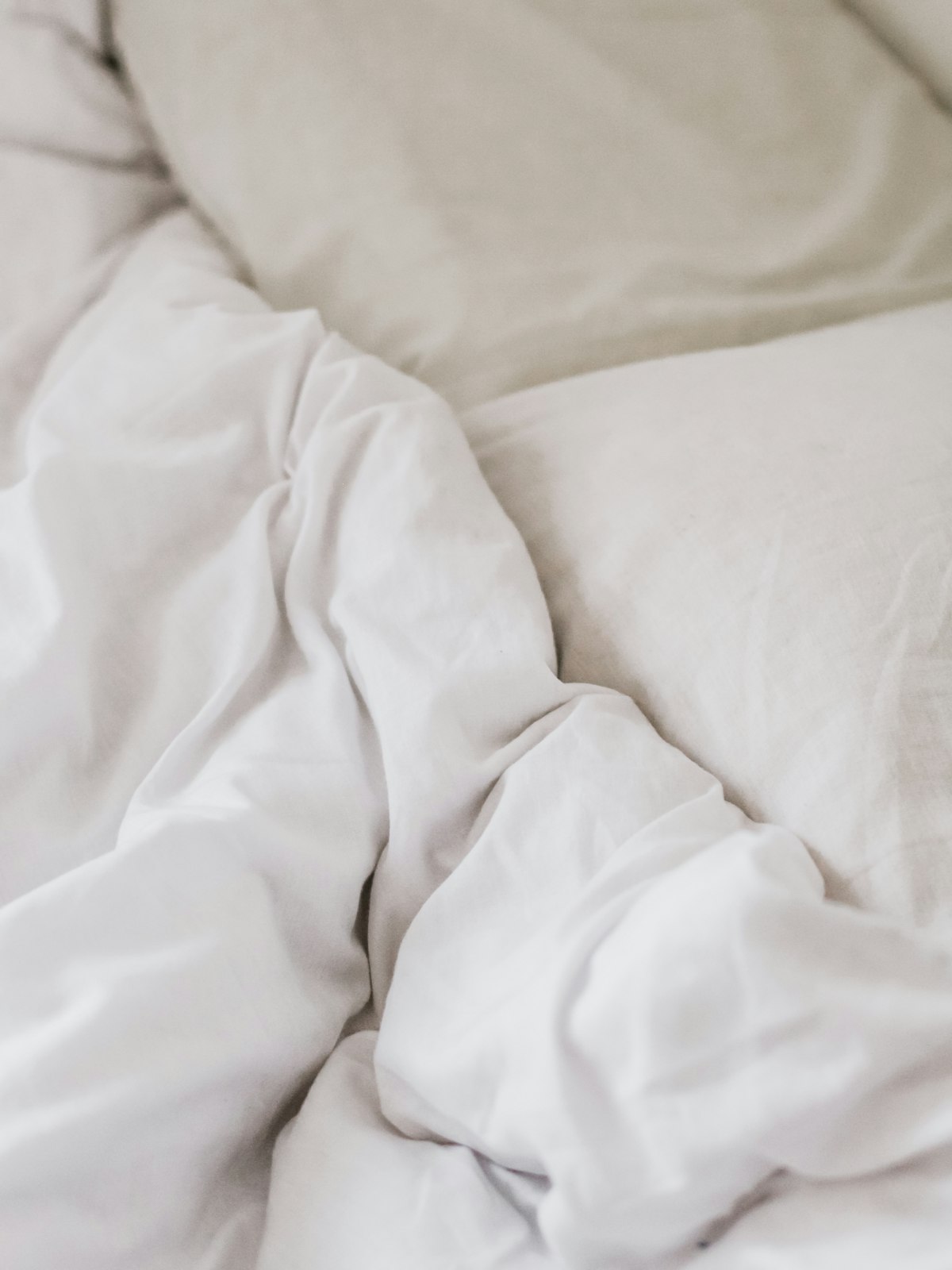
You know the 2 a.m. routine by heart: flip the pillow to the cool side, extend one leg into open air, and finally give up and throw the whole duvet across the room like you’re signal-flagging a ship. Sheets for hot sleepers get marketed with words like arctic and glacier, and the truth is more textile-science and less moodboard: two properties decide everything, and neither one is the thread count. This post is the honest buyer’s guide, and the room-level version of the same war is in my bedroom sleep environment guide.
Key takeaways
- Two properties matter for hot sleepers: breathability, meaning airflow through the weave, and moisture handling, meaning sweat leaves the skin and the fabric dries fast.
- Linen and lightweight percale cotton are the natural-fiber picks; merino and technical synthetics handle heavy sweating best.
- High thread count is usually a heat trap: tighter weave, less airflow, cooler only in the advert.
- Layers beat one heavy cover regardless of fabric, because shedding a layer at 2 a.m. beats waking fully to fix the temperature.
- The bedding works with the room, not instead of it: a warm room defeats any sheet ever woven.
The two properties that actually matter
Start with the mechanism, because it turns the marketing into something you can shop against. Your body dumps heat all night, through the skin and through moisture, and your bedding sits between that heat and the room. A sheet either lets the heat and the moisture pass through and away, or it doesn’t. That’s breathability, the airflow through the weave, and moisture handling, how fast sweat moves off your skin and how fast the fabric dries after taking it. Every useful claim about cooling sheets reduces to one or both of these, and everything else is thread count theater.
Breathability is why hot sleepers get pointed at linen, which has a looser weave and a slight stiffness that holds the fabric away from the skin, creating micro-ventilation that dense fabrics can’t manage. It’s also why percale, the plain-weave cotton with the matte, slightly crisp hand, outperforms sateen for hot sleepers at any price point: same cotton plant, different weave, different airflow. Moisture handling is why merino wool, which sounds insane for hot sleepers until you try it, works so well for people who wake actually damp, and why the technical synthetics built for this job earn their place. The book puts the principle bluntly in the sleepwear context: fabric that pulls sweat off the skin and dries fast is the difference between shivering back to sleep and changing clothes in the dark. Synthetics and merino both do it. Cotton doesn’t, at least not once you’re sweating.
The corollary is the thread count myth. Very high thread counts require tighter weaves, and tighter weaves hold air still, and still air is insulation. An 800-count sateen is a windbreaker with good PR. A mid-count percale at a third of the price will out-sleep it.
Fabric by fabric, without the mythology
Linen is the natural-fiber front-runner for hot sleepers: extremely breathable, dries fast, and it insulates only when crushed flat, which is why the rumpled look is actually functional. Its texture divides people, and a night’s sleep is a fair price for finding out which side you’re on. Cotton percale is the reliable middle pick: breathable, washable, durable, and affordable enough to own two sets so the summer one is always clean. Bamboo-derived viscose feels cool to the touch and handles moisture decently, though it’s softer on the environment claims than on its own label. Merino is the specialist pick for genuine night sweats, warm when you’re cold and astonishing when you’re not. And the technical synthetics, the ones borrowed from running gear, are the honest answer for heavy sweaters, uncomfortable to admit because they cost less than the Egyptian cotton and work better.
What to skip: dense sateen weaves, flannel obviously, and any fabric whose cooling claim lives entirely in the phrase “cool to the touch,” which is a handshake, not a climate. The touch test measures the first ten seconds of contact. The night measures eight hours. If you share the bed with a comfortably cool partner, per-side bedding, a lighter duvet and the airy sheets on your side only, resolves the thermostat war without anyone conceding, which is the compromise the book endorses for couples with different climates.
One honest limit before the shopping list feels complete: sheets are the smallest lever in the room. A bedroom that’s warm at midnight will defeat any fabric ever woven, and if the bedding upgrade alone doesn’t fix the night, the next moves are the thermostat, a fan, and the shower timing, all covered in best temperature for sleep.
The layering system that beats any single sheet
The single most useful hot-sleeper purchase isn’t a sheet, it’s a system, and it costs nothing extra to understand. Layers turn temperature from a decision you wake for into an adjustment you make at half-sleep. A flat sheet, a light blanket, and a comforter you can shed in stages mean the 2 a.m. heat wave gets answered with an arm out of the covers instead of a full wake-up, lights, and a duvet thrown across the floor. The book’s version is exactly this: layers let you adjust at 2 a.m. without properly waking, kick one leg out, and that counts as climate control.
Practically: pick your breathable sheet, add a flat sheet or light blanket between it and whatever cover the season demands, and keep a spare light layer within reach for the other end of the temperature spectrum. Tight tucking is the enemy, and the fitted sheet can be snug while everything above it stays loose. You want exits. If you run hot only in the second half of the night, which is common, the layer you shed at 2 a.m. is doing more work than any thread count ever discussed.
For the sweating end of the spectrum, the moisture-wicking pajamas advice applies to the mattress layer too: a breathable, washable protector under the sheets costs less than one ruined mattress and handles the nights when the fabric choice alone wasn’t enough. If the sweating is heavy and nightly, that’s also worth a look at the medical column in night sweats cooling tips.
The whole temperature chapter, room and bedding together, is in Sleep, Finally. Tonight’s version, before buying anything: sleep one night with the flat sheet and the duvet as separate layers and one leg out, and see how much of the war that already settles.
This guide is educational, not medical advice. Heavy, persistent night sweats that soak bedding regardless of room temperature are worth describing to a doctor, because they have medical causes as well as textile ones.
Frequently asked questions
What sheets are best for hot sleepers?
Breathable, moisture-handling fabrics: linen and lightweight percale cotton are the classic picks for natural fibers, and merino or technical synthetic blends handle sweat best for people who wake damp. The common trait is airflow and fast drying, not softness or thread count.
Is a high thread count better for hot sleepers?
No, and it’s often worse. Very high thread counts mean tighter weaves, which trap heat and sleep cooler only in marketing copy. For hot sleepers, a mid-range percale or linen weave that moves air beats a dense 800-count sateen every night of the summer.
Do cooling sheets actually work?
Some do, by a mechanism you can check. Fabrics that pull moisture off the skin and dry fast genuinely change the 3 a.m. experience, which is the same principle that makes moisture-wicking sleepwear worth its odd name. Fabrics that just feel cool to the touch for the first ten seconds are selling a handshake, not a climate.
Should hot sleepers use a flat sheet and blanket or a duvet?
Layers beat one heavy cover. A flat sheet with a light blanket, or a lighter duvet than your partner might want, lets you shed a level at 2 a.m. without properly waking. Kick one leg out, and you’ve done more for the night than any fabric alone can.