Hormones & Sleep
How Long Perimenopause Insomnia Usually Lasts
By Nora Vale · October 15, 2025 · 8 min read
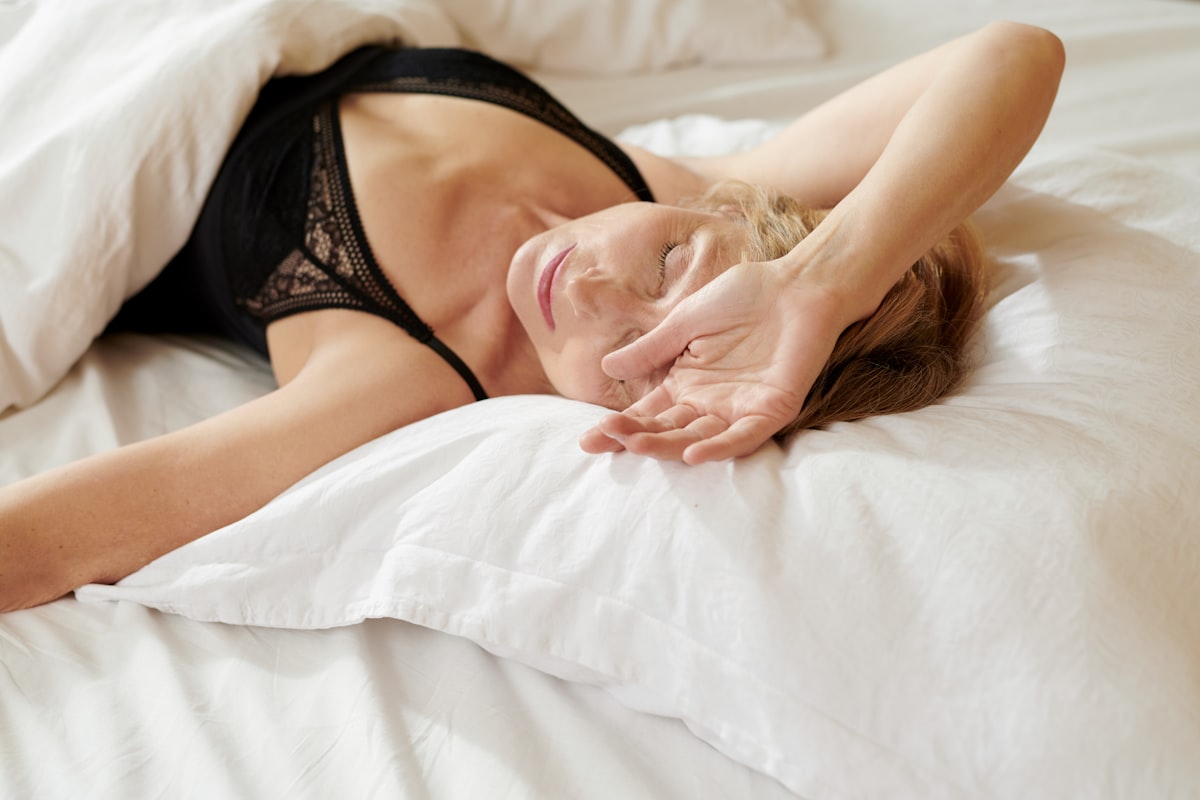
I spent a season of my forties blaming my workload. The workload hadn’t changed. My forties had. That sentence cost me about a year to write honestly, because the alternative explanations were all so much more flattering, and because nobody had told me what this post will tell you: that perimenopause sleep trouble has no fixed expiry date, and hunting for one is the wrong search. What exists instead is something more useful, a way to find out which parts of your rough nights are the transition itself and which parts are thieves riding along with it. The whole territory is in the hormones and sleep guide.
Key takeaways
- Perimenopause commonly runs four to eight years, and sleep trouble comes and goes within it rather than following one curve.
- Rough nights cluster around triggers: flushes, the luteal week, alcohol, late meals, an overwarm room.
- “The heat starts it. The worry finishes it,” which is why cooling tactics and worry tactics both belong in the plan.
- A trigger diary over fourteen days finds your specific thieves; memory alone can’t, because “Memory is a terrible statistician.”
- Months of broken sleep despite honest fundamentals is data for a doctor, not proof of failure.
Why the timetable question is harder than it sounds
When women ask how long this lasts, they’re usually asking a reasonable question with a hidden assumption underneath: that there’s a curve, a peak, a normal. The transition does have a shape, commonly somewhere in the range of four to eight years, with the late stretch, the twelve months before periods stop and the year after, typically the most turbulent for sleep. But the shape is a generalization about populations, and your body hasn’t read it. Within any given month of it, your nights are shaped less by the average curve than by which triggers showed up that week.
This is why the honest answer is a two-part answer. Part one: the transition itself is measured in years, and no supplement, discipline plan, or positive attitude shortens the clock. Part two: the rough nights inside those years are mostly episodic, and episodes have causes you can find, which means many of them are trimmable even while the transition runs its course. Women who hear only part one tend to surrender to a decade of bad nights. Women who hear only part two blame themselves when the sleep doesn’t instantly return. You deserve both parts at once.
What the rough nights actually look like
The classic perimenopause wake-up has a cast of characters. A hot flush arrives, or a temperature drop after one, and you surface at 3:40 with a pounding heart and damp hair. The flush itself lasts minutes. The wake-up costs an hour, because the mind, now fully online and doing arithmetic about the alarm, refuses to follow the body back down. That two-stage structure is the most important fact in this whole post: “The heat starts it. The worry finishes it.”
A woman named Christine, forty-seven, spent six months doing detective work from memory and concluded she had no pattern. Then she kept a notebook by the stove, one line every morning for fourteen days: what she drank, what she ate, when the flush hit. The loudest pattern wasn’t wine, which she’d suspected. It was Tuesday curry and Friday salsa, the spicy meals, with hot sauce after six as a supporting actor. She didn’t become a monk. Wine moved earlier and smaller, curry migrated to Saturday lunch, and she got her nights back. “Memory is a terrible statistician. It rounds off Tuesdays,” and the diary doesn’t.
The triggers worth checking before you blame the hormones entirely
Perimenopause sets the stage, and the stage makes every ordinary sleep thief worse. That’s different from the hormones being the only actor. The list I’d check, in rough order of how often they turn out to be load-bearing:
- Alcohol, which fragments the second half of the night and amplifies flushes. Same Tuesday, different bill.
- Late and spicy meals, Christine’s thieves, working through temperature and reflux.
- The room, which needs to run cooler than it did at thirty-five, because your thermostat now runs a tighter tolerance.
- The luteal week, when body temperature rises and sleep thins on a schedule you can plan around instead of being ambushed by.
- An erratic wake time, which quietly undoes every other fix, because the clock can’t find its footing.
- A progesterone dip doing quiet work, independent of any flush, which is why a perfectly cooled room with still-thin sleep isn’t a contradiction or a failure.
None of these replace the hormone conversation. They sit alongside it, and the reason to check them first is that they’re the ones you can act on this week while the bigger clock does what clocks do.
The cooling playbook, briefly, because it works
The tools that fight the flush-driven wake-ups are unglamorous and effective. Room at the bottom of the 65 to 68°F range. Layered bedding you can shed in stages without waking fully. A fan within arm’s reach, part air movement and part steady sound. Moisture-wicking sleepwear, which sounds like marketing copy, and I rolled my eyes at it too, and it outperformed cotton by a mile. A cool pack in a towel at the bedside. A warm shower an hour or two before bed, which paradoxically helps by triggering the post-shower temperature drop that signals sleep.
What the playbook doesn’t do is promise a flush-free night, and I want to be precise about that. These tools reduce the number and the cost of the wake-ups; they don’t retire them. If a flush still lands at 3:40 after all of it, that’s the honest margin of the method, not your failure to apply it correctly. “You haven’t broken anything. Your thermostat got moved. Effort is the one thing this window doesn’t need.”
When to involve a doctor, and the sentence worth saying
Two doors lead to a doctor from here, and both are legitimate. The first: sleep stays broken for months despite honest work on cooling, triggers, and a steady wake time. The notebook that honest is still worth keeping. It just isn’t a lab, and there’s a point where a clinician should look at the whole picture, including whether hormone therapy is an appropriate conversation for your situation, because that’s a real medical question with real evidence on both sides, not a marketing decision.
The second door is the doctor who says “that’s just your age” and nothing else. Age explains lighter sleep. It doesn’t explain everything, and some things recorded as aging are testable and fixable, apnea chief among them, which women in this exact window are routinely missed for. If the first doctor waves it away, seeking a second opinion isn’t being difficult. It’s the correct response to an incomplete answer. “Notebooks record. Labs read. I can’t,” and that’s precisely why both exist.
If the 3 a.m. wake-ups are the dominant pattern, the piece on why perimenopause wakes you at 3am goes deeper on the two-stage mechanism, and the cooling details live in night sweats cooling tips.
Frequently asked questions
So how long does perimenopause insomnia actually last?
The transition commonly runs four to eight years, with the late stretch typically roughest for sleep, and within those years the trouble comes in episodes rather than as one continuous block. The useful reframe: you can’t shorten the transition, but the episodes inside it have triggers you can find and trim, which is why the two-week diary matters more than any timeline anyone can quote.
Will my sleep go back to normal after menopause?
For many women the flush-driven wake-ups ease as the transition completes, but it’s not guaranteed, and some changes persist. The more useful position is that post-menopause is exactly when unexplained sleep trouble deserves a fresh medical look, because “just my age” is an answer that has hidden testable conditions, apnea especially, for a lot of women.
Why 3 a.m. specifically?
Two mechanisms stack there. Deep sleep is mostly banked by that hour, so sleep is lighter and easier to surface from, and flushes and temperature swings tend to strike in the second half of the night. The heat starts it and the worry finishes it, which is why the cooling playbook and the wind-down work as a pair rather than competitors.
Can I do anything to shorten the rough patch?
Not the transition itself, but the episodes, yes. Alcohol earlier and smaller, spicy meals at lunch, a cooler room, a planned lighter week around your luteal phase, and one fixed wake time that survives weekends. Christine’s diary found her thieves in fourteen days, and thieves found are thieves that can be moved.
What makes a doctor visit worth it rather than premature?
Months of broken sleep despite honest fundamentals, sleepiness that interferes with your days, or any suggestion of something beyond hormones, like witnessed snoring pauses. And separately, a doctor who ends the conversation at “your age.” Hormone therapy is a legitimate conversation to have, and so is a sleep study. Neither requires you to have failed at anything first.
The full cooling playbook, the diary method, and the honest limits are in Sleep, Finally.
This guide is educational, not medical advice. Perimenopause is a possibility to discuss with a doctor, not a self-diagnosis, and hormone questions belong with a clinician who will listen.