Bedroom & Sleep Environment
DIY Blackout Hacks for Renters: Dark Room, No Drilling
By Nora Vale · May 31, 2025 · 8 min read
The first winter in my current apartment I counted the little lights sharing my bedroom: router, clock, TV standby, two chargers, smoke detector. Seven of them, all perfectly normal, none of them the reason I was lying there at 1 a.m. with a brain that wouldn’t slide under. Light is the cheapest sleep problem to fix and the last one anyone fixes, and renters get the worst version of it, because streetlights come with the lease and so does the rule about not drilling holes.
The good news: DIY blackout hacks need none of it. No drill, no deposit risk, no landlord conversation. This post is the renter’s version of the full bedroom environment guide, and everything in it survived two apartments and one very skeptical husband.
Key takeaways
- Renters can reach true darkness with foil, removable liners, tension rods, and tape, all reversible and all cheap.
- The hand test tells you when you’re done: lights off, five minutes, raise a hand. If you can see it clearly, there’s still work to do.
- Darkness isn’t only windows. LED pinpricks on routers, clocks, and chargers matter just as much.
- Small lights tape over in ten minutes for about two dollars.
- A dark room sets the floor. It won’t rescue a night ruined by coffee, wine, or a racing mind.
Why your bedroom is darker than you think
A bedroom can look dark at bedtime and still fail at midnight. Stand in your room during the day and the curtain looks like enough. Lie in bed at 2 a.m. and the streetlight draws a rectangle on the ceiling, the router glows like a tiny campfire, and the smoke detector blinks politely every thirty seconds.
Your retinas don’t clock out. Whatever glow remains gets reported to the brain all night, and the brain, reading that report, never quite commits to it being night. That’s the mechanism behind the “I slept eight hours and woke up tired” report from rooms that photograph beautifully. Rooms don’t get graded in how they look. They get graded in lux, decibels, and degrees, and light is the easiest of the three to change.
Start with the hand test, tonight, before you buy anything. Lights off, five minutes of waiting, then hold your hand up in front of your face. Can you see it clearly? Then you have too much light. That’s the whole standard, and it costs nothing, and it gives you an objective finish line instead of a vague feeling that the room is “dark enough.”
Window fix one: aluminum foil, the two-dollar blackout
Here is the least photogenic and most effective trick in the entire bedroom chapter: aluminum foil, pressed flat against the glass, dull side out. One roll, maybe two for a big window, done in twenty minutes.
It sounds like a college stunt, and my husband thought so too, for about a week. Then he stopped noticing it, the same way you stop noticing everything in a room that’s genuinely dark, and the foil stayed up for two years. Nobody saw it but me. Guests don’t grade your bedroom at midnight; they aren’t there.
Foil works better than most “blackout” curtains because it seals edge to edge. Curtains leak around the frame, and the leak is exactly the strip of streetlight your eyes pick up at 3 a.m. Press the foil on dry glass or with a few drops of water as an adhesive, smooth it with your palm, and it peels off clean when you move out. No screws, no residue, no conversation with the landlord.
Window fix two: removable liners and tension rods
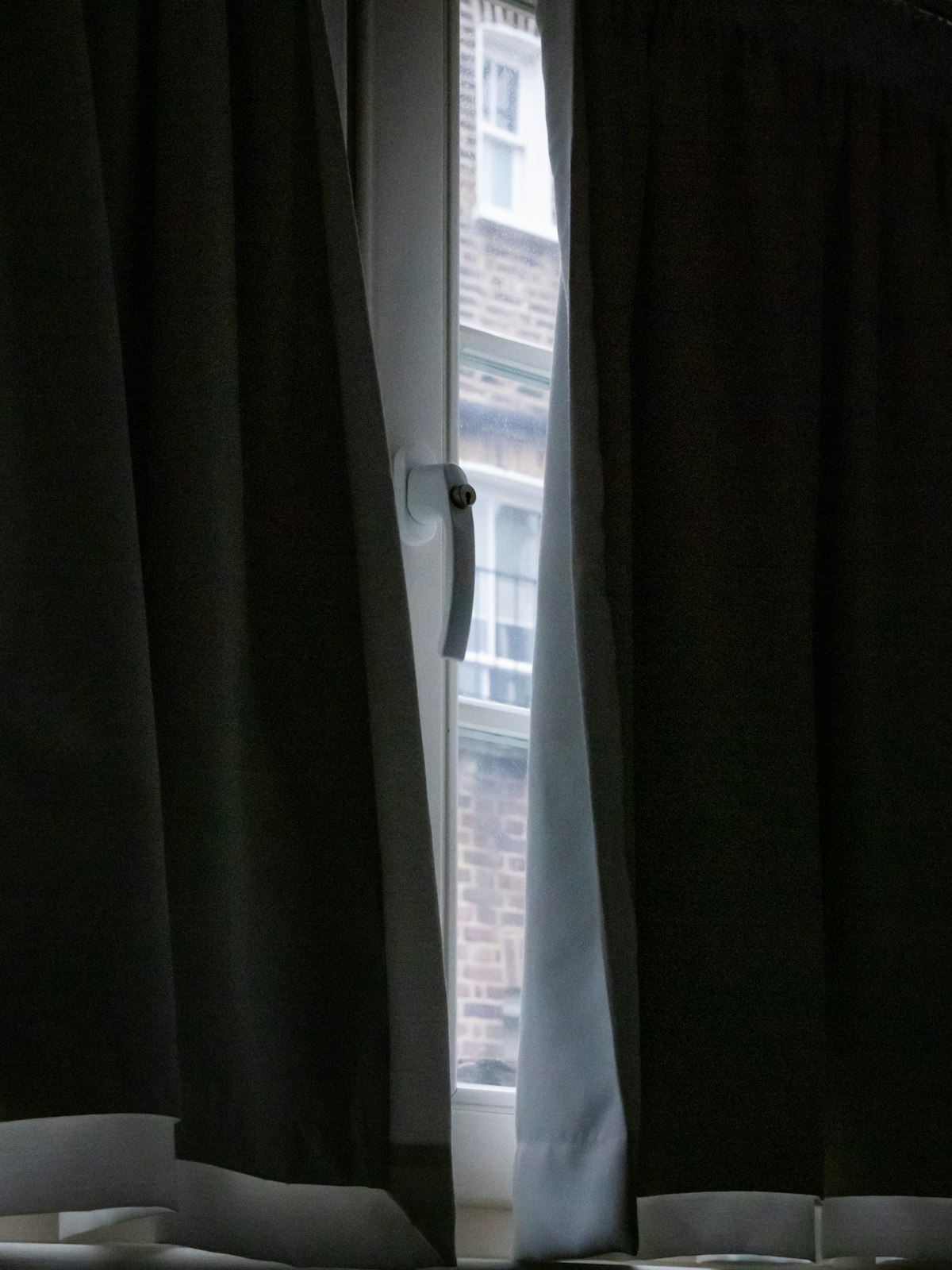
If foil offends your sense of interior design, the middle option is a blackout liner: a flat panel of blackout fabric cut to the window, hung on removable hooks, velcro strips, or a tension rod wedged inside the frame. Twenty to thirty dollars, zero holes, and it looks like a curtain from the street.
The one mistake to avoid: hanging blackout panels on the same rod inside the frame as your regular curtains. The light bleeds around every edge, and you’ve spent money on a solution that leaks. Mount wide of the frame or seal the glass directly, then let the pretty curtains hang in front for show.
There’s also removable blackout film, the kind that clings to glass statically. It works, it’s tidy, and it’s the option to reach for if your window gets afternoon sun and you want the room dim in the day too. For pure night darkness, foil and liners are cheaper and darker.
Whichever you choose, run the hand test again afterward. Windows done but LEDs blinking means you’re halfway, and the hand test doesn’t grade on effort.
The ten-minute light sweep
Windows were half the problem in my room. The other half was the seven pinpricks, and they cost about two dollars to kill: “Electrical tape over the router light, a folded sticky note on the clock face, a small square of masking tape over the television’s standby eye.”
Ten minutes, once, and the room stops talking to you all night. Electrical tape is better than sticky notes for the LEDs because it stays put and doesn’t glow through; a folded sticky note is fine for a clock face you still want to read in the morning. Either way, the point isn’t decoration, it’s silence.
Two things people miss. First, chargers: the brick in the wall socket often has its own dot, and the phone charging on the nightstand is its own light source besides. The phone belongs somewhere else anyway, and there’s a whole argument for that in why the phone should charge outside the bedroom. Second, the hallway light that leaks under the door. A rolled towel at the door frame is the least glamorous product in sleep science and one of the most effective.
What darkness buys you, and what it doesn’t
Here’s the honest part, because a dark room has real limits and I’d rather tell you now than after you’ve taped everything. The room is necessary, not sufficient. It sets the floor, and everything else in the book builds on that floor.
I know this because I built the perfect room and then spent some nights lying wide awake on the ceiling doing math anyway. Foil up, every LED dead, thermostat down, the right pillow, and still awake, because there was a 4 p.m. coffee in the story, and a glass of wine at nine, and a head that treats bedtime as its favorite time to open tabs. A dark room with a chaotic afternoon gives you a nicer place to lie awake in.
So treat darkness as the first dial of four, not the whole dashboard. The temperature dial matters just as much, and the case for a cooler bedroom covers it. Sound is the third, and if your problem is a snoring partner or a loud street, the fix is masking and earplugs rather than a quieter city, which the white noise guide explains. And if you wake at 3 a.m. regardless of how dark the room is, the cause probably isn’t the room at all; that story starts in why you wake at the same time every night.
Frequently asked questions
What are the best DIY blackout hacks for renters?
Aluminum foil pressed onto the glass, a removable blackout liner hung with tension rods or removable hooks, and electrical tape over every LED in the room. All of it comes down at the end of the lease, none of it needs a drill, and the whole setup costs under thirty dollars.
How dark does a bedroom need to be for sleep?
Dark enough that the hand test passes: lights off, five minutes for your eyes to adapt, then hold a hand up in front of your face. If you can see it clearly, there’s too much light. Your retinas report whatever glow remains to your brain all night.
Will foil on the windows damage the glass?
No, if you press it on dry glass or use a few drops of water. It peels off cleanly at the end of the lease. Avoid strong adhesive tape on painted frames, since that’s where rental deposits actually get lost.
Is blackout film better than blackout curtains for renters?
For a rental, removable film or foil usually wins, because curtains leak light around the edges unless they’re mounted outside the frame. The cheapest fix is layered: foil or a liner on the glass, and whatever curtains you already have on top for looks.
Do the hand test tonight. Then cover whatever it shows you: foil on the worst window, tape on the router, a towel under the door. The complete bedroom system, with the worksheets and the full four-dial walkthrough, is in Sleep, Finally.
This guide is educational, not medical advice. If sleep problems persist for months or wreck your days, see a doctor.