Waking Up at 3 A.M.
Waking Up at the Same Time Every Night: Why 3:17
By Nora Vale · March 25, 2026 · 7 min read

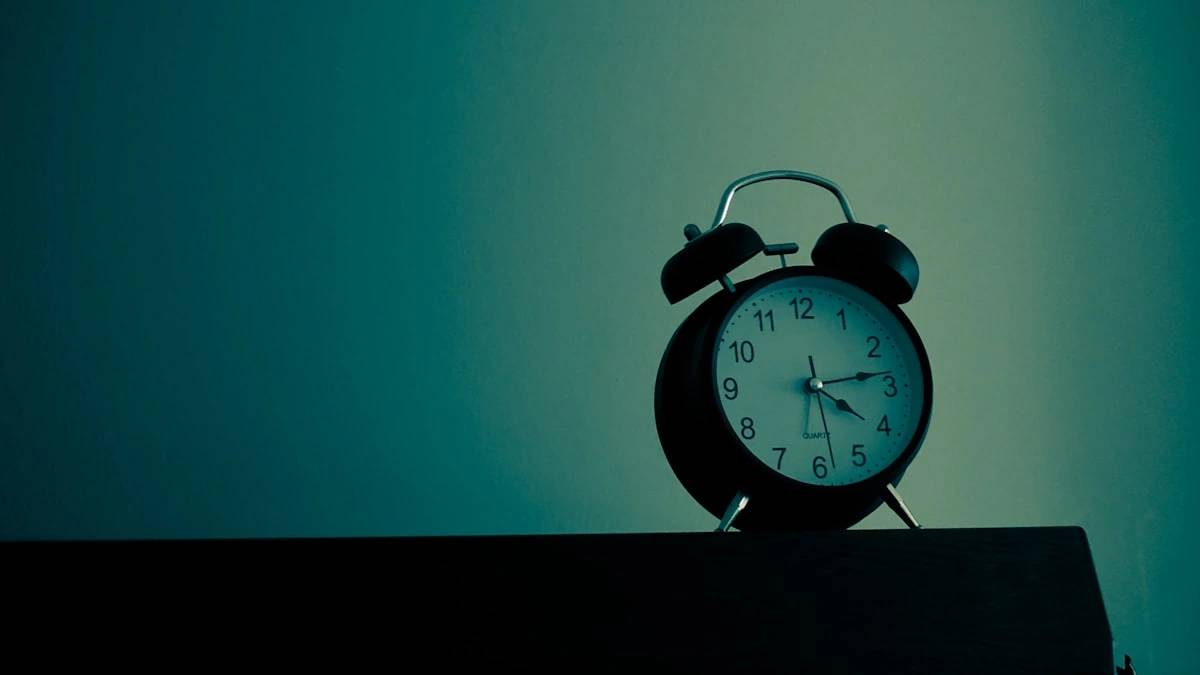
3:17. Again. Not around 3:17, not roughly, but 3:17, the way a train arrives at a station, and you lie there in the dark wondering what your body knows that you don’t. I did that wondering for a couple of years, and I’m fairly sure I checked the clock first, every time, which is how the wondering got fuel. Waking up at the same time every night feels like a message. It’s mostly a timetable. The full story of the hour lives in the waking up at 3am guide.
Key takeaways
- A night runs four to six cycles of roughly ninety minutes, and the second half is lighter, so wake-ups cluster in the same window.
- Habit adds precision: a body that has surfaced at 3:17 for a month starts expecting the appointment.
- The sameness means the system is running on rails, not that something is broken.
- Checking the clock at that hour starts the time math, and the math is what turns a surfacing into a waking.
- You don’t fight the hour. You remove the attachments and let the expectation starve.
First, the architecture
A night isn’t one long dive. It runs four to six laps of roughly ninety minutes each, deep sleep packed into the early cycles and dreaming sleep stretching toward its long runs by morning. Between the laps, you surface. Most of these surfacings last under three minutes and get forgotten by breakfast, which tells you how little they matter on their own.
The clustering has a simple reason. By the second half of the night, deep sleep is banked and sleep pressure is mostly spent, so what remains is lighter, dreaming-heavy sleep you can pop out of like a cork, while cortisol begins its climb toward the morning peak. The shallow half of the night is uniformly shallow, so surfacings land in the same neighborhood of the clock. “Three in the morning isn’t cursed. It’s the shallow end of the pool.” If your bedtime and cycle length are roughly stable, the window is roughly stable too.
That explains the neighborhood. It doesn’t yet explain the minute.
Then, the habit
Here’s where the precision comes from, and it’s the part people resist because it makes the phenomenon smaller. A body that has surfaced at 3:17 for a month starts to expect the appointment. Expectation is a real force in sleep the way it is in digestion: you get sleepy around your usual bedtime and hungry around your usual lunch, and a trained wake-up runs on the same scheduling machinery. A rough month can train the slot, and the habit then outlives its reason by years, because nobody untrains it. Everyone just fears it.
I want to be careful with the claim, because this is exactly the kind of explanation that sounds too tidy. The honest version: architecture sets the window, habit sharpens it, and neither means anything is wrong. The book’s phrase fits here. The sameness is the system running on rails. Rails can be re-laid. Haunted houses can’t.
The organ clock question, answered honestly
Somewhere around the third night of Googling, you will find the chart: traditional Chinese medicine assigning each organ its hour, gallbladder at 11, liver at 1, lungs at 3, so on. The chart is old, it’s sincere, and it doesn’t survive contact with physiology. No evidence supports waking by liver schedule, and the lungs-at-3 claim collapses the moment you meet someone whose bedtime differs by two hours from yours. The boring explanation, shallow sleep plus a trained expectation, accounts for the precision without recruiting an organ.
I mention it because the charts do real damage in a specific way. They convert a scheduling quirk into a diagnosis, and diagnoses generate fear, and fear at 3 a.m. is precisely the fuel the loop runs on. If an organ theory has you worried, that worry is a bigger problem than the wake-up it’s attached to.
What actually keeps the slot alive
The wake-up lands at 3:17 and lasts until 4:40 because something attached to it. The usual suspects are named and countable. First, the clock check, the reflexive roll toward the nightstand. The instant you know it’s 3:17, the math starts, and the math is always the same flavor: hours left before the alarm, hours already gone, tomorrow getting mortgaged minute by minute while you watch. “You check for reassurance and get a bill instead.” Time math fuels arousal, which is exactly backwards from what the checking is for.
Second, the phone grab, three problems in one rectangle: light aimed at your face, a feed engineered to be more interesting than sleep, and a job with an email in it. One is enough to stretch a wake-up. All three arrive together, in one hand, in the dark.
Third, the worry that finds the stage. A waking after 2 a.m. arrives with alertness chemistry already loose in the blood, and whatever it finds gets performed with excellent acoustics. Kevin, an accountant I think about more than is dignified, does his sharpest work at 3:17 exactly: pension projected to seventy, kids’ shoes priced through college, a filing from 2019 reopened, in that order, like acts of a play nobody wrote. His wake-ups began with a genuine work crisis that ended two years ago. The wake-ups stayed, because the bed had learned the routine. His 3:17 is a 3:17 because it trained one.
How the loop actually breaks
You don’t attack the time. Attacking a time is like arguing with a timetable; the platform doesn’t care. You remove what makes the surfacing stick, and the method for that is dull enough to be trustworthy: no clocks, the display turned away tonight; fifteen to twenty minutes of estimated awake time in bed, and if you’re still awake, up; something dim and boring somewhere else until you feel truly sleepy, then back. The step-by-step version covers the return trip in full.
Expect it to feel like surrender for a week or two. Getting up at 3:30 to fold laundry under a dim lamp is not anyone’s idea of victory, and the first stretch genuinely runs worse before it breaks. That’s the untraining, not a verdict, and the awkwardness usually starts breaking up somewhere in the second week. The loop starves because the bed stops being the place where the argument happens. What stimulus control is explains why the boring version works.
Also give the environment one honest pass. A heating cycle that kicks in around 3, a neighbor’s door, a streetlight timer: any of them can train the slot, and the heating kicking in post covers that suspect specifically. If something external reliably pings you at 3:15, fix that too. Both can be true at once, a trigger and a habit, and they respond to different fixes.
One last thing, because it belongs to every night and not just the bad ones: a fixed wake time, the same time every morning, no matter how the night went. It’s the anchor that keeps one bad night from becoming a rearranged body clock and a whole lost week. The weekend lie-in question covers the tempting exception.
Frequently asked questions
Is waking at the same time every night a health warning?
Usually not. The timing is explained by sleep architecture and habit: the second half of the night is uniformly shallow, and a trained expectation sharpens the slot. What deserves attention is duration and frequency, not the clock position.
Why does it land at almost the same minute?
Part architecture, part expectation. Light sleep clusters in the same neighborhood of the clock, and once a surfacing has happened at 3:17 often enough, the body runs it on schedule, the way it expects lunch at noon.
Does the liver or some organ wake me at a set hour?
No physiological evidence supports waking by organ schedule. The chart is traditional, not clinical, and it shifts the problem from a fixable habit to a scary-sounding diagnosis, which is the opposite of helpful.
How do I stop waking at the same time?
Remove what makes the surfacing stick: no clock checks, no phone, and past twenty minutes awake, up for something dim and boring until sleepy. The precision fades as the loop starves, usually within a couple of weeks.
Could it be my environment, like the heating kicking in?
Worth checking, yes. A thermostat cycle, a neighbor’s door, or a streetlight timer can train the slot. If something external pings you reliably, fix that too. A trigger and a trained habit can coexist.
The train stopped arriving once I stopped meeting it on the platform, which is a strained metaphor for something as dull as turning the clock face away. Dull is the point. The whole protocol, logs and worksheets, is in Sleep, Finally.
This guide is educational, not medical advice. If you’re waking three or more nights a week for three months with days that drag, a doctor is the right door.