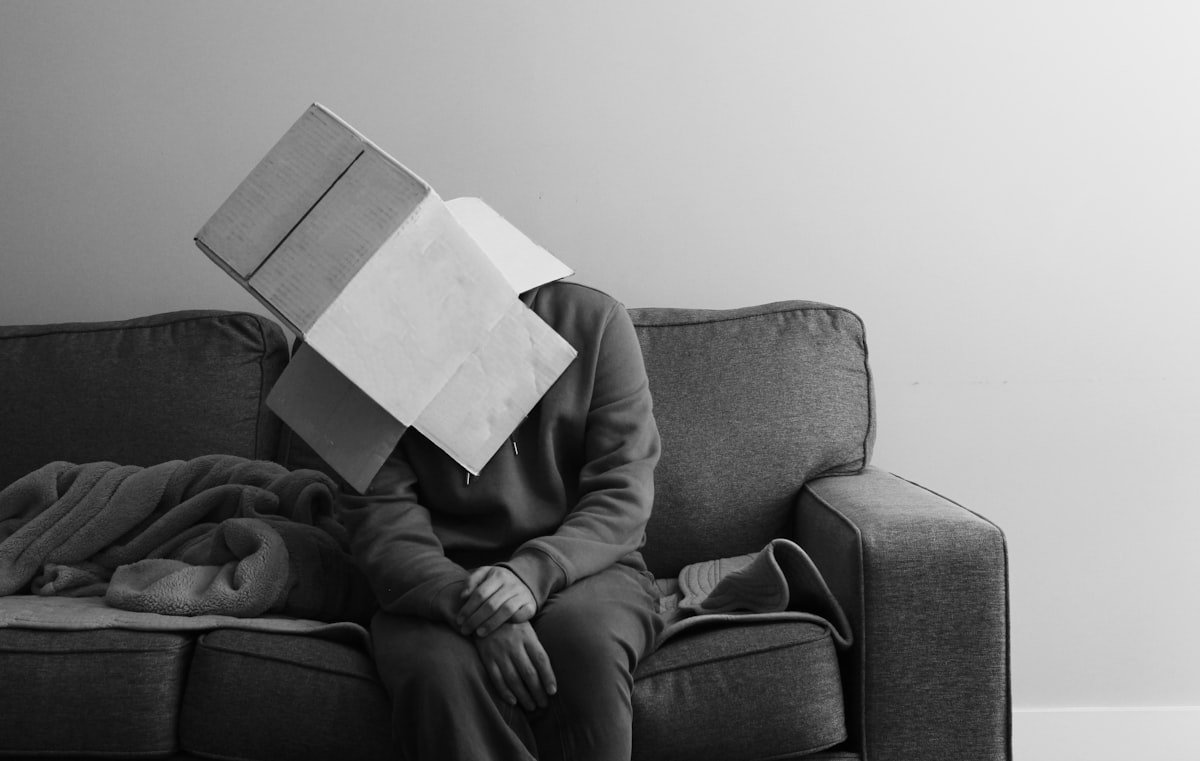
Stress & Cortisol
Why Nerves Keep You Awake Before Big Events
By Nora Vale · December 10, 2025 · 7 min read

The night before my biggest presentation ever, I lay in the dark rehearsing my opening line for the fortieth time, and somewhere around midnight I realized I was no longer rehearsing. I was performing an autopsy. Every version of the line sounded worse than the last, and my heart had opinions. Nothing about that night was a mystery, though it took me years to see it: my brain had classified tomorrow as an event that required overnight supervision, and it was simply doing its job badly at the worst possible hour. The wider system for stress that won’t let go at night is in the stress and sleep guide, and this post is the specific case of the night before.
Key takeaways
- Nerves before events keep you awake because worry keeps the alertness system idling high; the event doesn’t have to arrive to charge the system.
- Your brain’s real fear is usually forgetting, not failing, which is why writing the thing down works so well.
- Sleep effort backfires: the harder you try to sleep, the more the trying keeps you awake.
- The day after a bad night is survivable, because your body is built to rebound with deeper sleep the next night.
- If most nights are like this, not just the nights before events, the pattern has a name and a better treatment than willpower.
What nerves actually do to the sleeping brain
Here’s the mechanism without the mysticism. Stress doesn’t look like a problem. It looks like your life, the presentation, the wedding toast, the interview, the flight in the morning. Worry is the fuel gauge that’s wrong: the body may be genuinely tired, but worry blocks the perception of sleep pressure, so the fuel exists and the instrument reads empty. You feel wired when you should feel drowsy, and the mismatch feels like a personal defect instead of what it is, a chemistry report.
Cortisol, the alertness hormone, deserves a fair introduction here, because it has been slandered by an industry selling it to you as a villain. It isn’t a villain. It’s a shift worker, and the shift has a fixed shape. The problem was never the morning spike. The problem is what constant worry does to the rest of the curve: it flattens the natural nightly decline into a plateau that’s still running at midnight. The night is when you notice. The day is where it lives.
Why the brain demands overnight supervision
The strange part is how reasonable your brain thinks it’s being. A big event tomorrow is an open loop, and open loops are the thing your brain actually objects to, so it assigns the case a night shift. That’s why the rehearsal runs unbidden: your mind is trying to protect you from forgetting, not from failing.
That insight is also the fix, and it’s cheaper than anyone expects. Writing a thing down is the cheapest way I know to convince a worried brain that the thing is handled and doesn’t need overnight supervision. Your version of the rehearsal doesn’t have to be a presentation. It might be tomorrow’s conversation you’re dreading, the field trip logistics, the eulogy you somehow agreed to give. If your mind rehearses, give the rehearsal a script: the actual opening lines, the three beats, the question you’ll ask yourself if you freeze. The brain’s real fear was never the event. It was forgetting.
The write-down works best in the early evening, not at midnight, because the point is to close the tabs while you’re still in day mode. A worry page done at midnight is just worry that found a pen.
The trap: trying to sleep harder
Now the part that makes event nights worse than ordinary nights. Everyone knows tomorrow matters, so everyone tries to sleep well, and effort is exactly the wrong tool. You can’t fall asleep, so you try harder, and the trying is precisely what keeps you awake. Effort is arousal. The more the day matters, the harder you grip, and the grip is the problem.
This is why the tools that work on event nights are all occupations rather than commands. A body scan gives your mind a boring job. Slow breathing with a long exhale occupies the body first and lets the mind quiet down second. Even the counterintuitive move, deliberately trying to stay awake with your eyes open in the dark, works by trading away the task you were failing at. You can’t fail at a task you’ve quit. If the event night tends to come with a mind that replays instead of plans, the post on falling asleep when stressed runs the toolset in order.
And one paragraph of permission, because you need it more than tips: the anxiety about the bad night does more damage than the night itself. One bad night means almost nothing. Your body is built to rebound, and a short night buys you deeper sleep the next one, automatically. The fear of performing badly on four hours of sleep is almost always worse than the reality of performing on four hours of sleep.
The morning after: what actually helps
If the night went badly anyway, the medicine is boring and it works. Up on time, some daylight, a walk, no rescue fourth coffee at noon, and bedtime at the ordinary hour rather than an 8:30 retreat. The single worst morning-after move is the long lie-in, which feels like repayment in the moment and works like a time-zone change by the weekend.
Keep one thought in your pocket for the next event night: the dread always quotes a worse day than the one that actually shows up. I’ve collected a good number of mornings after bad nights before big days, and I’m still functional, employed, and mildly smug about it. The coffee on those mornings is worth timing carefully, because the rescue cup at noon is exactly the trade that books another bad night before the next event.
The honest limits
Now the flaw, because every trick has one. None of this turns a genuinely high-stakes week into a calm one, and the goal was never a lighter load. The goal is keeping the load out of the mattress, and the write-down plus the boring tools do that most nights, not all nights. Some event nights will still run long, and that’s a cost of having a life with things in it that matter, not a failure of technique.
The honest border sits where the pattern stops being about events. If your sleep is broken three or more nights a week, for three months or more, with a real daytime cost, that’s no longer nerves, it’s chronic insomnia, and it responds better to structured treatment than to willpower or to any book. If alcohol has become your event-night off switch, that trade has a predictable invoice, and the post on why alcohol wakes you at 3am explains the math without scolding.
Frequently asked questions
Why can’t I sleep before big events?
Your brain treats tomorrow’s event like an open loop that needs overnight supervision. Worry keeps the alertness system idling high, and the harder you try to sleep, the more the trying itself becomes the thing keeping you awake.
Is it bad to lose sleep before an important day?
One short night buys you deeper sleep the next one, automatically, no effort on your part. The real damage from pre-event nerves comes from the fear of the bad night, which does more harm than the night itself.
What should I do the night before a big presentation?
Give the rehearsal a script on paper in the early evening: the actual opening lines, the three beats, the question you’ll ask if you freeze. Writing it down convinces a worried brain the thing is handled and doesn’t need overnight supervision.
Why does trying harder to sleep make it worse?
Sleep effort is the trap. You can’t fall asleep, so you try harder, and the trying is precisely what keeps you awake, because effort is arousal. The tools that help work by occupying you boringly, not by forcing sleep.
When do pre-event nerves become a problem worth treating?
When the pattern stops being the night before events and becomes most nights: trouble falling or staying asleep three or more nights a week for three months, with a daytime cost. That has a name, and it responds to structured treatment.
If you want the whole case file on stress, cortisol, and nights, it’s in Sleep, Finally. Write the script tonight. Let the brain file the case.
This guide is educational, not medical advice. If anxiety keeps most nights broken rather than a few, a doctor is the right door.