Shift Work & Jet Lag
When to Eat on a Night Shift: Timing That Helps
By Nora Vale · June 7, 2026 · 6 min read
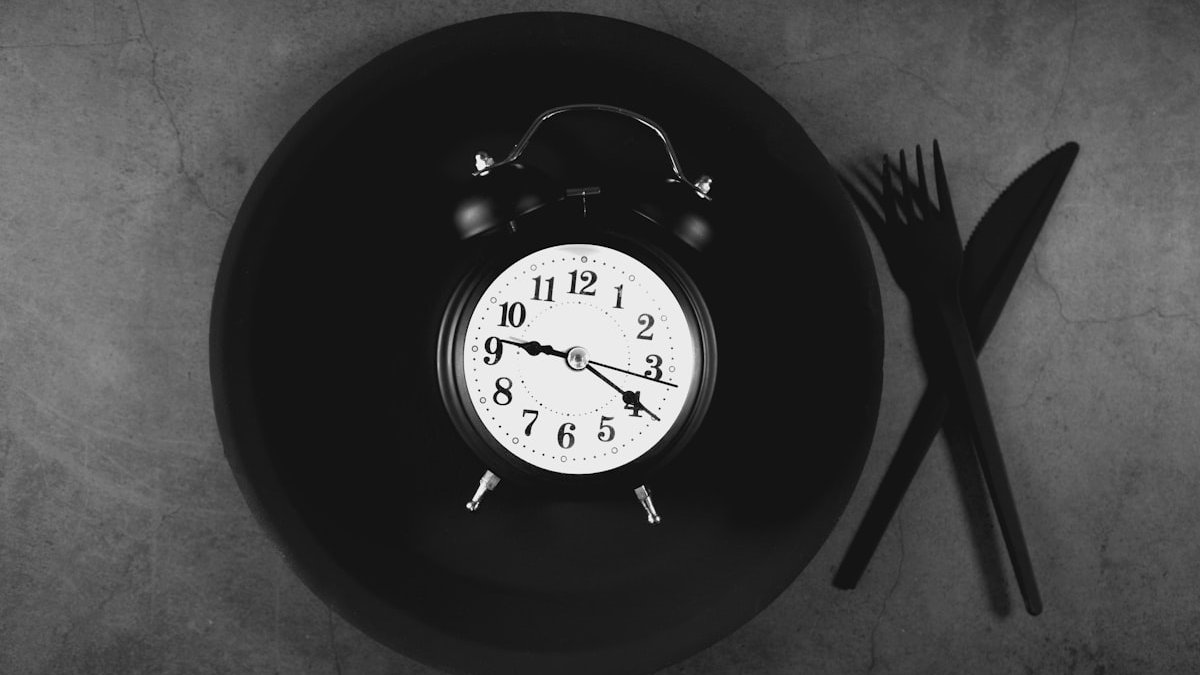
There’s a moment on most night shifts, somewhere around 3 or 4 a.m., when the vending machine or the break-room pizza starts making sense. You’re tired, food is a form of staying awake, and the whole culture of night work treats the late-shift meal as normal. Then you get home, lie down, and either can’t sleep for the heartburn or sleep four shallow hours and wake up feeling like you never digested anything. If you’ve wondered when to eat night shift meals so your body doesn’t punish you, the honest answer is that the timing matters more than the menu, and the 4 a.m. feast is the main thing standing between you and the day sleep you’re short of.
The shift work sleep guide is mostly about light and the anchor block, but meal timing shows up in it twice, quietly: in the jet-lag plan, where eating lunch at the local lunch hour even with no appetite is part of adopting the destination clock, and in the pregnancy chapter’s logistics of smaller, earlier dinners. The principle underneath both is the same one that applies at 3 a.m. on a ward or a loading dock: your digestive system runs on a circadian schedule too, and food at the wrong hour is an input your body argues with.
Key takeaways
- Eat the main meal in the first third of the shift, when digestion still has its daytime staffing.
- The 4 a.m. heavy meal backfires twice: it sits undigested, and it fragments the day sleep that follows.
- Meals are a clock input. Consistent timing that supports your schedule beats erratic eating.
- Back-half snacks: light, protein-forward, boring. Sugar at hour six costs you sleep at hour ten.
- The pre-shift meal, not the midnight one, is the meal worth engineering.
Your gut has a schedule, and it isn’t yours
Circadian biology doesn’t stop at the brain. Digestion, stomach emptying, and the way your body handles glucose all vary across the day, running at something close to daytime capacity and gearing down through the night. That’s the mechanical reason a 2 a.m. cheeseburger feels different in your stomach than the same burger at 2 p.m.: you’re not imagining it, and it isn’t just the lettuce. The system that processes food is partially offline at exactly the hours when night-shift culture does its heaviest eating.
This matters for night workers twice over. First, the immediate cost: heavy food late in the shift sits, and lying down a couple of hours later, which is what your commute home and your day sleep require, sends what hasn’t digested upward. Reflux keeps hours that end far too late, and the book’s own advice about eating earlier and smaller is framed around exactly that problem. Second, the sleep cost: fragmented sleep from reflux and a working stomach shaves hours off day sleep that NIOSH already puts at one to four hours shorter than a normal night. The meal you ate at 4 a.m. shows up in the sleep you didn’t get at 10.
If day sleep is already your hardest problem, covered in how to sleep after a night shift and blackout bedroom for day sleep, meal timing is one of the few levers that costs nothing and doesn’t require your employer’s cooperation.
The meal plan that fits the shift
The pattern that works for most night workers, and the one consistent with the book’s principles, splits the shift’s food into three parts.
The pre-shift meal is the main event. Eat your largest, real meal before the shift starts, in the early evening, when your body still has daytime digestion available. This is the meal worth actually cooking, and it’s also the meal that keeps you from arriving at hour six with the kind of hunger that makes vending-machine decisions feel reasonable.
The early-shift food is real but not heavy. If the shift runs long or your workplace has a proper break, a moderate meal in the first third of the shift, roughly before midnight, is fine. That’s the window where a meal costs the least.
The back half of the shift belongs to snacks, and boring ones. Light, protein-forward food, the kind that doesn’t spike and crash your blood sugar, covers hour four through hour eight. The heavy, sweet, or greasy 3 a.m. option is the one that combines the worst possible digestive timing with a glucose swing that lands during your day sleep. Small and dull wins, and the best time to stop eating before bed logic applies on a shifted schedule too: leave a real buffer between your last real food and lying down.
One honest caveat on caffeine, since it rides along with night-shift eating: caffeine timing on a night shift deserves its own plan, because the cutoff that protects your day sleep comes earlier in the shift than most people expect.
Meals as a clock input
Here’s the deeper reason timing matters, and it comes from the book’s travel chapter. Light is the strongest signal your body clock takes, but meals set the clock too. That’s why Victor, the frequent flyer, eats breakfast at the local breakfast hour even with no appetite: “Light, meals, and activity all set the clock, which is why breakfast at the local breakfast hour has done more for him than any pill he’s tried.”
For a night worker, this cuts both ways. Consistent meal timing that supports your target schedule, main meal early in the shift, day-sleep buffer afterward, is another repetition teaching your body when the active window is. Erratic eating, a feast at 4 a.m. tonight, nothing until 2 p.m. tomorrow, is a stream of contradictory inputs, and your clock makes no promises about resolving them in your favor. You don’t control this lever as strongly as you control light, but it’s free, and on a roster where so much isn’t free, free inputs are worth taking.
The same logic governs the flip back to days on your days off: your meals are part of what either holds your anchor block in place or drags it around, which is the subject of anchor sleep for shift workers. And on rotation weeks, when the whole schedule lurches, keeping meal times as stable as your sleep allows is one of the few anchors left, covered in rotating shift schedule survival.
What the vending machine is really selling
Night-shift food culture is its own obstacle. The 3 a.m. takeout run is social, it’s a break, and it’s one of the few treats the schedule leaves available. I’m not going to pretend that eliminating it is free, because for a lot of crews it’s genuinely the best part of the shift. The honest version isn’t “never eat at 3 a.m.” It’s knowing what the late meal costs and making the trade deliberately: if the 4 a.m. pizza is worth a worse night’s sleep to you on a given shift, that’s a real decision an adult can make. Making it every night, by default, is the part that quietly costs you the whole run.
If you’re trying to change the default, the practical moves are the small ones: eat enough before the shift that hour six doesn’t decide for you, keep something protein-forward in your bag, and drink water on the same schedule you would during a day shift, because thirst at 3 a.m. masquerades as hunger more often than anyone admits. And if night shifts have also wrecked your stomach generally, why night shifts upset your stomach covers that connection in detail.
Honest limits
The research on meal timing in shift workers is thinner than the confidence of the advice you’ll find online, and I’d rather say that than pretend otherwise. The circadian rhythm of digestion is well established; the exact best meal schedule for a specific roster is not, and individual variation is real. What’s on solid ground is the mechanism: heavy food late in the shift lands on a digestive system at low capacity, and it fragments the day sleep that follows. The rest, snack choices, exact buffers, is reasonable engineering, not doctrine.
Also worth saying: if your eating patterns at night feel compulsive rather than habitual, or if reflux is a regular nightly guest rather than an occasional one, those are medical conversations, not meal-plan problems. The when to ask your doctor about shift work sleep line applies to your stomach as much as your sleep.
Frequently asked questions
When should I eat my main meal on a night shift?
Early in the shift, roughly the first third, when your body still expects to be processing food. Digestion follows a circadian rhythm too, so a big meal at 2 a.m. lands on a system geared down for the night. Eat the main meal before midnight, then keep the rest of the shift light.
Why does a 4 a.m. meal make me feel worse?
Your digestive system has its own circadian timing, and at 4 a.m. it’s at its lowest processing capacity. Heavy late-shift meals sit, cause reflux when you lie down after the shift, and fragment the day sleep that follows, which is exactly the sleep you can’t afford to lose.
Does eating on a night shift affect my body clock?
Light is the strongest clock input, but the book notes that meals set the clock too. On travel it’s explicit: eat at the local breakfast hour even without appetite. On a night rotation, consistent meal timing that supports your target schedule beats erratic eating that argues with it.
What should I snack on during the back half of the shift?
Light, protein-forward snacks instead of the vending-machine sugar run. Heavy, sweet, or greasy food at 3 a.m. combines the worst timing with a blood-sugar swing that lands during your day sleep. Small and boring wins at hour six.
The full night-shift system, sleep, light, meals, and the drive home, is one connected plan in Sleep Finally.
This article is educational, not medical advice. For persistent reflux, disordered eating, or stomach problems that don’t resolve with schedule changes, see a clinician.