Shift Work & Jet Lag
Blackout Bedroom for Day Sleep: Dark at Noon
By Nora Vale · August 18, 2026 · 7 min read
The packing tape ran out before the cardboard did. It was 12:40 on a Wednesday, the neighbor’s retriever was doing laps of the yard, and I was taping a flattened box over my bedroom window because a run of night shifts was coming and I had a theory that noon light was the thing eating my sleep. The theory held. The room went dark enough that I had to feel along the wall for the lamp switch, and that afternoon I got six hours where five had been the ceiling. One box. Fifty cents of tape.
If you sleep after nights, you’re fighting two enemies at once: a clock that raises its own alerting signal all day and a world that will not lower its voice for you. A blackout bedroom for day sleep is the half of that fight you can win in an hour, and it’s the cheapest win available. The wider system, anchor blocks and light timing and all of it, is in the shift work sleep guide, but the walls are where I’d start.
Key takeaways
- Daytime sleep after a night shift runs one to four hours shorter than a normal night, and light is a big part of why.
- Ordinary curtains leak. The fix is covering the glass itself, not adding a layer in front of it.
- Cardboard, blackout fabric, or foil behind the curtain all work, and the cardboard version costs an hour and some tape.
- Darkness is half the job. Earplugs and a fan handle the noon noise that darkness can’t touch.
- A black room improves the sleep you get. It doesn’t move your clock, so day sleep still won’t feel like night sleep.
Why one in the afternoon is the worst hour you can pick
Two forces work on you at midday, and only one of them lives in the room. The internal one is your circadian alerting signal, which climbs through the day no matter when you last slept, so a body getting home at eight in the morning is being told to wake up for the next six hours by chemistry that has never heard of your roster. NIOSH, the federal institute that researches workplace safety, puts a number on the damage: daytime sleep after nights runs one to four hours shorter than a normal night. You can’t push through arithmetic. It compounds across a run of shifts until the tiredness stops feeling like tiredness and starts feeling like a different person wearing your clothes.
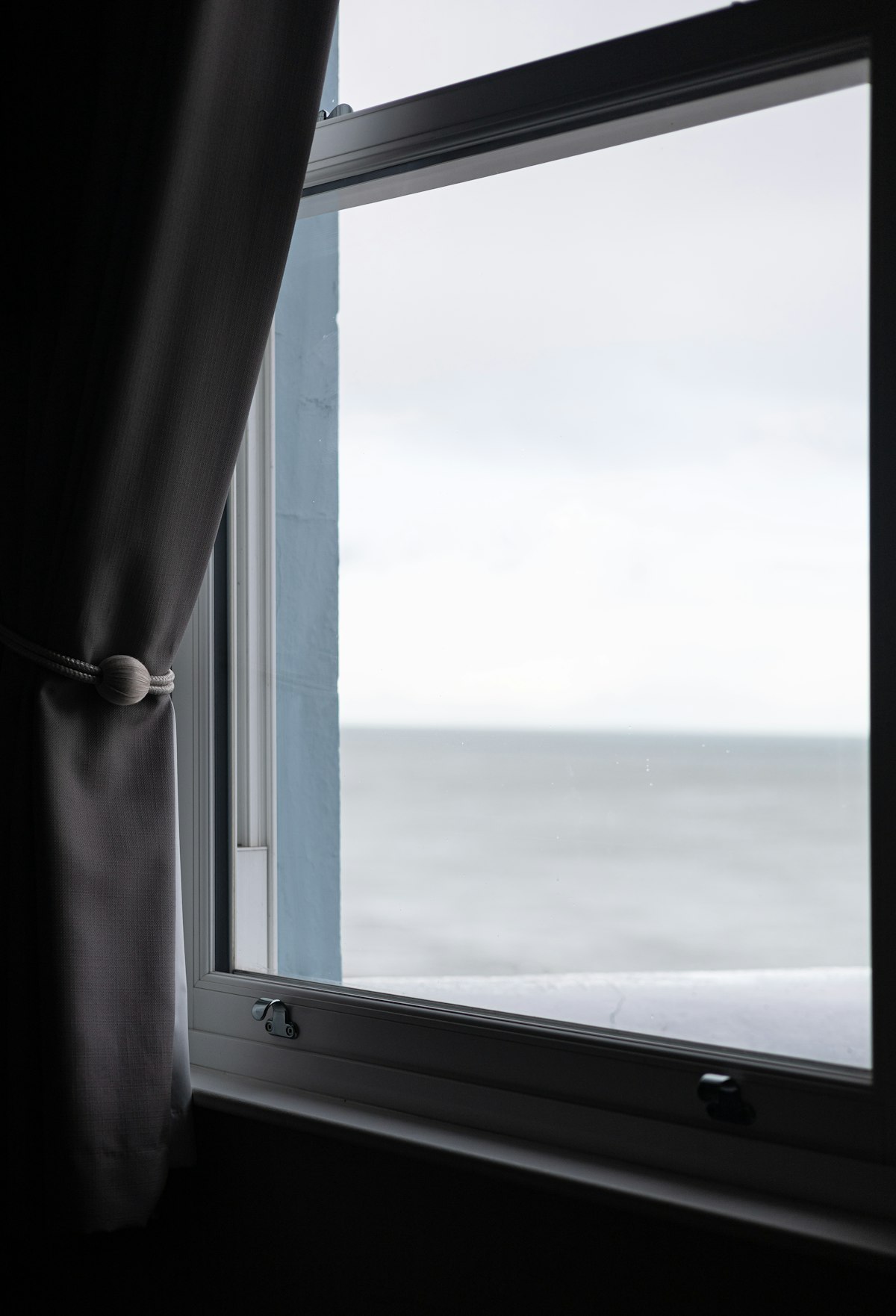
The external force is light, and eyelids are not the defense people imagine. Daylight is bright enough to fragment sleep through closed lids, and even the gray glow that leaks around ordinary curtains shaves pieces off the night, because a sliver of light is still a message and the message is daytime. So the book’s line on this is blunt and correct: “Your bedroom needs to be cave-dark at one in the afternoon, which usually means covering the glass itself.” Curtains in front of glass are a compromise. Coverage on the glass is a fix.
Building it: an hour, a flashlight, and a roll of tape
Pick your material by budget and by what your landlord allows. Cardboard cut to size and taped in place works, blackout fabric works, foil behind the curtain works and looks exactly as desperate as it is. For cardboard, cut panels a little larger than each pane, tape every edge so no rim of daylight survives, then run a hand around the frame and feel for leaks. Give it the flashlight test at full noon: close the door, let your eyes adjust, and look for gray lines. Every gray line is a seam you missed.
Ten minutes with a flashlight beats two hundred dollars of curtains, and I like that the important fixes in this room are the cheap ones, because the expensive versions mostly sell you the same darkness with better marketing. The book puts it better than a product page ever will: “Spend the money on sleep, not on the story.”
Darkness gets the headline, but noon has a soundtrack too. The delivery driver, the lawnmower, a family talking at full volume two rooms away because to them it’s an ordinary Tuesday, all of it lands harder than the same sounds would at midnight. Foam earplugs run a few dollars, and a box fan does the white-noise job as well as any gadget, because it’s the change in sound that drags you up out of sleep and a fan’s steady hum hides the on-and-off. Then handle the human part: tell your household which hours are protected, turn the ringer off, and put a sign on the door if you live with people old enough to read it. White noise for sleep covers the masking trick in detail, and why your bedroom should be dark explains the same crime at night, where it wears a weaker cast.
Do it once and it keeps paying. That’s the part I didn’t expect. The room is the rare sleep fix with no nightly willpower cost, no routine to abandon on a bad week, just cardboard sitting there working while you don’t think about it.
What it looks like in real rooms
Nadia has been a nurse for sixteen years, and she’ll describe the early ones fast: micro-dreams at the medication cart at 3 a.m., driving home with the window down in January because cold air was the only thing keeping her on this side of sleep. What she changed wasn’t heroic. A taped-up window, earplugs, a fan, and an anchor sleep block she keeps at the same clock time every day, days off included. She still works nights. She calls the dark room the cheapest upgrade of her career, and she’d know, because she priced the supplements first.
My own version is smaller. My partner works from home, which means his 1 p.m. phone calls used to land exactly in my deep sleep. The fan plus a sign reading SLEEPING, WORKING NIGHTS fixed what politeness couldn’t. He takes the calls at the kitchen table now. Nobody in that story became a different person; the room just stopped losing fights it could win.
The honest limit
Here’s what the cardboard can’t do. The alerting signal keeps climbing through the morning no matter how black the glass is, so a perfect room rarely hands back a full eight hours after nights, and it can’t convince your clock that one in the afternoon is midnight. A dark room repairs the half of the problem that lives in the bedroom. The other half, giving the clock one consistent window to count on, belongs to the anchor block, which is why how to sleep after a night shift pairs the two instead of selling you a window covering as a cure. And if you’ve built both and sleep still falls apart for weeks, that’s a conversation for a doctor, not a sturdier tape job.
Frequently asked questions
How dark is dark enough for day sleep?
Dark enough that you can’t see your hand in front of your face after five minutes of adjusting. The flashlight test at full noon is the honest check: close yourself in, wait, and watch for gray lines around the frame. If any light is getting in, your eyes will find it before you do.
Won’t a sleep mask do the same job?
A good mask is the right tool on planes and in hotels, but at home it loses. Masks shift in sleep, leak at the nose, and cover nothing for the light reaching your eyes at the edges. Tape the glass and keep the mask for travel.
What about noise I can’t control?
Mask it instead of fighting it. A fan or white noise machine flattens the spikes, a passing truck or a slamming car door, that punch through silence and drag you up out of sleep. Earplugs plus a fan beat either one alone, and together they cost less than dinner out.
Should the room also be cool?
Yes, and it’s the cheapest of the three jobs. Dark, quiet, and cool is the whole specification. A cave-dark room at 75 degrees still fights you, so drop the thermostat, run the fan you bought for the noise anyway, and let one machine hold down two jobs.
I rent. Will taped cardboard cost me the deposit?
Painter’s tape on glass, removed slowly, has never cost me a deposit. Test a corner first, keep adhesive off painted frames, and photograph the setup before you peel it down so you can prove the glass left clean. Landlords argue about walls, not windows.
The full system, from anchor blocks to light timing at both ends of a shift, is in Sleep, Finally. Tape the box. Keep the one o’clock appointment with your own bed.
This guide is educational, not medical advice. If daytime sleep stays broken after weeks of a dark room and a steady schedule, a sleep doctor is the right door, not a thicker curtain.