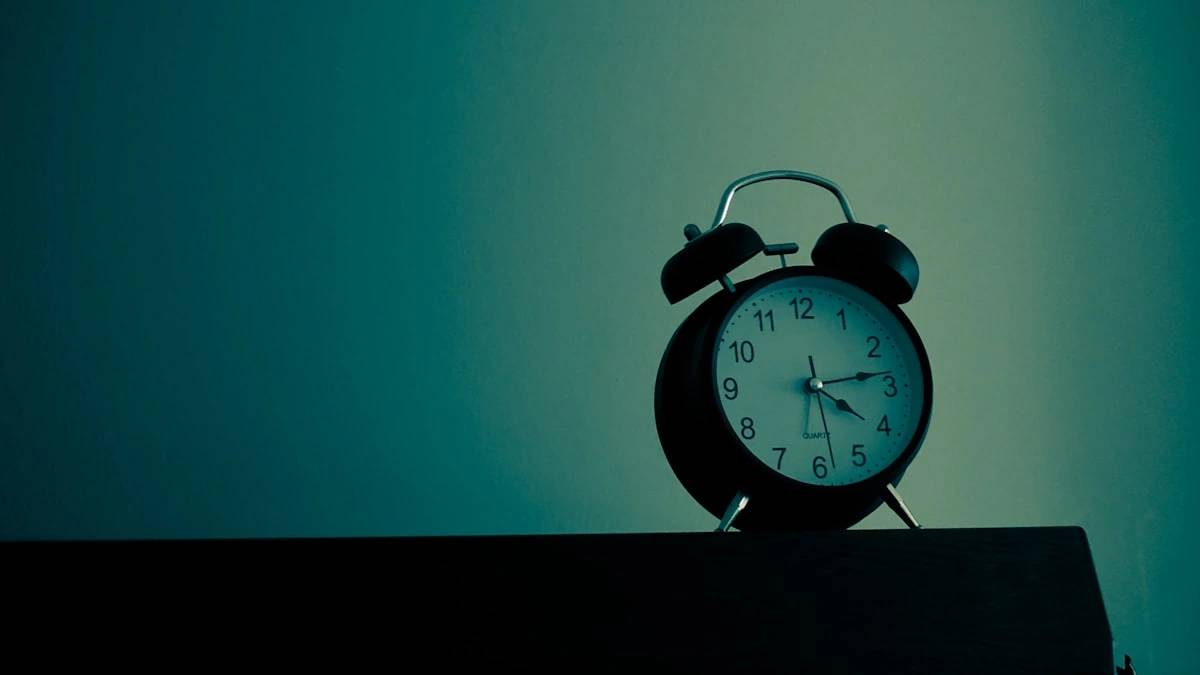
Waking Up at 3 A.M.
Waking at the Same Time Every Night: Causes Explained
By Nora Vale · June 2, 2026 · 8 min read
The punctuality used to feel supernatural. 3:17, every night, to the minute, and I assumed my body was keeping some grudge I could not see. It took me an embarrassingly long time to learn that the same time waking causes are not a curse and not a message from my liver, but two ordinary forces working together: the architecture of sleep, and the habit of expectation. Once you see the machinery, the mystery drains out of it, and what is left is fixable.
The first thing to know is that waking at night is standard equipment. “You were never a bad sleeper. You were a sleeper who started remembering the wake-ups, and the remembering is where all the trouble lives.” The full system for making wake-ups small again is in the complete 3am guide; this post is about why the clock time is so loyal.
Key takeaways
- A night is four to six cycles of roughly ninety minutes, and you surface briefly between them.
- The second half of the night is shallow and REM-heavy, so late-night surfacings cluster near the same time.
- Expectation does the rest: a body that has surfaced at one minute for weeks books the appointment.
- Cortisol climbing from around 2 or 3 a.m. gives the surfacing a nudge toward full wakefulness.
- The fix targets what makes the waking stick, not the waking itself: no clock math, no phone, a fixed wake time.
The architecture: why the hour is shallow
A night is not one long dive. It is four to six laps, each cycle running roughly ninety minutes, and the laps are not equal. Deep sleep comes early: the first cycles carry most of the heavy physical repair, while REM, the dreaming stage, starts skimpy and stretches toward the better part of an hour by morning. Between the laps, you surface. Most surfacings last under three minutes and are forgotten by morning.
Now the part that explains the timing. By 3 a.m., your deep sleep is banked and your sleep pressure, the drowsy cargo that builds all day, is spent. What remains is lighter sleep you pop out of “like a cork,” and because the shallow half of the night is uniformly shallow, the surfacings cluster in the same neighborhood of the clock. “Three in the morning isn’t cursed. It’s the shallow end of the pool.” The punctuality is the system running on rails.
Underneath that, one more force nudges the timing: cortisol, the alertness hormone, begins climbing around 2 or 3 a.m. toward its morning peak. Your body is already drifting toward the exit without consulting you. A surfacing that lands on that slope arrives with alertness chemistry already loose in the blood, which is why 3:17 feels so much more awake than 1:00 did, even though 1:00 was the deeper sleep.
The habit: how the body books the appointment
Architecture explains the neighborhood. Habit explains the address. Part of the answer to same-time waking is that “a body that has surfaced at 3:17 for a month starts to expect the appointment.” The body clock is a scheduling machine, and anything that happens at a consistent time, good or bad, gets a slot.
This is also why a rough season outlives its cause. Kevin, the accountant in the book, started waking during a genuine crisis at work, a restructuring that ended two years ago, and the wake-ups stayed, because by then the bed had learned the routine. A rough month trains a habit, and the habit cheerfully outlives the reason for it by years. Nothing in that is damage. It is conditioning, the same dull force that makes your mouth water at dinner smells, and conditioning un-trains the way it trained: boringly, with repetition.
Age bends the picture a little. Deep-sleep share declines across adulthood and older people surface more often, which researchers describe as mostly normal biology rather than a diagnosis in waiting. The margins run thinner, and the habits matter more, not less.
What makes the waking stick
The waking is not the problem. What attaches to it decides whether a five-minute surfacing becomes a two-hour argument, and the things that attach are nameable.
The clock check is the worst move available at that hour, because the instant you know it is 3:14, the math starts: hours left, hours gone, tomorrow mortgaged minute by minute. The phone grab is three problems in one rectangle, light aimed at your face, a feed engineered to beat sleep, and a job waiting inside it. And the cortisol wave meets whatever anxiety the day left behind halfway through, which gives the 3 a.m. conclusions excellent acoustics and terrible judgment. Treat those conclusions as drafts, not decisions; nothing real gets solved on the ceiling at that hour.
One cause deserves its own honesty: alcohol. A nightcap at 10 buys sedation at 10:15 and often a wide-awake 2:40, and that trade is predictable biology rather than bad luck or weak character. If your wake-ups cluster after drinking evenings, that experiment writes itself, and it is covered in why alcohol wakes you at 3am.
What actually helps
Because the waking itself is normal, the method aims at the stickiness, and the rules are the ones sleep clinics have leaned on for half a century. No clocks: turn the display away, park the phone beyond arm’s reach, because time math is fuel and the rule cuts the supply. The twenty-minute rule: estimate fifteen to twenty minutes awake in bed, and if you are still awake past that, get up and do something dim and boring somewhere else until you feel truly sleepy. The bed stays for sleep and nothing else, so the association you are protecting stays clean.
And the anchor that matters most: a fixed wake time, the same time every single day, no matter how the night went. It feels unrelated to a 3 a.m. problem and it is the strongest lever you own, because a rough night with a kept wake time costs you one day, while a rough night plus a three-hour lie-in rearranges your body clock and can book the same appointment again tomorrow. The daytime half of the method, up on time, daylight, no rescue fourth coffee, is in how to fall back asleep at night.
Expect the method to feel like defeat for the first week or so, and know that the first rough nights measure the untraining rather than your prognosis. The awkwardness usually starts breaking up somewhere in the second week.
If the wake-ups come with loud snoring, pauses in breathing a partner has witnessed, or days wrecked for months on end, stop reading and call a doctor. Those are different flags, and they get their own chapter.
Frequently asked questions
Why do I wake up at the same time every night?
Mostly architecture and habit. The second half of the night is uniformly shallow, so surfacings cluster in the same neighborhood of the clock, and a body that has surfaced at the same minute for weeks starts to expect the appointment. Neither cause means anything is wrong.
Is waking at 3am every night a sign of something serious?
Usually not. By 3 a.m. your deep sleep is banked, your sleep pressure is spent, and cortisol is starting its climb toward morning. That is the shallow end of the pool. Concern is warranted if you gasp awake, snore loudly, or drag through every day for months.
Can stress make me wake at the same time?
Stress makes the waking stickier, not necessarily more punctual. A waking that lands after 2 a.m. arrives with alertness chemistry already loose, and whatever worry it finds gets performed on a stage with excellent acoustics. The tools for that stage are in how to stop overthinking at night.
How do I stop waking at the same time every night?
Remove what makes it stick: no clocks, no phone, a twenty-minute rule with permission to get up and do something dim and boring elsewhere, and a fixed wake time every morning. Give it two weeks, because you are untraining an association.
The appointment is not a curse. It is shallow sleep plus expectation, and both yield to boring, repeated work. The complete method, with the seven-day log, is in Sleep, Finally.
This guide is educational, not medical advice. If sleep problems persist for months or wreck your days, see a doctor.