Morning Light & Sleep
The Dog Walker's Advantage: Built-In Morning Light
By Nora Vale · January 6, 2026 · 7 min read
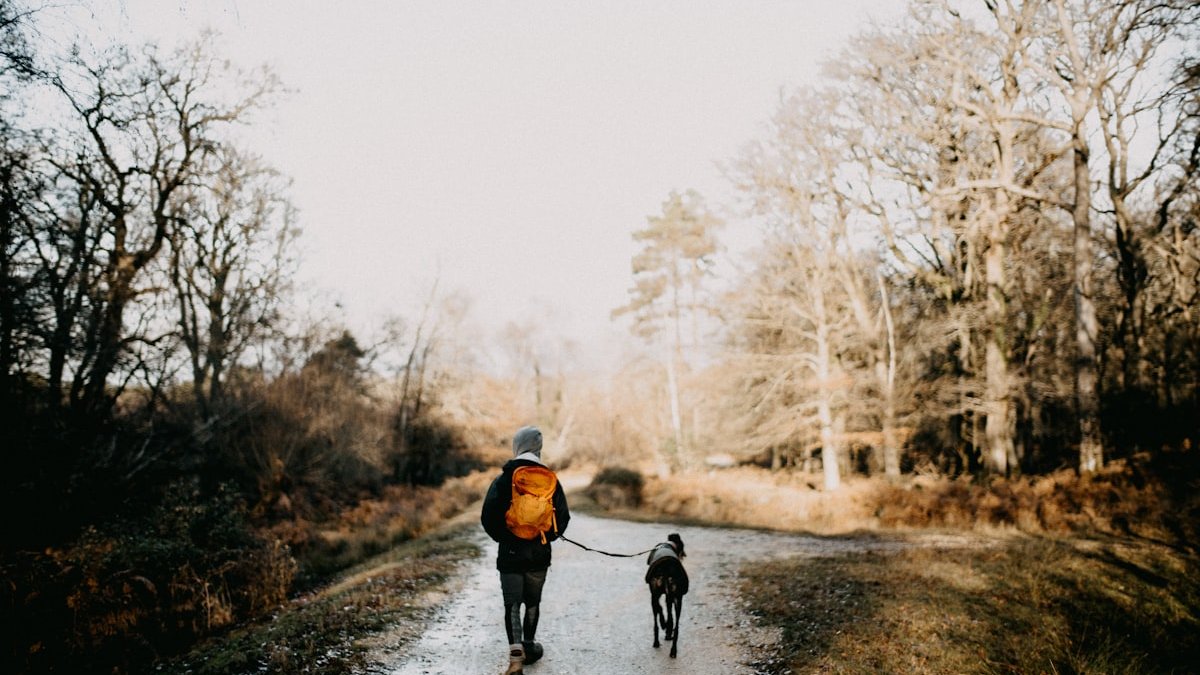
Grace did not set out to fix her sleep. Grace adopted a terrier mix with the bladder of an hourglass, and the dog wanted the yard at 7:15, every day, sleet included. That’s the entire intervention. Two or three weeks in, she noticed she was falling asleep fast, lights-out-by-10:40 fast, and it took her another month to connect the change to the dog, because nothing about a leashed terrier feels medicinal.
If you walk a dog, you’ve been running the best morning-light protocol available without anyone billing you for it. That’s the dog walker morning light advantage, and it’s worth understanding, because you can steal it even without the terrier. The full science lives in the morning light and sleep guide, and the short version is that the first hour of your day sets the terms for the night.
Key takeaways
- Outdoor light within an hour of waking is the strongest lever you have over your sleep.
- Dog walkers get it by accident, enforced by an animal that never skips a morning.
- Ten to thirty minutes counts, gray days included, and gray days ask for thirty.
- The habit works on a schedule of weeks, which is why most people quit at day nine.
- No dog required. You can staple the walk to coffee, or be your own terrier.
What the walk is actually doing
The morning walk looks like exercise, and the exercise isn’t the point. What your body clock reads out there is light, through the eyes, in the first hour after waking, and that light is the strongest signal the clock gets all day. Morning light pulls the clock’s schedule earlier. Evening light pushes it later. Most bad sleepers have their levers backwards: a dim indoor morning and a bright screen-lit evening, which is precisely the configuration that trains a body toward sleeplessness.
Indoors doesn’t deliver the dose. An overcast morning outdoors starts around a thousand lux and climbs; a brightly lit kitchen manages a fraction of that. Your eyes will tell you the living room is plenty. Your clock says the sun never came up. That gap between what your eyes report and what your clock receives is where a lot of mysterious tiredness lives, and the dog, without knowing it, closes the gap every single morning.
There’s a second, quieter effect: the walk happens at the same time every day, and the clock rewards repetition as much as brightness. Grace’s dog didn’t negotiate weekends. It didn’t check the forecast. It didn’t lose interest in the project after nine days, which is the exact point where human commitment usually does.
The experiment Grace ran without meaning to
Here’s what makes Grace’s story useful instead of just charming. She changed nothing else. Not her bedtime, not her coffee, not her screens. The walks were short, fifteen minutes around a block the dog had opinions about, and the rest of her evening was exactly as it had been. When her sleep improved anyway, the improvement had exactly one available explanation.
Then came the accidental A/B test. A rainy February week shrank the walks, the dog was indignant but accommodated, and the old restless nights crept back. Nobody handed Grace a spreadsheet, but the pattern was legible: walk, sleep; less walk, less sleep. She rebuilt the routine, and her nights have held since, which is more than most sleep purchases can claim.
The dog walker’s advantage, named honestly, is enforcement. Every sleep habit fails at the consistency step, and the dog removes the decision. You don’t wake up and ask whether you feel like the walk. You own a small animal with a schedule and opinions, and the walk happens. Humans are bad at that kind of reliably boring follow-through. Dogs are excellent at it, which is why the dog walker is the control group we should all be studying.
Stealing the habit without the dog
You need three ingredients, and none of them is a terrier. First, the first hour after waking, because the signal works best early. Second, actual outdoors, because the window glass and the distance from the light both cut the dose. Third, stapling, because a new habit attached to an existing one survives and a free-floating intention doesn’t.
Coffee is the obvious staple, and coffee on the porch counts. Tea on the front steps counts. Walking the first stretch of the school run instead of driving door to door counts. Taking the morning call you were going to take anyway while standing on the sidewalk counts. The light doesn’t care why you’re outside. It only cares that you are.
Dose is the part people overthink. Ten to thirty minutes, with gray mornings asking for the full thirty or a split into two doses, morning and lunch. You’re not topping up vitamin D out there. You’re setting a watch. The grayest January sky over the ugliest parking lot is still ten to a hundred times brighter than your kitchen with every bulb burning, which is why the walk survives winter if you let it.
And give it days, not nights. Morning light won’t knock you out at bedtime on night one, and the two or three week delay is the honest price. Most people quit inside that window and conclude the whole thing is a horoscope. The clock moves slowly, then holds.
The honest limits
I’d rather tell you where this ends than let you discover it on a disappointing February. Morning light is the biggest single lever, and it isn’t the whole machine. If your evening is floodlit until 11 p.m., the morning dose is fighting the evening dose, and the evening usually wins, which is why the wind down routine guide exists as the counterpart. The dose and the dim need each other.
If your mornings are genuinely impossible, a basement office before dawn, a newborn with different plans, there’s a repair, not a replacement: a lunchtime walk outdoors delivers a smaller signal, and consistency at whatever hour beats perfection at the ideal one. how long to sit in morning sun covers the dosing questions, does light through a window help covers the glass question, and morning walk benefits for sleep extends the walking case. If your body clock runs extreme in either direction, that’s a conversation for a doctor, not a bigger dog.
Frequently asked questions
Why do dog walkers sleep better?
Because the dog enforces the strongest sleep habit there is: outdoor light within an hour of waking, every day, weather included. The light pulls the body clock earlier, and the daily repetition teaches the clock where the day starts. The dog adds the consistency no human resolves to.
How long does the walk need to be?
Ten to thirty minutes outdoors, with gray days asking for thirty or a split into two doses. Grace got the effect on fifteen minutes around a block the dog had opinions about, which is a more realistic benchmark than any sunrise ritual sold online.
Can I get the same effect without a dog?
Yes, and the trick is stapling the walk to something you already do at the same time: coffee on the porch, the school run’s first stretch, a standing morning call taken on the sidewalk. Attach it, keep it in the first hour, and go in all weather, because you are now the terrier.
Does the evening dog walk help sleep too?
The movement helps, but light works against you by then, because evening light pushes the clock later. Keep the evening walk short and dim and treat the morning as the dose that actually fixes nights.
How long before it changes my sleep?
Two or three weeks, and that delay is the honest cost. Grace’s lights-out-by-10:40 arrived after weeks of a walk she took for the dog, not her sleep. Quit at day nine and you’ll never see the part that works.
The dog walker’s advantage is available to everyone, which is the quietly funny part: the best sleep intervention in the neighborhood is being distributed free by animals with small bladders. Borrow the schedule, if not the dog. The book that explains what the walk is doing to your clock is the Quiet Core Reset.
This guide is educational, not medical advice. If sleep problems persist for months despite good light habits, see a doctor.