Stress & Cortisol
How Stress Affects Sleep: The Mechanics of Tired but Wired
By Nora Vale · July 19, 2026 · 7 min read
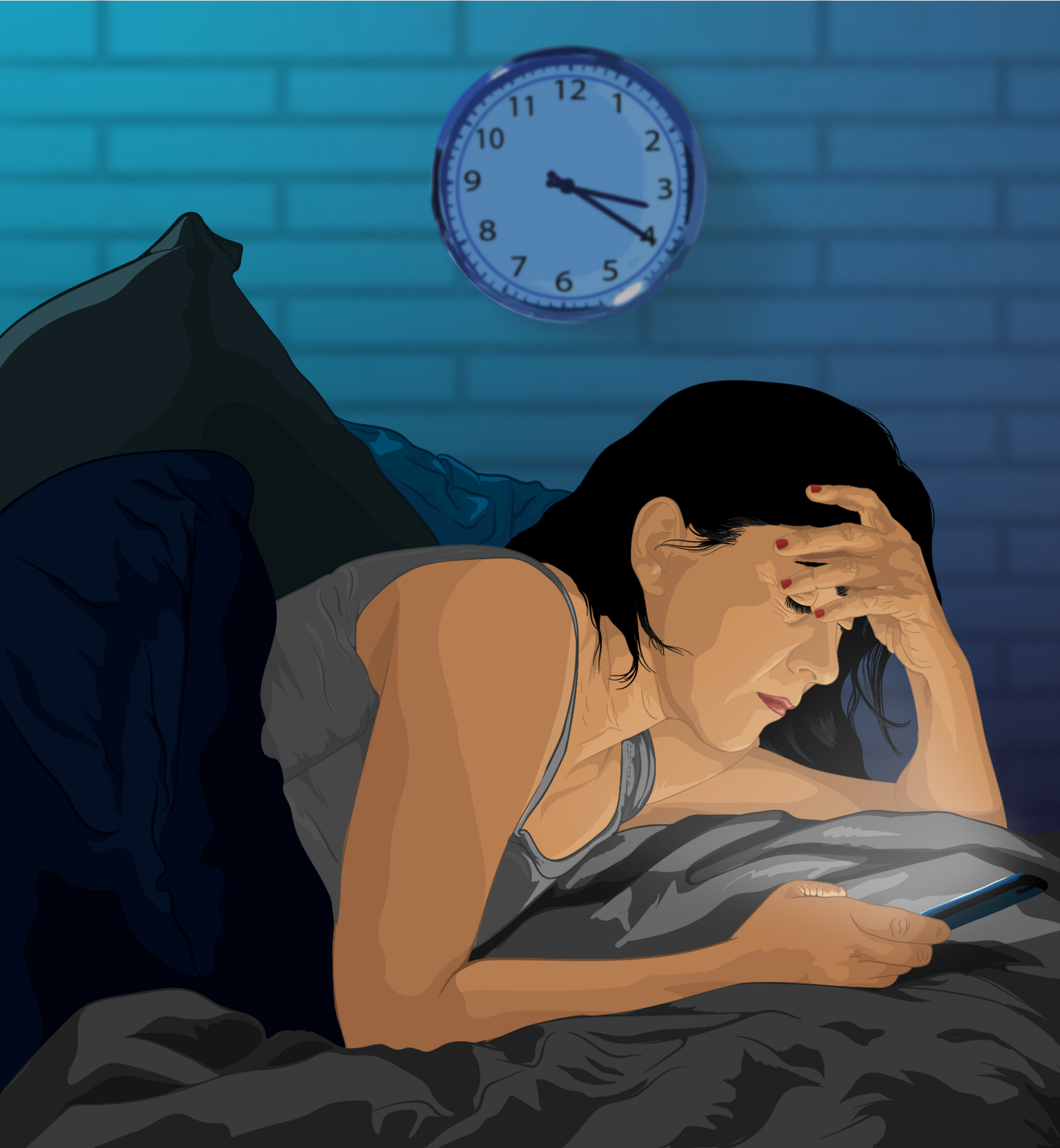
The remark fit inside a text message with room left over. A mother from the school pickup line said something clipped about a carpool roster, my friend Hannah drove home with her hands too high on the wheel, and by midnight she was flat on her back with her eyes wide and her heart tapping out something urgent. Nothing you’d call an event. She’d made dinner, checked homework, settled an argument about a tablet, and felt like a completely normal person the whole evening.
If you’re looking up stress and sleep at midnight, your version of the parking lot probably has its own details, and you’ve probably already concluded the problem is you. It isn’t. The most useful thing anyone told me about my own bad years was that midnight was handing me a chemistry report, not a verdict on my character. This post walks through the mechanics of how stress affects sleep, what “tired but wired” actually is, and the two moves that genuinely change it. The wider picture lives in my guide to sleeping under stress.
Key takeaways
- Stress is the most commonly reported cause of short-term sleep trouble there is: American Psychological Association surveys find about four in ten adults saying stress kept them awake in the past month.
- Worry doesn’t remove your sleepiness. It blocks your perception of it, so the fuel gauge reads empty at midnight while the cargo is right there.
- Chronic stress keeps your arousal system idling high around the clock, which researchers call hyperarousal, and it feels like personality from the inside.
- The fix isn’t a calmer life. It’s a scheduled one: a worry window, downshift tasks in the evening, one wake time defended.
- If wrecked nights run three or more a week for three months, that’s a doctor conversation, not a discipline problem.
Stress is the most common thief, and it wears a disguise
Here’s how common this is. American Psychological Association surveys find about four in ten adults saying stress kept them awake at night in the past month, and polls from the National Sleep Foundation have ranked it the top sleep saboteur for years. In any given year roughly one adult in three goes through a stretch of short-term insomnia symptoms. Your odds of meeting this problem are excellent. I’m sorry about that.
The disguise is the hard part. Stress never shows up at three in the afternoon wearing a name tag. It looks like the carpool, the dishes, the ordinary Tuesday, so none of it files itself under insomnia until midnight files the complaint. For most of the years my sleep was worst, I didn’t count as stressed at all. Nothing in my life was on fire, only logistics and small frictions and a low hum of unfinished everything, and the word stress sounded too much like an excuse, so I read my 3 a.m. as a personal defect instead of what it was. A chemistry report.
If the quiet, undramatic version describes you better than the meltdown version, you’re in the majority. The mechanism doesn’t care whether the day was dramatic. It counts votes.
The mechanism: worry jams the fuel gauge
All day your body banks sleep pressure, a genuine physical cargo you could measure in a lab, and by eleven the cargo is genuinely there. Worry does one specific thing to the gauges: alertness triggered by worry blocks your perception of that pressure, so the sleepiness sits in the system while the readout insists otherwise. “The fuel gauge is what’s wrong, and the fuel gauge is worry.” You’re not imagining the tired, and you’re not faking the awake. Both readings are honest. The instrument is what’s jammed.
You can spot the jam in odd places. It’s the jaw that aches by Wednesday from clenching, the shoulders that live near your ears, the sigh that arrives around four o’clock like a bus, the way you snap at a slow grocery line and then apologize to a stranger who didn’t deserve it. None of these is a diagnosis. They’re readouts, and readouts are useful, because the thing driving your nights runs in plain sight all day. You’ve had the equipment for years.
Hyperarousal: the smoke alarm that never resets
Now the deeper layer, the state underneath most stubborn insomnia. A smoke alarm has one job: shriek when there’s fire, then reset and go quiet. A house where the alarm never fully resets, where it keeps up a low chirp all day and all night for months, would drive anyone out of it, and that is the house a chronically stressed person lives in. Nothing is burning. The alarm won’t stand down.
This is why researchers describe chronic insomnia as a 24-hour disorder of hyperarousal, and the phrase is more literal than it sounds. People with chronic insomnia show higher resting heart rates, warmer core temperatures, and a metabolic rate idling above normal, and researchers find those markers in broad daylight, hours before anyone has tried to sleep. The night is when you notice. The day is where it lives.
The cruel twist is that idling high doesn’t feel like stress from the inside. It feels like personality. I spent years certain I was simply a night person with an anxious streak, when my body had been marinating in alertness since every morning commute and had never once been shown the exit. You can’t feel a baseline. You can only feel departures from it, and when the baseline sits high for years, exhausted stops registering as a symptom and starts registering as who you are.
So postpone the verdict on yourself. Tired but wired isn’t a character flaw, it’s an arousal system answering perceived threats without pausing to grade them first, the way Hannah’s body at midnight was still faithfully answering a parking lot remark from nine hours earlier. Nobody chooses that. You can, though, teach the system where the day ends, and that’s most of what the rest of this post is for.
The two moves that actually change the night
You can’t delete stress. You can’t cancel the carpool, unhear the remark, or wish the workload into a kinder shape, and anyone selling you a stress-free life is selling you a smaller life. What you can do is give it boundaries, and the boundaries are boring, which is why they work.
The first move is paper. A worry page, two columns, the worry on the left and the next concrete step on the right, written two to three hours before bed, run as a standing appointment at the same time every evening rather than an emergency measure on bad nights. A brain objects less to a problem than to an open loop, and the page turns loops into appointments. The full method, including the midnight rule, is in the worry journal method.
The second move is in your shoes. The hours between the end of the workday and bedtime decide more about your night than the last hour does, and the stress system needs dull, physical, low-stakes evidence that the day’s emergencies have ended. A walk around the block, a shower, folding laundry with the radio on. None of it would impress anyone. That’s the point, and I’ve laid out the evening version in how to decompress after work.
Two supporting pieces are worth grabbing while you’re at it. If the awake starts the moment you lie down, why your brain wakes up when you lie down covers the bed-specific version of the jam. And if the trouble has already gone chronic, stress insomnia help covers what to do when the basics stop being enough.
One honest limit before the FAQ. Some weeks are genuinely bad: a diagnosis, a job ending, boxes to the ceiling. On those weeks, sleep hygiene is a bucket in a rainstorm. The page gets written, the walk happens, and the night is wrecked anyway, because no technique talks a real fire out. I’ve carried the bucket. It gets you wet and it feels like failing. The fix isn’t a better bucket. It’s lowering the bar to one anchor, the wake time, and keeping that one perfectly while the rest of the routine floats.
Hannah’s ending is the one I’d bet on for you. Her parking lot still shows up at three fifteen, it has an appointment at six thirty, and somewhere inside that gap it stopped being the thing her body rehearses at midnight. The life stayed exactly as stressful. The nights stopped joining in.
Frequently asked questions
How does stress actually keep you awake?
Two mechanisms stacked. Worry-triggered alertness blocks your perception of sleep pressure, so real tiredness never shows up on the readout. And chronic stress keeps the arousal system idling high around the clock, so by the time you lie down, your body has spent twelve hours believing something is coming. The bed is where you finally feel it.
Can stress cause insomnia even if my life isn’t that dramatic?
Yes, and the undramatic version is the most common one. Small repeated votes, a rerun conversation, a snippy email, a clenching commute, each release a tiny pulse of stress chemistry, none near flood level, and they compound into an idle that sits high for years. You’d honestly tell me your days aren’t stressful. Your jaw disagrees by Wednesday.
Why do I feel exhausted all day but wide awake at night?
Because the gauge is the broken part, not the fuel. Your body banks real sleep pressure all day, but worry blocks the perception of it, so the tiredness and the alertness run side by side. At midnight the cargo is still there. The readout just won’t admit it, and that mismatch has a name: tired but wired.
Will my sleep fix itself when my life calms down?
I waited years for that calm season, and it never arrived, because calm was never a season on its way. What arrived instead was a shape: a worry window at seven, a walk after dinner, a wake time defended like a shift I couldn’t miss. The life stayed exactly as stressful. The nights stopped joining in.
When is this a doctor problem instead of a habits problem?
When wrecked nights run three or more a week for three months straight. That’s past what habits and buckets describe, and there are treatments that outperform everything on this page combined. Booking the appointment is a sleep skill like any other here, and it’s the least lonely one.
This guide is educational, not medical advice. If a stressed mind keeps you up most nights for three months, that pattern has a name and a treatment, and a doctor is the right door.