Racing Mind at Night
Why Your Brain Wakes Up When You Lie Down
By Nora Vale · June 19, 2026 · 7 min read
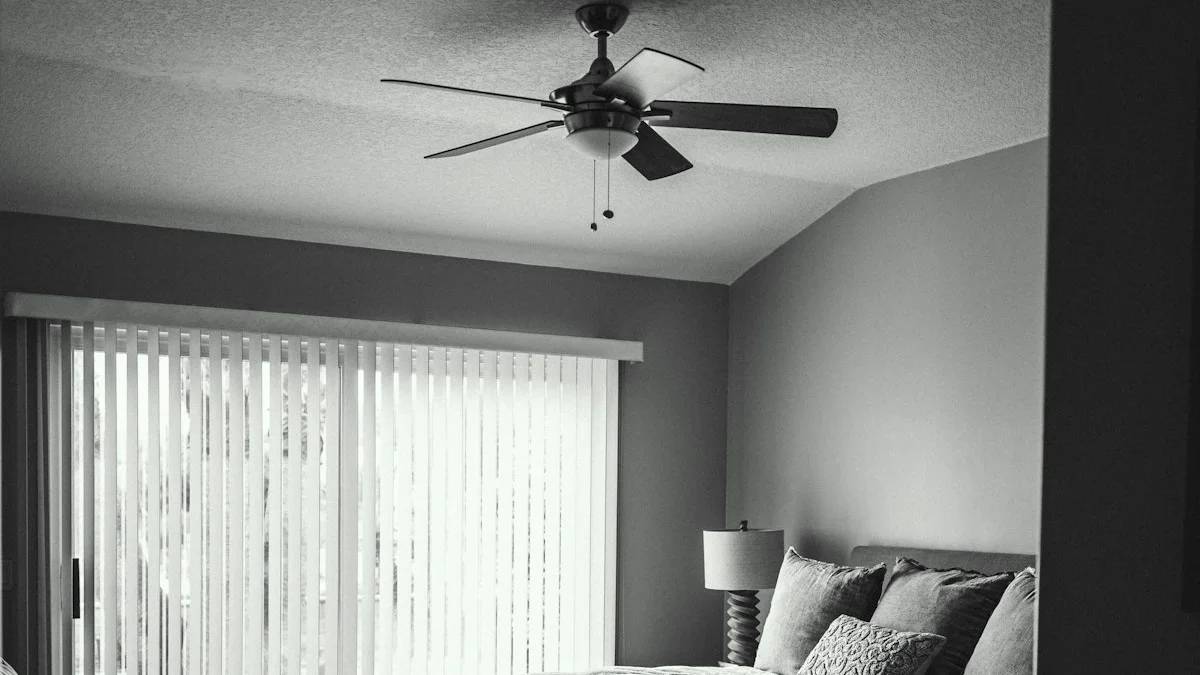
My record was ninety minutes of what I genuinely believed was troubleshooting. Ten forty at night, lights off, pillow finally cool, and somewhere around the third breath my brain opened the inbox: seventeen unread items, two half-finished arguments, a dentist appointment I’d been rescheduling since April. I lay there proposing solutions like it was my job, increasingly certain something was broken in me specifically. If you know that lurch, the one where lying down feels like a starting gun, two things are true. You are not broken. The fix has less to do with your thoughts than with the room they happen in. This is the same territory as the racing mind at night guide; this post is the mechanism, because once you see why the quiet turns the volume up, the tools stop sounding like superstition. There is no off switch, by the way. Nobody has one, including the people selling the meditation subscription with the annual plan.
Key takeaways
- A mind that spins at bedtime isn’t a character flaw; it’s ordinary equipment doing its job in a room where nothing else needs doing.
- The quiet is the amplifier: all day your brain runs background jobs, and at night the monitoring turns inward and the inbox opens.
- Night shrinks the thought’s competition, not the thought. Same worry, bigger production.
- Trying to fall asleep is arousal. Sleep is something you permit, not a skill you perform.
- The fix is a boring job for the mind: occupy it just enough that worry loses the stage, most nights.
The quiet turns the volume up
Here’s the mechanism nobody mentions. All day your brain runs background jobs: steer the car, track the meeting, remember where you parked, keep one ear on the kids. In bed the jobs run out. Dark room, no conversation, no screen, a body gone still. There’s nothing left to monitor, so the monitoring turns inward, and the inbox opens. That’s not your mind malfunctioning. That’s your mind finally getting a turn, in the one room of the day with nothing else scheduled.
So when people ask why your brain wakes up when you lie down, the unglamorous answer is that the quiet is the amplifier, not the thought. The content barely changed from what it was at 3 p.m. The staging did. “The same worry that bored you at three in the afternoon arrives at eleven with a full production staff.” At noon it’s a phone call you haven’t made. At night it becomes a three-act play about everything that happens if you never make the call, complete with reviews.
Night does one more thing worth naming: it strips away every distraction that kept your worries in their place, and worry, handed the whole stage, elaborates. The unpaid bill becomes a credit catastrophe. The awkward comment from Tuesday becomes a resignation letter you’re composing for a colleague who has already forgotten saying it. A 3 a.m. brain catastrophizes, so treat its conclusions as unreliable drafts, not decisions. The problem that feels unsolvable in the dark shrinks back to a ten-minute phone call by mid-morning.
A detail worth knowing: night brains come in two flavors. Planners relitigate the future, tomorrow’s meetings and unmade calls. Replayers rerun the past, the thing you said in 2009 that still makes you wince in the shower. Both are normal, and neither one is a diagnosis. Mine is a planner with a replayer problem, which is a lovely combination to be at 1 a.m. with.
Chasing sleep scares it off
Before any tool works, you need to see the trap under all of them, because I lived inside it for a decade. Sleep researchers have a name for it: sleep effort. “You can’t fall asleep, so you try harder, and the trying is precisely what keeps you awake.” The people who model insomnia for a living describe sleep as something you permit rather than a skill you perform. Effort is arousal. You can’t clench your way to unconsciousness.
For years I did everything that sounds right. I went to bed earlier to catch up. I rehearsed relaxation like a piece of music, checking after every cycle whether it was working yet, a bedtime deadline with the next day officially ruined if I missed it. Every one of them was a job, and every job at midnight is a morning shift. My sister, meanwhile, falls asleep during the credits of a crime show she isn’t watching. She has no techniques. I hated learning this.
You’ve probably lived the proof without naming it. People with insomnia often drop off easily on the couch at eleven, then lie rigid in bed at midnight. Same brain, same exhaustion. The couch doesn’t ask anything of them. The bed has become an exam room, and grinding through relaxation techniques with one eye on the ceiling is just the exam, taken with more effort.
This is also why the tools that work are shaped so strangely. None of them try to make you sleep. They occupy you, gently and dully, so the part of you that’s been gripping the night can let go of it, and sleep, which was never actually lost, wanders back in on its own. The whole specification is one line: a job absorbing enough to crowd out worry, boring enough not to wake you up. Worry needs a storyline, momentum, stakes. A mind spelling random words can’t simultaneously run the 3 a.m. status meeting. You haven’t defeated the worry. You’ve out-competed it for attention.
Where the open loops come from
One more piece of the mechanism, because it explains why some nights are worse than others. Your brain doesn’t really object to problems. It objects to open loops: things started and not closed, decisions postponed. At night every unclosed loop files in for its report, because no one told it the report can wait. That’s why a normal Tuesday can be quiet and the night after a vague, unfinished meeting can run a three-act play.
Which means the best move happens hours before bed, not in it. Writing a worry down and giving it one small next step converts an open loop into an appointment, and the open loop is the thing your brain actually objects to. The step doesn’t solve the worry; it tells your brain the report is scheduled. The full method lives in the worry journal method post, and it slots into how to wind down before bed, because closing tabs is wind-down, just for a mind instead of a laptop.
For the loops that can’t be closed, the leftover conversations and half-remembered embarrassments, the job is different: occupy the mind with something too dull to hold a storyline. The cognitive shuffle for sleep is the best version I know. You can’t worry in shuffle mode; the words refuse to line up. One tool for planners, one for replayers, one for the nights the body is humming. That’s the kit, and it’s deliberately small.
The trap that makes it every night
Here’s the part I’d rather you hear from me than discover at 1 a.m. None of these tools work when you’re desperate for them to work. The shuffle collapses if you’re silently begging it to knock you out. The breathing turns into one more performance. Desperation is sleep effort wearing a costume, and since every tool is an antidote to sleep effort, the desperate version of the tool is a contradiction in terms.
The mistake I made for years was practicing only on the nights I needed it, which is like learning a fire drill during the fire. Run the tools on an ordinary Tuesday, five boring minutes, one tool per drill. It will feel silly, which is exactly the condition under which it becomes learnable. Two weeks after my own ridiculous drill, on a genuinely bad night, the shuffle started itself almost without my permission.
And one honest limit: knowing the mechanism doesn’t switch it off. I can name the inbox opening in real time and still get swept into the play. Some nights the knowing only shortens the run from ninety minutes to twenty. That’s a real win, not a cure, and anyone who says insight alone dissolves a racing mind is selling the annual plan.
If the whole cycle runs for months and costs you days, that’s a different tier of problem: three or more nights a week for three months, with a daytime cost, has a clinical name and responds to a specific skills-based treatment. Now and then is just human. A mind that spins past what self-help covers deserves the real exit.
Frequently asked questions
Why do I suddenly think of everything the moment I get in bed?
All day your brain runs background jobs, and in bed they run out. With nothing left to monitor, the monitoring turns inward and the inbox of open loops opens. It is normal equipment doing its job in an empty room, not a broken brain.
Why do the same worries feel bigger at night?
The staging changes, not the content. The worry that bored you at three in the afternoon arrives at eleven with a full production staff, because nothing competes with it anymore. A 3 a.m. brain catastrophizes; treat its conclusions as drafts, not decisions.
Can trying harder to fall asleep make it worse?
Yes, and it is the most common trap there is. Sleep researchers call it sleep effort: the trying is precisely what keeps you awake. That is why the useful tools occupy you gently instead of pushing you toward sleep.
How do I stop my brain from doing this every night?
Give it a better job before the lights go out: a worry page in the early evening and one dull in-bed tool, practiced on calm nights so it exists as a reflex. If the bed has become an exam room, the couch will outperform your own determination.
Last night the inbox opened on schedule, around the third breath, same shelf of half-finished arguments. The difference a decade makes is smaller than I’d like and bigger than it sounds: I knew what it was. I wrote the worry page early, ran a shuffle on harbor, and never got past H. Most nights now look like that one, which is the entire promise, and the mechanism behind it, worksheets and all, is in Sleep, Finally.
This guide is educational, not medical advice. If your mind races every night for months or the worry follows you through the day, see a doctor.