Racing Mind at Night
How Slow Breathing Calms Nighttime Anxiety
By Nora Vale · July 21, 2025 · 8 min read
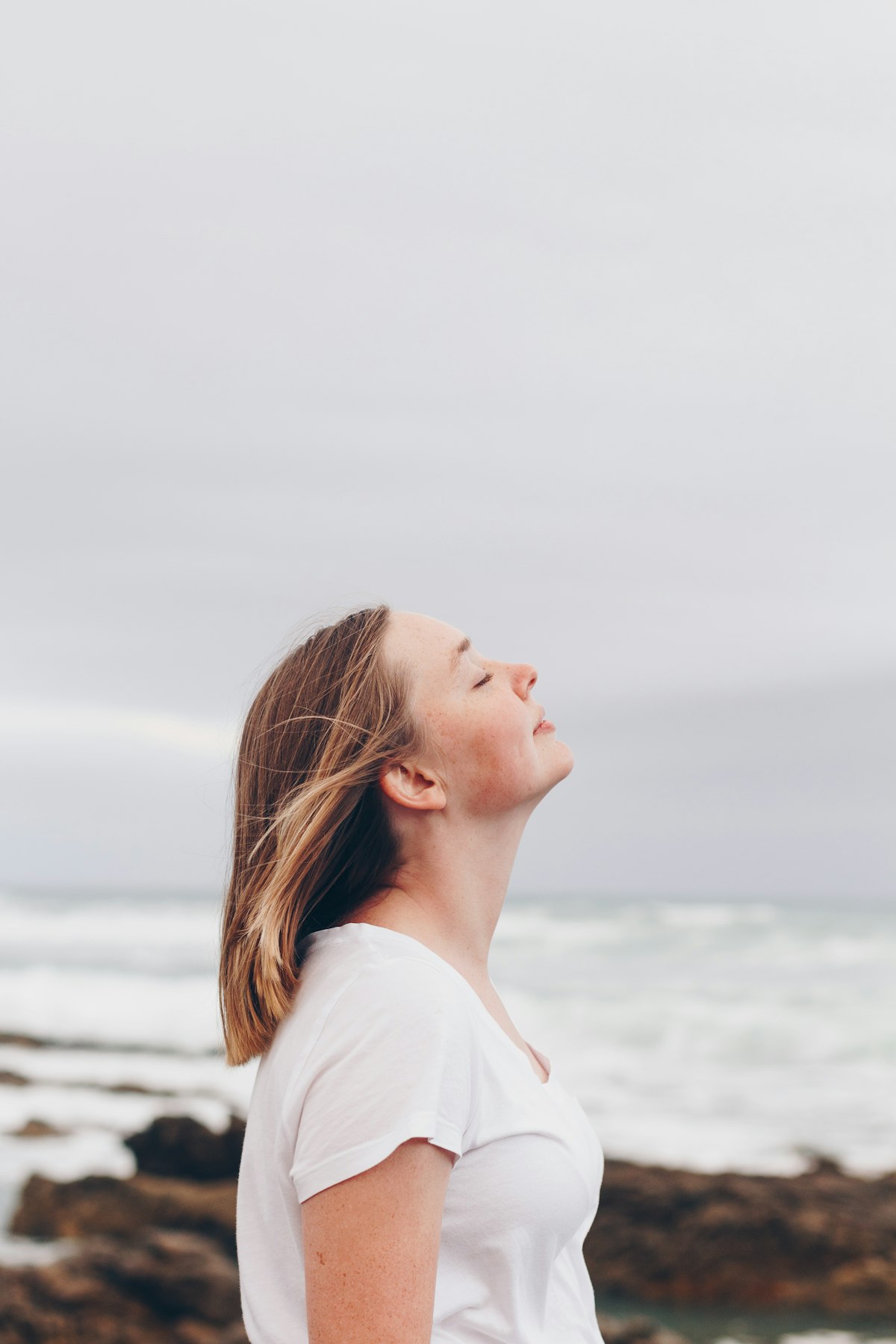
My first attempt at breathing for anxiety failed so completely that I quit the whole category for a year. I lay in bed rehearsing relaxation like a piece of music, breathing on the beat, checking after every cycle whether it was working yet. It was a job. Every job at midnight is a morning shift. What I had missed, and what the research actually supports, is smaller and stranger: slow breathing anxiety relief comes from the exhale, practiced on boring days, and it works as an arousal dial rather than a sedative.
The full context sits in my racing mind at night guide, because breathing is one tool in a small kit. This post covers why the long exhale does what it does, the exact version with the best evidence, and the flaw that sinks it for people who try to perform it.
Key takeaways
- Slow breathing with a long exhale is the body-based tool with the best recent evidence, and the honest size of the effect is modest.
- A 2023 Stanford study in Cell Reports Medicine had people practice five minutes a day of cyclic sighing for about a month, and the breath group beat a mindfulness comparison group.
- The physiological sigh is the simplest version: two inhales through the nose, one long exhale through the mouth.
- The counts matter far less than making the exhale the longest part of the cycle.
- Desperation is sleep effort wearing a costume, so practice on a boring Tuesday, not first at 1 a.m.
Why the exhale, of all things
The mechanism is less mystical than the wellness aisle makes it. Your nervous system runs an alert mode and a recovery mode, and the exhale is one of the few levers that reaches the recovery side directly. Breathe slowly enough, with the exhale long enough, and heart-rate variability rises, which is one of the markers that tracks your shift out of alert mode. The book’s framing is exactly right: it is an arousal dial, not a sedative, and a dial turns in minutes rather than seconds.
That framing matters because of what anxiety at night actually is. The mind that spins at 1 a.m. is not broken, it is ordinary equipment in a room where nothing else needs doing, and it is idling high because the day left it there. Breathing does not argue with the worry or solve it. It turns the idle down a notch, which is a smaller promise than silence and a far more honest one. The post on why anxiety is worse at night covers the chemistry underneath that idle.
The evidence, named rather than gestured at: a 2023 Stanford study published in Cell Reports Medicine had people practice five minutes a day of cyclic sighing, the long-exhale pattern, for about a month, and the breath group improved more than a comparison group doing mindfulness meditation, both in mood and in lower day-to-day arousal. In physiology labs, slow breathing down around six breaths a minute reliably raises heart-rate variability. Modest but real.
The physiological sigh, step by step
The simplest version has a name, and the book gives it in one sentence I will quote exactly, because the details are the tool: “Two inhales through the nose, the second a small top-up right after the first, then one long, slow exhale through the mouth, longer than both inhales combined.”
That is the whole instruction. The first inhale fills most of the lungs, the second small one tops up the last bit, and the exhale runs long and slow through the mouth. If you have met 4-7-8 breathing, that is the same family, and the exact counts matter far less than making the exhale the longest part. Two or three rounds take under a minute, and you can run them anywhere, which is why this version travels: in bed, at the kitchen sink during the wind-down, or parked outside a meeting you are dreading.
Where it fits in the evening is the body slot of the wind-down, the one most people leave empty because relaxing is not an activity. Ten slow breaths while the toothbrush or the kettle does its work fills it. The full three-slot template lives in the wind-down routine guide, and the breathing exercises for sleep post walks the wider family of patterns.
Practice on a night that does not matter
Here is the part that decides whether this tool exists for you or merely decorates a bookmark. “So practice on a boring night. Pick an ordinary Tuesday when you’re mildly tired and nothing is on fire, and run the tools like a fire drill.” The quote is about the whole toolkit, and breathing is its best student, because the desperate version of a relaxation technique is a contradiction in terms.
The mechanics of why are worth two sentences. When you lie in bed silently begging the breathwork to knock you out, you have turned a dial into a performance, and the checking-after-every-cycle habit I described at the top of this post is exactly how. The breath group in the Stanford study practiced daily for a month at no particular stakes. The skill they built was a hand that knows where the dial is, and hands learn on ordinary days.
So the assignment is almost insulting in its smallness. Two minutes of the physiological sigh at the kitchen sink tonight, while the kettle boils, with no goal beyond doing it. Repeat tomorrow. The post on cognitive shuffle for sleep pairs well with this one, since the two tools cover the mind and the body halves of the same night.
The honest limits
The limits, in the order I learned them. First, this is not a sedative, and the night you demand knockout results from a breathing pattern is the night it becomes one more thing you failed at. Second, the evidence base is modest, and the book says so plainly: promising, plausible, free, and unproven is not the same as useless, but nobody should promise silence. Third, anxiety that lives all day and most nights, or arrives with a daytime cost you can name, belongs with a professional, and breathing is a companion to that conversation, not a replacement for it.
When the mind keeps spinning on the nights the dial works, the how to stop overthinking at night post covers the mental side, and 3am anxiety covers the specific hour this post’s readers know by name.
Frequently asked questions
Does slow breathing actually reduce anxiety at night?
Modestly and reliably. A 2023 Stanford study published in Cell Reports Medicine found five minutes a day of long-exhale breathing improved mood and lowered day-to-day arousal more than mindfulness meditation, and physiology labs tie slow breathing around six breaths a minute to higher heart-rate variability, a marker of the shift out of alert mode.
What is the physiological sigh?
Two inhales through the nose, the second a small top-up right after the first, then one long, slow exhale through the mouth, longer than both inhales combined. Two or three rounds take under a minute, and the exhale is the part doing the work.
How long does it take to work?
The arousal dial turns within minutes, but the dependable version of the skill comes from practice. The tools work best when your hand already knows where the dial is, which is why two boring minutes at the kitchen sink nightly beats any desperate hour in bed.
Why does the long exhale matter more than the count?
The exhale is the part that shifts your nervous system toward recovery mode, so the exact counts matter far less than making the exhale the longest part of every cycle. Any pattern that honors that beats a perfect count that does not.
What if slow breathing becomes one more thing I fail at?
That is sleep effort wearing a costume, the honest flaw of every tool in this family. Shrink the session to two minutes, drop the goal of feeling calm, and treat the practice as attendance. If a tool keeps turning into a performance, the mental tools in the same kit may fit you better.
The whole promise, sized honestly: a dial you know by touch, most nights, and a shorter fallback for the rest. Two minutes at the sink tonight, kettle optional. The full kit, breathing drills and worksheets included, is in Sleep, Finally.
This guide is educational, not medical advice. If sleep problems persist most nights for three months or more, a doctor is the right door.