Alcohol & Sleep
Hangxiety at Night: Why Drink-Driven Dread Wakes You
By Nora Vale · January 11, 2026 · 7 min read
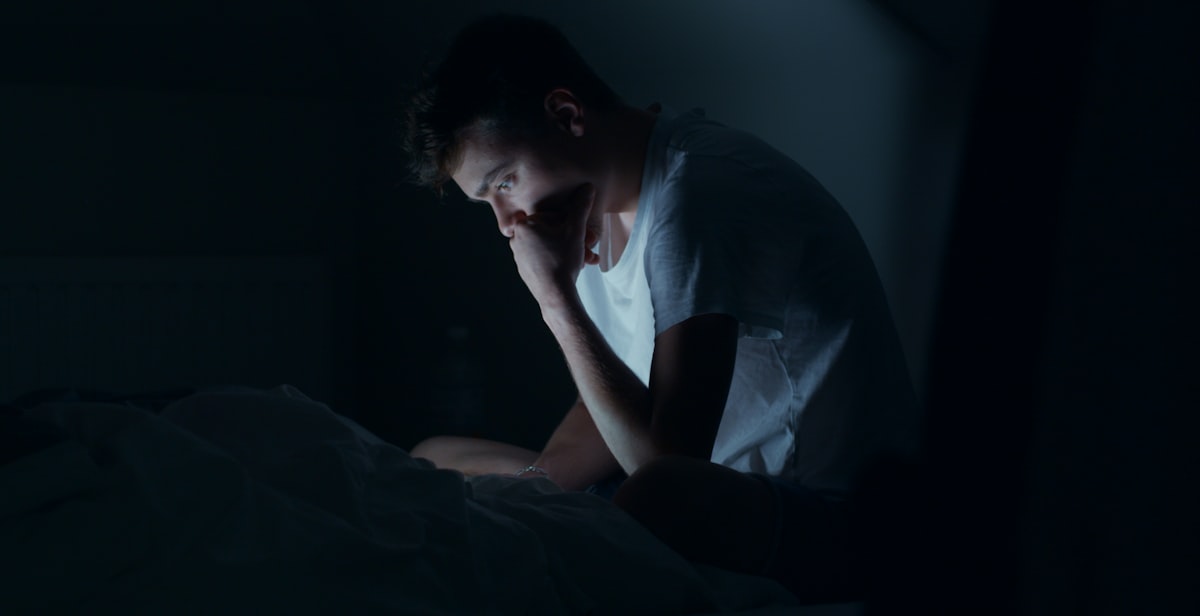
For a decade, my 2:40 a.m. had a full cast of suspects: work, hormones, the heating, the neighbor’s cat. The wine at nine never made the list, because the wine was the thing that put me to sleep in the first place, and you don’t investigate your best employee. Then a two-week experiment put the glass on leave, and the 2:40 appointments stopped attending.
If you wake with a racing heart and a list of everything that might go wrong, and the previous evening had drinks in it, the full chapter lives in the alcohol and sleep guide, and this post takes the dread apart specifically, because it has its own mechanism.
Key takeaways
- A hangxiety night wake-up is chemistry on a timetable: the sedative leaves, the nervous system rebounds, and dread moves in around 2 to 3 a.m.
- Alcohol’s first half of the night is deep and sedated; the second half is fragmented, REM-starved, and restless.
- Morning dread after drinking is mostly manufactured by the broken night itself, not by guilt, though guilt often joins in.
- Fewer, earlier, with food is a legitimate stair-step, and the two-week log experiment turns a suspicion into evidence.
- If the drink is a coping mechanism rather than a habit, that’s a doctor conversation, and it’s a stronger move than any rule.
The nightcap’s small print
The evening glass does deliver, and this post isn’t going to pretend otherwise. Alcohol is a sedative, and sedation arrives with a feeling of deep relief that the body files under sleep. You fall asleep faster, the first hours are heavy and quiet, and from the inside it looks like the drink worked. Nobody checks the paperwork until the middle of the night.
The distinction that explains everything else: sedation and sleep are different products. Sleep is a night shift with phases, deep sleep early and REM later, each doing maintenance the other can’t. Sedation is the switch flipped off, and when the switch comes back on, the shift resumes wherever it was interrupted. “Sedation and sleep feel identical from the inside, they look identical from the doorway, and they are different things.” The morning-after brain knows the difference even when the bedtime one didn’t.
This is why the drink stays on the payroll. Every one of its performance reviews happens at bedtime, when it performs. The reviews that happen at 2:40 never get read, because by then you’re too busy staring at the ceiling to take notes.
The timetable: why it’s always around 2 or 3
The wake-up time isn’t a mystery, and knowing the arithmetic helps, because a predictable event feels less like failure. Your liver clears alcohol at a steady rate, “roughly one drink per hour, steady as a metronome and completely indifferent to your plans.” Two or three glasses at nine means the clearing finishes somewhere between midnight and two, and when the sedative level drops below the line, your body rebounds: lighter sleep, faster pulse, skin warmer than it should be, and a nervous system no longer switched off but not yet calm either.
That rebound is the hangxiety night in one sentence. “First half deep. Second half wrecked.” The deep half is borrowed; the second half is where the loan gets serviced, with fragmented sleep, suppressed REM, and a body running mildly hot. “It isn’t bad luck. It’s a timetable,” and the timetable had never once missed.
The accountants’ version from the book is the one worth keeping: the first half is the loan, the second half the repayment, and the interest is charged in REM. You can skip the chemistry and still use the shape: anything that sedates you to sleep will bill you at two.
Where the dread actually comes from
Now the dread itself, because it deserves a mechanism rather than a moral. Three pieces stack. First, the fragmented second half means your emotional maintenance ran overnight in fragments; REM, which the alcohol pushed late or cut, is part of how the brain files the previous day’s load, and an unfilled night hands you the unfiled version at dawn.
Second, the rebound state itself mimics anxiety from the inside: faster pulse, warmer skin, a sense of something about to happen. Your brain, waking into that body at 3 a.m., does what brains do, which is generate explanations. It audits the bank account, the meeting, the marriage, the text you sent at nine. The content feels specific. The engine was chemical.
Third, sleep loss itself makes the next day’s threat-detection touchier, so the dread doesn’t just arrive at 3 a.m., it lingers into the afternoon in a lower key. The morning-after mind produces anxious conclusions the way a fever produces chills: from a state, not from a fact. If the 3 a.m. thoughts are doing their own damage on non-drinking nights too, why anxiety is worse at night and the 3am anxiety playbook cover the version with no drink attached, and why alcohol wakes you at 3am overlaps this post from the timing side.
The experiment: two weeks, one log
Here’s how you turn this from an article into a verdict for your own life, because the pattern only counts when it’s yours. Run two weeks with no evening alcohol. Change nothing else: same dinner, same routine, same bedtime. Keep a one-line log each morning, wake-ups and how the morning felt, with the previous night’s drinks noted.
Read the log for the shape, not the drama. In the book’s version, a woman named Lisa, two glasses a night for years, saw the pattern in nine days: drinking nights woke her between 2:20 and 3:00 like a commuter catching the same train; dry nights slept through. My own version: the 2:40s vanished inside two weeks and returned on the first celebratory Saturday, which was almost useful, like a control group that buys its own drinks.
The dread is often the first thing to lift, and it lifts before the sleep looks perfect, because the rebound state driving it is gone. “An experiment that clears a suspect is still a good experiment,” even if the suspect turns out innocent. Some people run the two weeks and find their nights don’t change; that’s a real result too, and it moves the investigation to the next dial, why do I wake up at 3am every night.
Honest limits: the stair-step and the line
The part of this post that keeps it honest: the goal here is information, not abstinence, and no rule that wrecks your social life will survive contact with a real one. “Fewer, earlier, with food is a legitimate stair-step.” Same amount at dinner instead of on the couch at nine gives your liver the head start and shrinks the rebound. Sparkling water in the wine glass handles the social side with fewer comments than you fear, usually zero, occasionally one that lasts four seconds. Moving the glass earlier and smaller was my own landing place, and I still drink; for the record.
Two lines I’ll draw without drama. First, the herbs-and-teas corner: the evidence for sleepy herbs is thin, and a tea’s real job is keeping the ceremony while firing the chemistry, which is a fine trade but not a sedative. Second, the bigger one: if the drink is how you make the day bearable, if the thought of the two weeks landed harder than any sleep argument, that’s not a sleep problem and this post isn’t the tool. That’s a conversation with a doctor, and it’s the strong move here, not the weak one. Shame has never helped anyone drink less, so this section doesn’t carry any.
Frequently asked questions
Why do I wake up at 3 a.m. after drinking?
Arithmetic. The liver clears roughly one drink per hour, and a few hours after your last glass the sedative level drops below the line, triggering a rebound: lighter sleep, faster pulse, warmer skin. The 2-to-3 a.m. wake-up is the timetable, not bad luck, which is why it keeps such punctual hours.
Is the next-day dread just guilt about drinking?
Mostly no. The broken second half of the night, the REM debt, and the nervous-system rebound all manufacture anxiety on their own, and a sleep-deprived brain generates threat explanations the way a fever generates chills. Guilt can join the choir, but the chemistry writes most of the music.
Why does anxiety feel stronger the morning after drinking?
Because the night that produces your morning mood ran its emotional maintenance in fragments, and the rebound body state mimics anxiety from the inside. You’re meeting the day on an unfiled brain. The dread usually fades with the state, which is why it lifts first when the drinking changes.
Does drinking earlier or less help?
Both, and together most of all. Finishing by early evening gives the liver the head start, and a smaller amount means a smaller rebound. Fewer, earlier, with food is the legitimate stair-step, and it’s the version most people keep for years, which beats a strict version nobody keeps past February.
How can I test whether alcohol is behind my night dread?
Two weeks, no evening alcohol, everything else unchanged, one log line each morning. Look for the shape: drinking nights versus dry nights. If the wake-ups and the dread lift together, the case is closed in your own handwriting. If nothing changes, that’s a real result, and the investigation moves to the next suspect.
This guide is educational, not medical advice. If drinking feels like a coping mechanism, or sleep trouble persists most nights for months, a doctor is the right door, not a stricter rule.