Waking Up at 3 A.M.
Do Weighted Blankets Reduce Night Wakings
By Nora Vale · April 4, 2026 · 7 min read
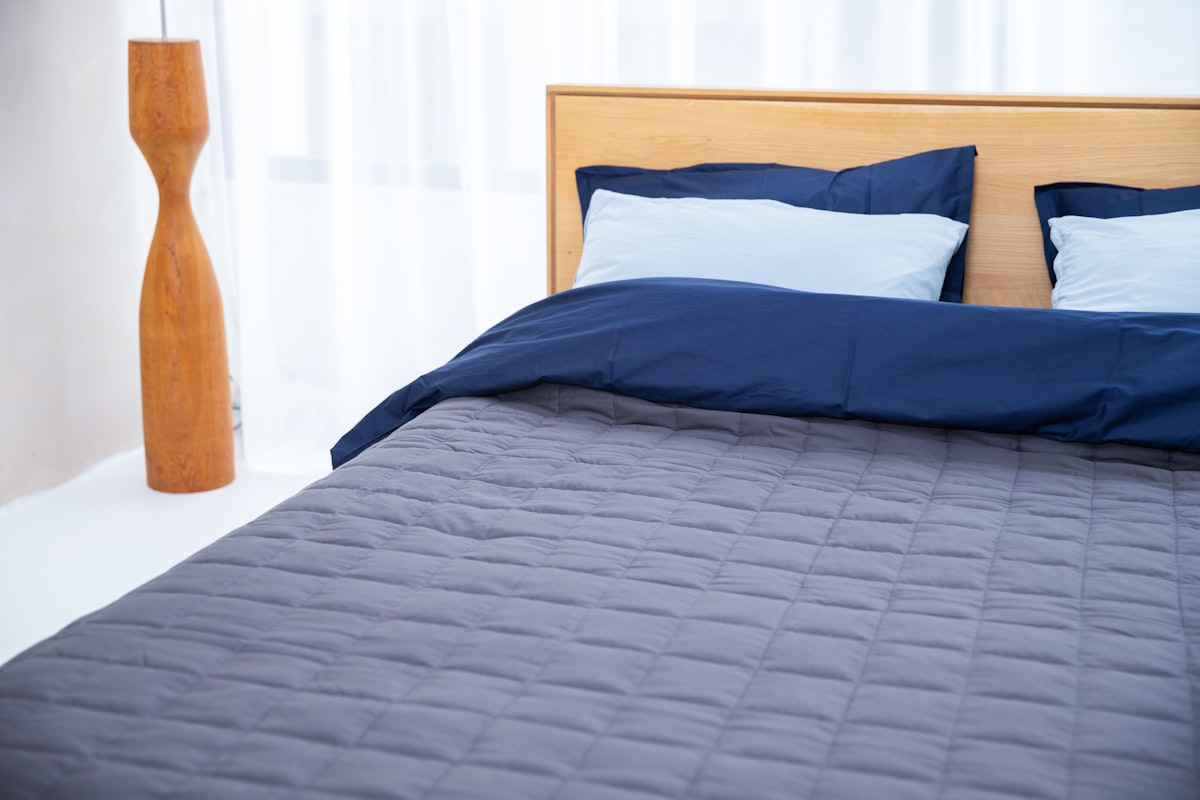
I own a weighted blanket and I’m going to disappoint both camps at once. It’s pleasant and I keep it, and it did not stop my 3 a.m. wake-ups, because nothing that lives on the mattress can fix a problem that lives in the architecture of the night. If you’re researching weighted blanket wakings, the honest answer is that the blanket works on one narrow piece of the problem, does nothing for the causes, and can quietly make things worse through heat. Here’s the full picture before you spend the money.
The mechanics of why you wake at all live in the waking up at 3am guide; this is just the bedding question, taken seriously.
Key takeaways
- Waking at night is standard equipment; several brief surfacings are a feature of the design, not a malfunction the blanket failed to fix.
- 3 a.m. is the shallow end of the pool: deep sleep banked, sleep pressure spent, cortisol climbing. No bedding changes that.
- Deep pressure genuinely calms many people, so the blanket can help the fall-back-asleep half of the night.
- The two real risks are heat and confinement, both of which work against the core temperature drop sleep requires.
- Layer the blanket over lighter bedding so you can shed it at 2 a.m. without properly waking.
Why the wake-up happens, blanket or not
A night is not one long dive. It’s four to six laps of roughly ninety minutes, and deep sleep comes early: the first cycles carry most of it, while REM stretches toward the better part of an hour by morning. Between the laps, you surface, and most of those surfacings last under three minutes and are forgotten by morning.
Now the part that explains 3 a.m. specifically. “With your deep sleep banked and your sleep pressure spent, what remains in the second half of the night is lighter, REM-heavy sleep you can pop out of like a cork. Underneath that, cortisol, the alertness hormone, begins climbing around 2 or 3 a.m. toward its morning peak, so your body is already drifting toward the exit without consulting you. Three in the morning isn’t cursed. It’s the shallow end of the pool.”
That’s why I’m skeptical of any bedding claim about wakings. The blanket sits on a body that is surfacing because of sleep architecture and chemistry. If the waking is normal, the question isn’t how to prevent it, it’s how to keep it small. And that’s where the blanket gets its honest half-credit.
The half-credit: pressure helps the return trip
A surfacing turns into a waking when something attaches to it, and the usual attachments are named: the clock check, the phone grab, and the cortisol wave meeting your anxiety halfway. What a weighted blanket offers is the opposite of an attachment. Deep, even pressure is calming for a great many people, in the same way a firm hug is, and a body that settles faster gives the wake-up less material to work with. If your problem is the twenty minutes of tossing between surfacing and sleep, the blanket plausibly shortens it.
Notice what that claim doesn’t include. It doesn’t include fewer wake-ups. If you’re waking because of alcohol’s rebound, reflux from a late dinner, the heating kicking on before dawn, or a feed on the nightstand, the blanket is a spectator. It also doesn’t include falling asleep faster at eleven, which is a wind-down and light-and-timing problem, not a pressure problem. Where the blanket earns its keep is the return trip, and only for people who find pressure calming in the first place, which not everyone does.
The two ways it backfires
Heat first, because it’s the common one. Your core temperature needs to drop by one to two degrees Fahrenheit to fall asleep, and a warm room blocks the drop. A weighted blanket is, functionally, a warm room you’re wearing. In a cool bedroom with light bedding underneath, that’s fine. In a warm one, or for a hot sleeper, the blanket works directly against the signal that starts the night and deepens it, and you can end up waking at 2 with skin too hot, which the half-asleep brain reads as danger and answers with a full inventory of everything going wrong in your life.
Confinement second. “Layering beats one heavy thing. A duvet and the room temperature are one system, and a heavier duvet widens the range of room temperatures you can sleep through comfortably. Layers let you adjust at 2 a.m. without properly waking. Kick one leg out. That counts as climate control.” The same logic prices the blanket: if you can’t shed it half-asleep, every adjustment becomes a project, and projects wake you properly. Whatever you buy should sit over lighter layers you can kick free one at a time.
The guideline most sellers cite is roughly ten percent of body weight, and I’d treat that as a ceiling rather than a target. The right weight is the heaviest one that still leaves you able to move without negotiation.
What to fix before you buy anything
Since the blanket can only help the return trip, spend attention on what makes the return trip long. The list is short and mostly free.
No clocks: turn the display away, and if the phone is your alarm, rehome it beyond arm’s reach, because time math is fuel. The phone itself is three problems in one rectangle, light, feed, and job, and any of the three stretches a wake-up. Give yourself an estimated fifteen to twenty minutes awake in bed, and if you’re still awake past that, get up and do something dim and boring somewhere else until real sleepiness returns. Hopeful doesn’t count as sleepy. And keep a fixed wake time even after a bad night, because the long lie-in is the move that turns one rough night into a rough week.
If your wake-ups cluster after drinking evenings, that’s a cleaner experiment than any bedding purchase, and why alcohol wakes you at 3am walks through it without a hint of scolding. And if the bed itself has become a place where thinking happens rather than sleeping, the full reset for that association is what is stimulus control.
If you buy one anyway
Buy it warm-weather-skeptical and layer-friendly: a weight at or under the ten percent guideline, a removable cover you can wash, and light bedding underneath so the exit stays available. Try it for two weeks with a simple note each morning of how long the night’s wakings felt, because two weeks is long enough for the novelty to wear off and the honest pattern to show. If your wakings shrink from long to brief, keep it; it’s doing the return-trip job. If nothing changes, you’ve learned the wakings belong to a different thief, and the seven-day log approach in why do I wake up at 3am every night will name it.
And the line worth knowing before any purchase: waking three or more nights a week, struggling to get back to sleep, for three months or more, has a name, sleep-maintenance insomnia, and it responds better to structured treatment than to bedding. That’s a doctor conversation, and it’s a well-studied one.
Frequently asked questions
Do weighted blankets reduce night wakings?
They can shorten the return trip, because deep pressure calms many people. They don’t reduce the wake-ups themselves, which come from sleep architecture, cortisol timing, and named triggers like alcohol, heat, and the clock check. Expect help with the twenty minutes after waking, not with the waking.
Why do I still wake up at 3 a.m. with a weighted blanket?
Because the second half of the night is lighter by design and cortisol is climbing toward its morning peak. The waking is normal biology. What decides whether it sticks is what you do in the following twenty minutes, which is a behavior question, not a bedding one.
Can a weighted blanket make sleep worse?
Yes, through heat and confinement. A warm room blocks the core temperature drop sleep requires, and heavy bedding works against it. If you can’t shed the blanket half-asleep, every 2 a.m. adjustment wakes you properly. Layer light bedding underneath and treat ten percent of body weight as a ceiling.
How heavy should a weighted blanket be?
Around ten percent of body weight is the common guideline, and the real test is whether you can kick it off at 2 a.m. without properly waking. A lighter weight that keeps the exit available beats a heavier one that doesn’t.
If you already own the blanket, tonight’s test is free: light layers under it, clock turned away, phone in the kitchen, and a week of honest notes. The full protocol, worksheets included, is in Sleep, Finally.
This guide is educational, not medical advice. If sleep problems persist for months or wreck your days, see a doctor.