Wind-Down Routines
Do Sleep Masks Help You Wind Down Faster
By Nora Vale · May 26, 2025 · 7 min read
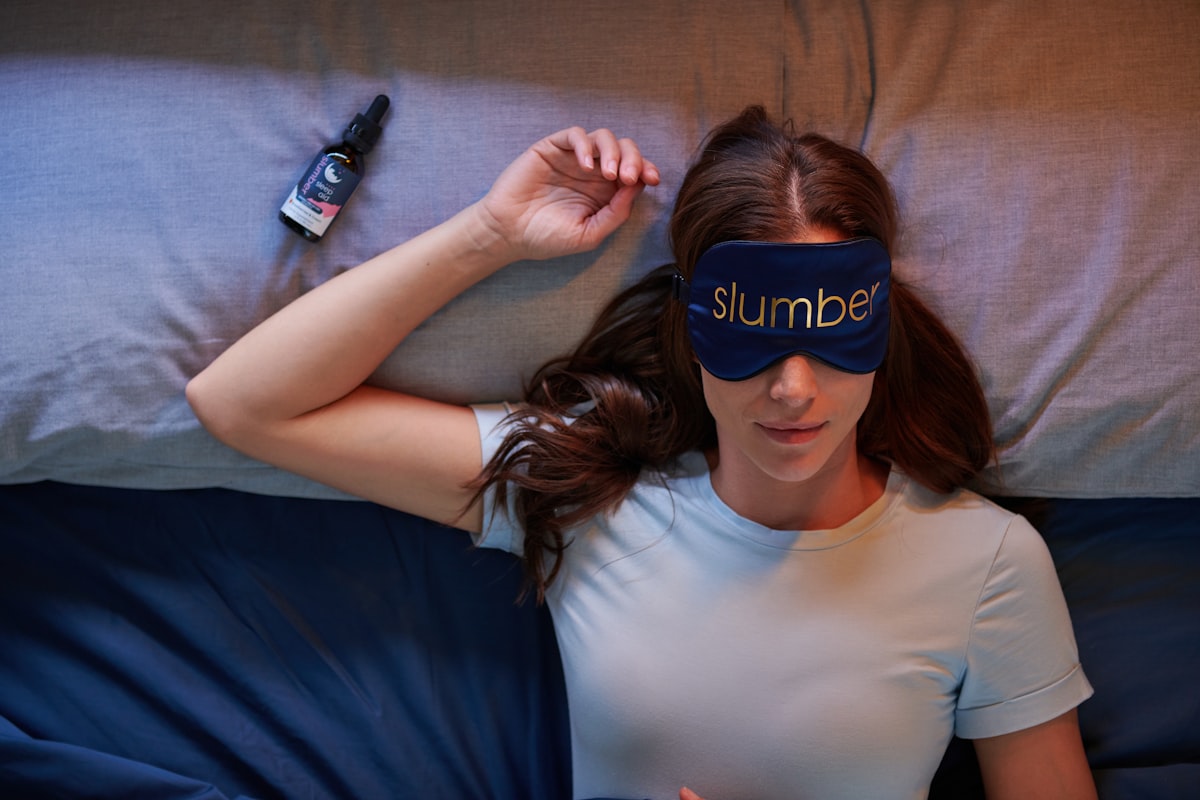
I bought my first sleep mask for a long flight, which is how most people meet them, and then ignored it for years at home because my bedroom looked dark enough. It was not, and the seven glowing dots I finally counted one bad winter told the whole story. So the honest answer to whether a sleep mask helps you wind down faster is: yes, for the part it owns, and no for the part people hope it owns. Here is where that line sits. The routine behind it lives in my wind-down routine guide.
Key takeaways
- A sleep mask fixes light, and light is a real dial: dim conditions are what let melatonin rise in the evening.
- It cannot replace the wind-down routine, because you spend the last hour with your face uncovered.
- Fit beats price: full blackout without eye pressure, a nose seal, a strap that survives side sleeping.
- Travel is where it earns its keep first, thin curtains and hotel rooms second.
- A dark room is necessary, not sufficient. Coffee, wine, and a busy mind have their own chapters.
Why darkness is a sleep signal, not a mood
The case for any sleep mask starts with what your eyes do at night, whether you notice or not. Your retinas keep reporting illumination to the brain long after you stop consciously seeing it, and the brain takes every report at face value, because for most of human history a lit environment meant daytime. Daytime is not for sleeping. “In sleep labs, melatonin, the darkness signal that eases a person toward sleep, starts rising about two hours before their usual bedtime, but only in dim light, because bright light in that window holds the hormone down and quietly shoves the body clock later.”
That sentence is the entire argument for the mask, and also its border. The hormone rises in dim light, so anything you do to dim the last two hours, including covering your eyes, works with the system. But notice what the mask cannot reach: the two hours before you put it on. If your wind-down hour runs at full overhead brightness, the melatonin rise gets pushed back while you read under the ceiling light, and the mask you strap on at eleven arrives too late to fix it.
What the mask does in the wind-down hour
Here is the honest placement. The last hour of the evening has three slots: a body slot, a mind slot, and a room slot. The mask belongs to the room slot, and only at the end of it. During the shower, the stretching, the twenty pages under a lamp, your face is bare, because you are doing things. What the wind-down needs from you in that hour is dimness around you, which means lamps instead of overheads, the kitchen low, the hallway dark.
Then, when the book closes and the lights go out, the mask takes over the part of the night your room cannot guarantee. Streetlight through thin curtains, a partner reading with a headlamp, a glowing smoke detector. “A wind-down is a buffer. It’s thirty to sixty minutes between the last useful thing you do all day and the first minute you genuinely try to sleep, and it runs in the same rough order most nights.” The mask is the last runner in that relay, not the whole team.
I think of mine as the patch, not the fix. The fix is the dimmed house at nine. The patch is what keeps it dark after midnight when the streetlight has opinions.
Picking one: what actually matters
The gear talk can stay short, because the useful version of this purchase is boring and cheap. What you are buying is complete darkness without pressure on your eyeballs, and three things deliver it. First, coverage that actually seals, especially around the nose, where every cheap flat mask leaks. Contoured masks with cutouts for your eyes block light without pressing on the lids, which matters if blinking under fabric drives you crazy. Second, fabric that breathes, because a sweaty band across your forehead at 2 a.m. is its own wake-up. Third, a strap that survives your actual sleep position, since side sleepers shred elastic masks in a month.
Beyond that, price buys branding more than darkness. The book’s rule about the room applies here: “The useful version of a bedroom is boring and cheap, the same way the wind-down in chapter 1 was boring and cheap, and for the same reason: biology doesn’t care what looks good; it cares what’s true.” A biology that only cares about photons cannot tell a fifteen-dollar mask from a seventy-dollar one. If light still leaks in around the edges, no silk lining will save it.
One warning from experience: wear it around the house for an evening first. A mask that is fine for ten minutes can be intolerable at hour three, and discovering that at a hotel is worse than discovering it on the couch.
Where the mask earns its keep
Travel is the obvious win. A mask works on planes, in hotel rooms with curtain gaps, in guest rooms where you cannot unplug the glowing clock or tape the television’s standby eye. Anyone who sleeps away from home a few nights a month should own one, and there is a whole kit philosophy behind that, which how to make a hotel room sleep-friendly covers in full.
At home, the honest question is why the room needs a mask at all. Sometimes the answer is fair: a rental with unfixable streetlight, a shift-working partner whose schedule runs opposite to yours, a nursery you share. Other times the mask becomes a way to avoid the ten-minute fix the room actually wants, which is tape over the router, a folded towel over the window seam, lamps after dinner. If streetlight is the culprit, a mask is a legitimate answer, and blackout bedroom for day sleep covers the heavier version of the same problem. Run both, and see what your log says over a week.
If the middle of the night is where your light leaks hurt most, waking at 3 with the streetlight in your eyes, why do I wake up at 3am every night explains what the shallow half of the night does to a surfacing.
What a mask can’t do
The limits, plainly. A sleep mask does not sedate. Darkness removes one obstacle; it does not add any sleep drive. If the 3 p.m. coffee is still on board, if the wine has an invoice coming, if your mind is running tomorrow’s schedule on the ceiling, the mask will simply make all of that happen in perfect blackness. “None of it looked like a problem. It looked like a normal bedroom, which is exactly why it took me another year of lying awake to connect those pinpricks to the fact that my brain never quite slid under.” A mask on top of an unrestored room is the same risk in miniature: one dial turned while three others argue.
And there is the point I keep coming back to, because the marketing will not tell you: the mask covers your eyes, not your evening. The hour that decides the night is the one you spend upright, and no fabric touches it. “You’re not a bad sleeper. You’re missing the three books.” The wind-down is the practice, the mask is the equipment, and equipment without practice loses.
The verdict, then: buy one, wear it every night and every flight, and let it do the one job it is good at, the last stretch and the small hours. “you can’t switch a brain off like a lamp, but you can walk it down, and the walk can be short, dull, and repeated.” The mask holds the darkness at the end of the walk. It was never going to walk for you. The full evening system behind this post is in Sleep, Finally.
Frequently asked questions
Do sleep masks help you wind down faster?
They help with the dark part, which is real but partial. A mask removes the light your retinas keep reporting, and dim conditions are what let melatonin rise in the evening. What a mask cannot do is replace the wind-down itself: the dimmed house, the slow physical move, the quiet hour that walks the brain down.
Is a sleep mask a substitute for a dark bedroom?
No. It is the portable version and the patch version. At home, the whole room needs to get dark, because you spend the last hour before bed outside the mask, in the shower, reading, brushing teeth. The mask covers the last stretch and the hours after, not the wind-down.
What kind of sleep mask works best?
One that blocks light completely without pressing on your eyes, with a contoured cut or a soft nose seal, breathable fabric, and a strap that survives your sleep position. Fit matters more than price. If light leaks in around the nose, you will notice at midnight.
When does a sleep mask earn its place?
Travel first: planes, hotels, thin curtains, bright alarm clocks you cannot unplug. Second, bedrooms where darkness is out of your control, like a shared room with a reading partner. A mask costs less than most people’s monthly snack budget and works on business trips forever.
This guide is educational, not medical advice. If sleep trouble persists most nights for three months or more, that pattern has a name and a treatment, and a doctor is the right door.