Caffeine & Sleep
Coffee Served at Lunch: The Restaurant Refill Trap
By Nora Vale · May 5, 2025 · 7 min read
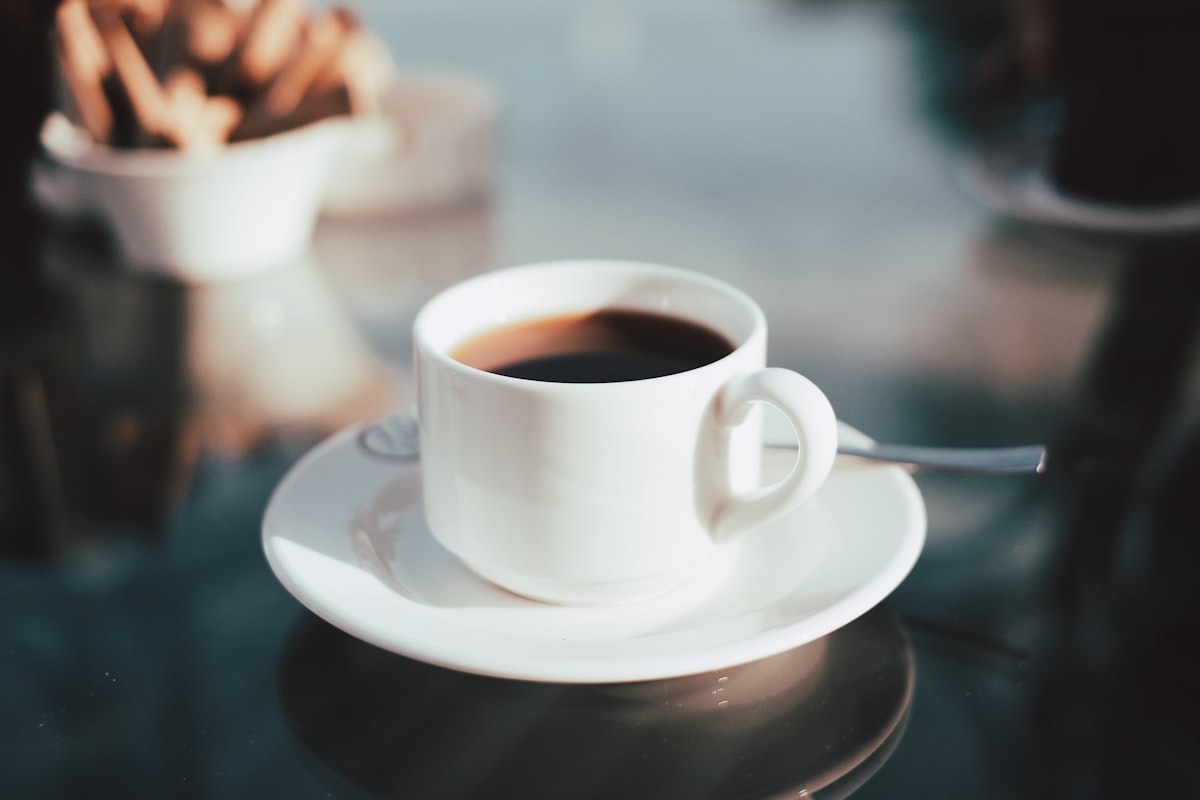
The most expensive coffee I never paid for was the free refill. A long dinner, a diner pot that kept arriving unbidden, a friend who ordered “one more for the road” at 9:40, and a night that ended with me at 2 a.m. composing arguments for people who weren’t there. Nobody at that table thought of the refills as a decision. That’s what makes the restaurant refill trap so effective: it doesn’t ask for your consent, it asks for your company.
Here’s the anatomy of the trap and the rule that dissolves it, with the underlying half-life machinery in my guide to caffeine and sleep.
Key takeaways
- Restaurant coffee arrives by default at the wrong hour, with dessert, four to six hours past the cutoff most bedtimes need.
- Free refills compound quietly: two or three pours of a bottomless cup can total 300 or more milligrams after dark.
- The damage shows up as 2 a.m. surfacing, not as trouble falling asleep, which is how the cup keeps its alibi.
- Decaf is the after-dinner order that keeps the ritual and skips the dose.
- The math is the math: your bedtime coffee is being served at lunch.
The hour is the trap
Start with the timing arithmetic, because the cup itself is innocent. Caffeine’s half-life runs five to six hours for a typical adult, and the guideline is no caffeine within eight hours of bedtime, ten or more if sleep is already poor. Restaurant coffee arrives with dessert, call it 8:30 at a leisurely dinner. Against an 11 p.m. bedtime, that’s a dose landing five hours past the line, running at better than half strength through the hours when your sleep is supposed to be at its deepest.
And the half-life doesn’t care that the meal was lovely or that you fell asleep without trouble, because falling asleep fast isn’t the test. Staying down in deep, unbroken sleep is the test, and caffeine lightens and fragments the night even when sleep onset is easy. The cost surfaces at 2 a.m. and again at 6:40, when the alarm finds you pre-exhausted, and nobody at the table connects the dessert coffee to the ceiling they stared at, because the connection requires math that nobody does between the entrée and the check.
There’s a social physics to it, too. The refill arrives because someone poured it, the host ordered a round, the waiter topped the cup without asking, and each pour is small enough to wave through. The book’s line for this pattern is exact: the cutoff doesn’t count sources, it counts milligrams, and the refills are just milligrams wearing hospitality.
The compounding of free refills
Bottomless cups are the mechanism the trap runs on, because each individual pour looks negligible. A diner cup runs 100 to 200 milligrams, and a leisurely two-hour dinner with a pot on the table can deliver two or three of them, quietly stacking 300 or more milligrams at the worst hours of the day. Nobody would order three espressos at 9 p.m. The same total arrives, unpaid and unannounced, in a brown pot nobody ordered.
The pattern has cousins everywhere caffeine is served as ambience. The after-dinner espresso “to be civilized.” The café’s bottomless brunch cup stretching from 11 to 1:30. The conference coffee station that never closes. Each format sells the same product, a socially invisible dose at a socially awkward hour, and each survives on the same alibi: the evening cup was small, and sleep came anyway.
That alibi is worth testing, because the sleep that came was probably thinner than the sleep you thought you bought. Deep sleep is when the brain clears the day’s adenosine backlog, and a caffeinated night spends hours in the shallow end without clearing much of it, so you wake with the bill mostly unpaid and reach for the morning cup before you’re out of bed. The loan rolls over, and the restaurant is where the paperwork gets signed.
The lunch rule that ends the trap
The fix is almost insultingly simple, and it’s the quiet payoff of the whole chapter: work backward from your bedtime, set the line, and order accordingly. The coffee your body will still be carrying at midnight turns out to be the one ordered in the early afternoon, every time, no exceptions granted for how harmless it felt going down. It never looks that way from inside the cup, warm and right on time. The math is the math. Your bedtime coffee is being served at lunch.
At restaurants, that translates into two orders. Before the cutoff, order whatever you like, refills included, because morning and lunch cups behave. After the line, order decaf, which carries only 2 to 15 milligrams per cup and preserves everything the ritual is actually for: the warm object, the pause, the civilized end of a meal. Half the habit lives in the holding of a warm cup, and decaf keeps that half without touching your midnight.
And there’s a bonus nobody markets: the lunch coffee is better company. It arrives when you’re alert enough to taste it, it does its work during hours when you’re using your brain, and it doesn’t follow you home. The dinner cup, by contrast, spends the whole night being present without contributing.
The honest limits
First limit, the personal range is real. Half-life runs from two to twelve hours depending on the person, so your dinner companion may genuinely clear the 9 p.m. cup before midnight while you don’t, and two weeks of your own log is the only referee with standing.
Second limit, the restaurant isn’t the only stage for this pattern, and home versions, the decaf-with-chocolate evening, the tea beside the book, can stack 50 to 100 milligrams after the line without a single cup of real coffee. The audit that catches your own ordinary Tuesday is what makes any of this stick.
Third limit, the medical note: pregnancy roughly doubles caffeine’s half-life, and heart conditions, anxiety, and relevant medications all change the calculation. Those conversations belong with a doctor, and the waiter’s suggestion doesn’t override them.
Frequently asked questions
Why is restaurant coffee a sleep problem?
Timing. It arrives with dessert, four to six hours past the eight-hour cutoff most bedtimes need, and the half-life keeps it working through the deepest hours of your night, lightening sleep even when falling asleep was easy.
How much caffeine do free refills add?
A bottomless cup runs 100 to 200 milligrams per pour, and two or three refills across a long dinner can quietly total 300 or more after dark, all on tonight’s tab whether anyone ordered it or not.
Is decaf at a restaurant actually decaf?
It carries 2 to 15 milligrams per cup, small enough to keep the ritual without meaningfully touching midnight. For most people it’s the after-dinner order that ends the problem while keeping the ceremony.
What about coffee at lunch instead?
That’s the whole fix. The dose your body carries at midnight is the one ordered in the early afternoon, every time, so the lunch slot is where the real cup belongs and the evening slot is where decaf lives.
How far from bedtime should the restaurant cup be?
Eight hours before bed, ten or more if sleep is already thin. For a 10:30 bedtime, that’s 2:30 in the afternoon, which is why late dinners turn every real coffee into tomorrow’s problem.
The self-test for your own line is in how late is too late for coffee, the decaf fine print in how much caffeine is left in decaf, and the iced version of the same trap in iced coffee at night, same problem. The full chapter is in Sleep, Finally.
This guide is educational, not medical advice. If sleep problems persist most nights for three months or more, a doctor is the right door.
Set the line before you’re seated, order decaf with dessert, and let the refill pot visit someone whose bedtime is farther away. The bill was always coming. This way it comes at lunch, where you can actually pay it.