Caffeine & Sleep
Caffeine Half-Life Explained: Why 6 PM Coffee Lingers
By Nora Vale · December 2, 2025 · 7 min read
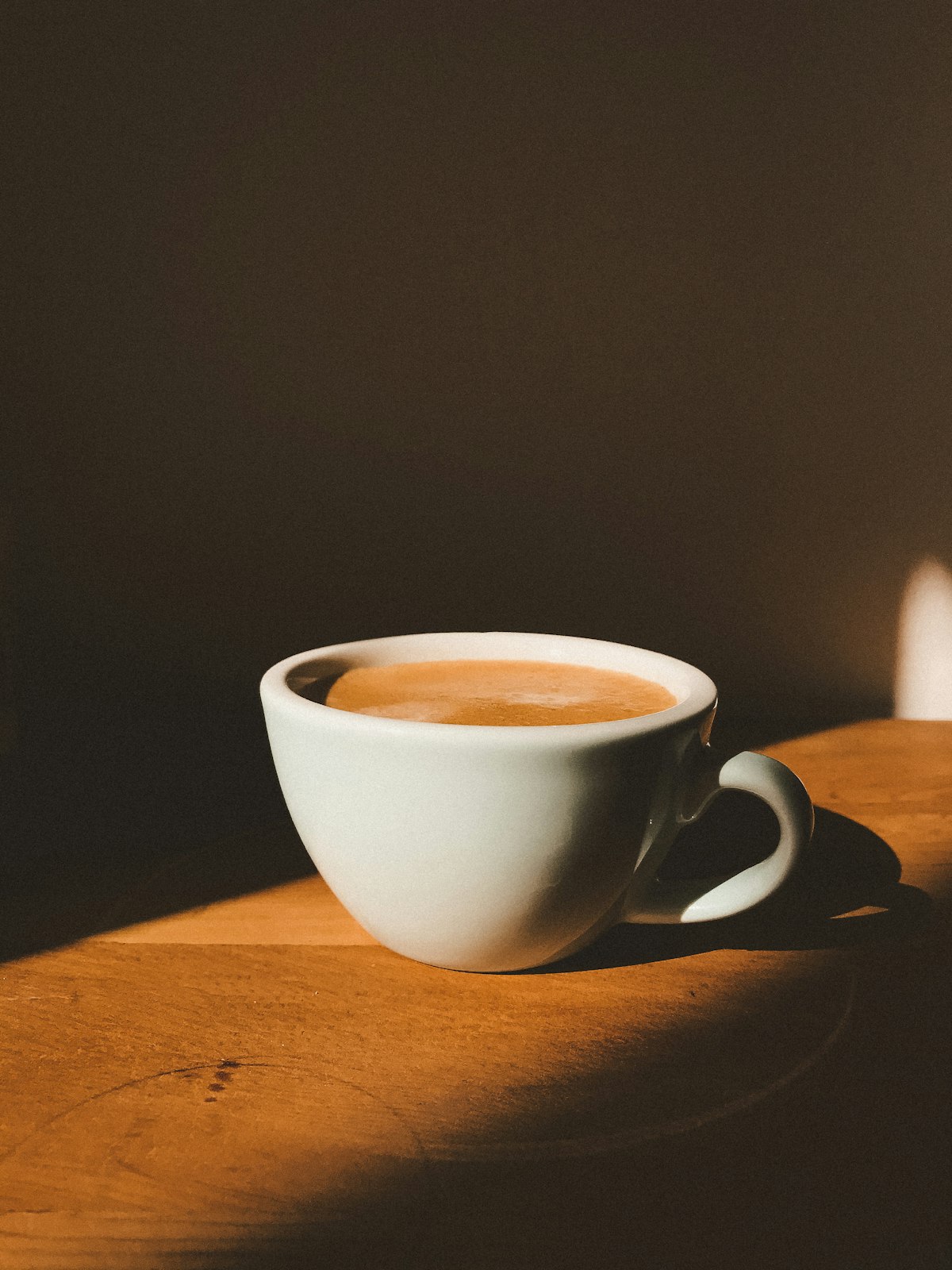
I drink coffee every day, and I’d rather tell you that first than let you read this as a sermon from someone holding a celery stick. The thing I had to learn the hard way is on the label, sort of: caffeine has a half-life, and the half-life sets the price of the afternoon cup. This post is that number, what it does to a 6 p.m. coffee, and how to find the hour when your last cup should land. The full timing system is in the caffeine and sleep guide.
Key takeaways
- Caffeine’s half-life is about five to six hours for a typical adult, with an honest range of two to twelve.
- A 4 p.m. coffee leaves half on board at 9 or 10 p.m. and a quarter still circulating at 2 a.m.
- Caffeine doesn’t erase sleepiness; it blocks the receptors, hides the receipt, and the bill comes due downstream.
- Falling asleep fast isn’t the test. Staying down in deep, unbroken sleep is, and the afternoon cup fails it quietly.
- Your cutoff is bedtime minus eight hours, ten if sleep is already thin, tested for two honest weeks.
The receipt, not the gift
Here’s the mechanism in plain words, because the half-life makes no sense without it. From the moment you wake up, your brain produces a chemical called adenosine, and it accumulates hour by hour the entire time you’re awake, which is why you start the day clear and end it heavy. Adenosine is the sleepiness bill. The longer the day runs, the bigger it gets.
Caffeine doesn’t shrink the bill. It blocks the receptors adenosine is trying to use, so the chemical keeps piling up in the background while the doorways it needs are occupied, and you experience the whole arrangement as alertness. The bill hasn’t been paid. It’s been slid under a coaster. So when people say caffeine gives them energy, I’d put it differently: caffeine doesn’t give energy, it hides the receipt. That’s why the afternoon crash so often lands a few hours after the cup and feels like betrayal. It isn’t betrayal. It’s the paperwork clearing.
The crash has a second act. Late in the afternoon the blocker loses its grip, all that banked adenosine comes due at once, and the reply most people reach for is another cup, which pushes the whole cycle three hours deeper into the evening. The debt keeps moving downstream, and downstream is always night.
And here’s the piece that keeps the problem alive for years. Caffeine can lighten and fragment your sleep even on the nights you fall asleep without any trouble at all, so the person lying awake at 2 a.m. never once suspects the 3 p.m. espresso. Falling asleep fast isn’t the test. Staying down in deep, unbroken sleep is the test, and it’s the one the afternoon cup keeps failing.
The half-life math, run on a 6 p.m. coffee
Half-life is the number that turns theory into a schedule, and for a typical adult it runs about five to six hours, meaning that’s how long your blood takes to clear half of whatever caffeine it’s holding. The Sleep Foundation notes the honest range is wide, anywhere from two to twelve hours depending on the person. Start with the average, though. It’s ugly enough.
Run the clock on a two-hundred-milligram coffee, the ordinary kind from any counter. Ordered at 4 p.m., half of it, a hundred milligrams, is still on board by 9 or 10 while you wind down, and a quarter still circulates at 2 a.m., which is a respectable cup of tea arriving at the hours your sleep should be at its deepest. Shift the order to 6 p.m. and the math slides right past midnight: half a cup still on board when the alarm is five hours away, a full quarter of it waiting for the shallow end of the night.
A 3 p.m. coffee still has a quarter of itself in your blood at an eleven o’clock bedtime, an early afternoon cup is nearly finished by then, and the morning cups are long gone, which is exactly how the morning habit earned its good reputation. Early coffee behaves. Late coffee loiters. The Sleep Foundation’s guideline follows straight from that math: no caffeine within eight hours of bedtime, ten or more for anyone whose sleep is already poor, which puts the cutoff for a ten o’clock bedtime at around two in the afternoon.
Alex and the latte with an alibi
Alex is a tax manager, which means his year has a stress season the way orchards have a harvest, and every afternoon around four he orders a latte and calls it survival. He’s half right. February through April genuinely is brutal. But the latte shows up at 4 p.m. in May too, and he’d tell you sincerely that caffeine has never once interfered with his sleep, because the man is unconscious within minutes of his head hitting the pillow at 11:30.
What he never saw was the shape of his nights. He’d drop off fast, surface at 2 or 3, roll over, and wake up feeling like he’d slept in a trench, and for three years he blamed the stress season, including the seven months of the year with no stress season anywhere in sight. The latte had a perfect alibi. The alibi was him.
He even ran an experiment once, the informal kind: he skipped the latte one frazzled Friday and slept badly anyway, so case closed, coffee was innocent. What that Friday never controlled for was the week it sat inside, the wine with dinner, the way the Thursday latte was still paying out when he lay down. One data point, badly kept, and the suspect walks free for years.
The fix, when his wife finally dared him into it, was to move the latte to 12:30, right after his lunch walk, and keep the order otherwise identical. The first week gave him nothing, and he took it as vindication. The second week the 2 a.m. surfacing stopped, the sandpaper mornings thinned out, and he reported back with the wounded tone of a man who has just learned the workload was innocent all along. His text was four words long. It was the latte.
Finding your own number
Your cutoff is a personal number, and you can find it with one boring experiment. Bedtime minus eight hours is the starting line, ten hours if your sleep is already threadbare, and you hold that line every single day for two weeks while keeping the rest of the routine as steady as you can manage. If lights go out at 10:30, the last cup goes in before 2:30. That’s the whole design. One move, held still.
The first few days carry a tax, and you deserve fair warning. Withdrawal is real and catalogued: a headache, some fatigue, a mood like wet cardboard, typically starting twelve to twenty-four hours after the last dose and lasting somewhere between two and nine days. Taper the last few days instead of going cold, shrinking the afternoon cup by half on Tuesday and by half again on Wednesday, and the headache often shrinks right along with the dose. Swap the ritual rather than deleting it: a decaf, which carries only a 2 to 15 milligram remainder, fills the cup and the ten-minute break without meaningfully touching your midnight.
Two habits make the experiment honest. Write down the time of your last caffeine every day, because memory will fudge that number by an hour in coffee’s favor, and change nothing else for the two weeks, or you’ll never know which lever did the work. Then there’s the honest flaw: half-life is an average, and your liver isn’t. The liver enzyme that clears caffeine, called CYP1A2, runs fast in some people and slow in others, pregnancy roughly doubles the half-life, and smoking roughly halves it, so two colleagues splitting a 3 p.m. pot can be having completely different nights. Genetic tests for the enzyme exist. You don’t need one. Two weeks of your own data will tell you the same thing for free. And if two honest weeks move nothing, the experiment still paid you: sometimes the verdict reads not your thief, and your effort belongs to alcohol, light, or the room instead. For the sources that lie to you, the ones that aren’t coffee, hidden sources of caffeine runs the audit, and how long before bed you should stop drinking coffee holds the guideline up to the clock.
Frequently asked questions
What is caffeine’s half-life?
About five to six hours for a typical adult, meaning that’s how long your blood takes to clear half of whatever caffeine it’s holding. The Sleep Foundation notes the honest range is wide, anywhere from two to twelve hours depending on the person, which is why your coworker’s 4 p.m. espresso and yours can be different animals.
How much of a 6 p.m. coffee is still in me at midnight?
Run the math on a 200 milligram cup: half is still on board at 11 or midnight, and a quarter still circulates past 3 a.m. The half-life doesn’t care that you fell asleep fine, because the fragmenting happens in the shallow hours where nobody’s watching.
Why do I fall asleep fine after afternoon coffee but wake at 3 a.m.?
Because caffeine can lighten and fragment your sleep even on the nights you fall asleep without any trouble at all. Falling asleep fast isn’t the test. Staying down in deep, unbroken sleep is the test, and the afternoon cup keeps failing it quietly, without ever announcing itself at 11:15.
Does the half-life vary between people?
Yes. The liver enzyme that clears caffeine runs fast in some people and slow in others, pregnancy roughly doubles the half-life, and smoking roughly halves it. Two colleagues splitting a 3 p.m. pot can be having completely different nights while each swears the other is exaggerating.
How do I find my own caffeine cutoff?
Bedtime minus eight hours is the starting line, ten if your sleep is already poor, held every day for two weeks while changing nothing else. Write down the time of your last caffeine daily, taper the last few days, and if two honest weeks move nothing, the verdict may read not your thief.
The math is the math. Your bedtime coffee is being served at lunch. The full chapter is in Sleep, Finally.
This guide is educational, not medical advice. If sleep problems persist three months or more despite honest timing changes, a doctor is the right door.