Bedroom & Sleep Environment
Are Sleep Masks Better Than Blackout Curtains
By Nora Vale · September 1, 2025 · 6 min read
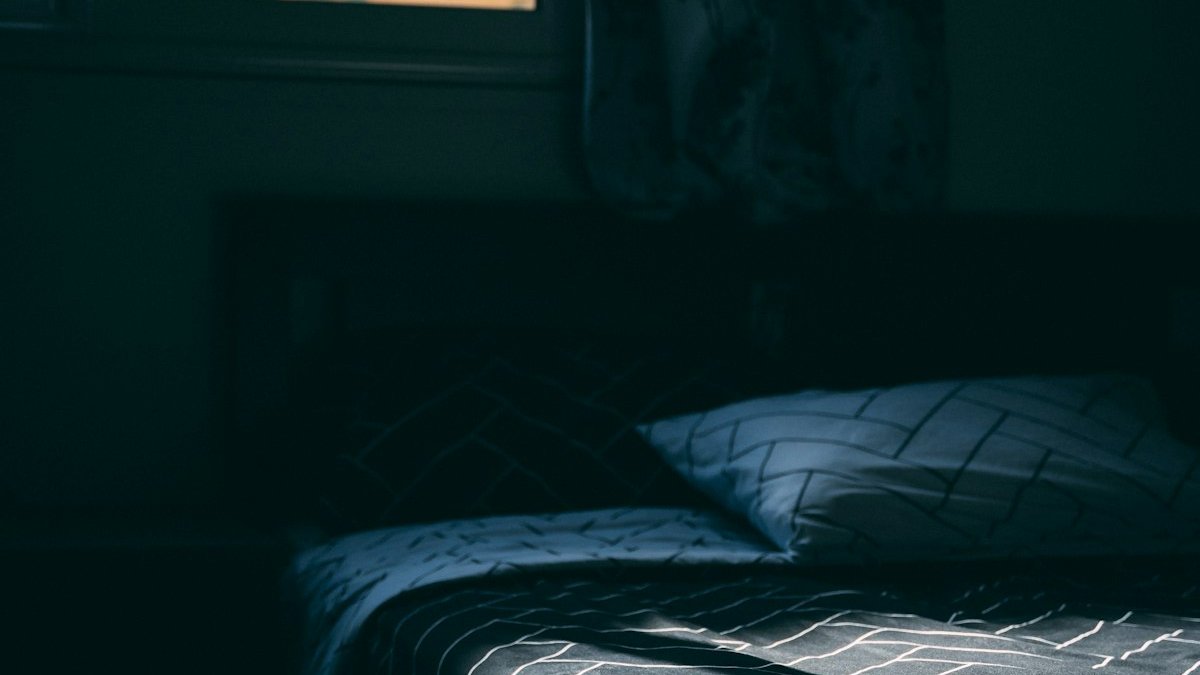
My bedroom was never dark. I didn’t know this for about a year, because eyes adapt and standards slide, and a streetlight through slatted blinds starts to look like a neutral fact of the room rather than the reason my brain never quite slid under. The fix came from both directions eventually: curtains in the winter, a mask in a hotel in April. So I have opinions on the sleep mask vs blackout curtains question, and they’re not the ones the affiliate posts hold.
The frame matters more than the products. Your bedroom is either working with your biology or quietly working against it, and darkness is the first dial, covered properly in the bedroom sleep environment guide. The comparison here is really about which tool fits which life.
Key takeaways
- Both tools win at their job: a good mask darkens your eyes, curtains darken the room.
- Curtains win on consistency; they work before you’re conscious enough to put anything on.
- Masks win on price, travel, rentals, and shared rooms where nobody else wants the cave.
- Light leaks around curtain edges matter more than fabric quality; a gap defeats the whole curtain.
- The raised-hand test tells you which one your room actually needs.
What the mask does well
A contoured sleep mask blocks light at the retina, and the retina is where the signal matters. If the mask fits well, it delivers cave-dark to your brain regardless of what the room looks like, for somewhere between ten and thirty dollars. For travelers it’s the obvious MVP, and a sleep mask costs less than most people’s monthly snack budget and works on business trips forever. Renters love it because it requires no hardware and no conversation with a landlord. Partners of light-sleepers love it because the other person can keep reading with the lamp on.
The honest downsides are real, though. Masks press on eyes, slide off in the night, and get flung across the room by people who sleep with their arms up. Some people find that anything on the face becomes the thing they think about, which is its own insomnia. And the mask has one structural gap: it only works once you’ve put it on. If you fall asleep on the couch and stumble to bed at midnight, the mask is wherever you left it, and the streetlight was working the whole time.
What curtains do that masks can’t
Curtains darken the room, not just the eyes, and that difference is bigger than it sounds. A streetlight leaking through slatted blinds hits your retinas all night whether or not you register it, and your brain takes the report at face value. The room-level fix also handles the 3 a.m. scenario: you wake, move, open an eye, and the room stays dark, so the brain doesn’t get a sunrise signal at 3:14.
The catch is that curtain quality is mostly a story about edges. The cheap fix is what renters have always done: a dark blanket or a piece of blackout fabric pinned over the frame, or foil pressed flat against the glass, ugly and completely effective. The middle fix is a blackout liner hung behind whatever curtains you already own. The proper fix is true blackout curtains on a wraparound rod, so light can’t sneak around the edges. I used the foil version for two years. Nobody saw it but me.
That’s the part most buying guides skip: a two-hundred-dollar curtain with a one-inch gap loses to a foil sheet pressed flat. The gap is the product.
The test that settles it for your room
Before buying anything, run the raised-hand test. Stand in your bedroom with the lights off at your usual bedtime, wait five minutes for your eyes to adapt, then raise your hand in front of your face. If you can see it clearly, the room is too bright, whatever your eyes are telling you, and the darkness lever needs pulling. The standard version: your goal is a room dark enough that you can’t find your slippers.
If the hand test fails on a bright moonlit night, curtains are the answer, because the light is arriving from a fixed source with a fixed path. If it fails only in hotels, guest rooms, or summer mornings, the mask is probably enough. If it fails because of a partner’s kindle, the mask wins by a mile, and there’s a whole post on why even small lights can disrupt your sleep for the LED-covered version of this problem. For the rental-friendly curtain fixes themselves, DIY blackout hacks for renters has the tape-and-foil detail.
The answer, for most people
If you pushed me for one answer: curtains for the home bedroom, because consistency is the whole game and the room-level fix doesn’t depend on remembering anything. A mask for travel, day-sleeping, and shared rooms, which is a different problem wearing the same name. And both, if your window faces a streetlight and your partner reads late, because they’re solving different leaks.
One honest limit to keep this from sounding like a gear review: darkness is necessary but not sufficient. A perfectly dark room with a warm thermostat and a 3 p.m. cold brew still loses. Blackout is the cheapest and most boring win in the sleep catalog, and it’s one dial of four. The other three dials, temperature, the bed, and noise, all take their turn, and the curtain is just the first and cheapest.
There’s also a timing note worth naming. Fixing the darkness feels like nothing on night one, the same way every change in this book feels like nothing on night one. What you’re doing is removing a signal that’s been arguing with your body all night, quietly, for years. The win isn’t a dramatic morning. It’s the slow disappearance of a fight you didn’t know you were in. Give it two weeks before you judge it.
Frequently asked questions
Is a sleep mask as good as blackout curtains?
For darkness at the eye, yes, a good mask blocks as much light as curtains. The differences are comfort, consistency, and whether light reaches the rest of the room if you get up. Curtains win for most bedrooms; masks win for travel and shared rooms.
Do sleep masks have any downsides?
A few. They can press on your eyes or slip off in the night, and they only work once you’ve put them on. They also don’t stop the room from being bright if you wake and move around.
What kind of blackout curtains actually work?
True blackout curtains on a wraparound rod, so light can’t sneak around the edges. A blackout liner behind existing curtains is the middle fix. The edges matter more than the fabric, because a one-inch strip of streetlight hits your retinas all night.
Which should I buy first?
The mask, if you need an answer tonight and travel often. The curtains, if light leaks around your windows most nights. Run the raised-hand test first: lights off, five minutes, raise your hand. If you can see it clearly, you need one of the two.
Run the test tonight. It costs five minutes and tells you which lever your room actually needs, and the full room audit, temperature and noise included, is in Sleep, Finally.
This guide is educational, not medical advice. If sleep problems persist for months or wreck your days, see a doctor.