Caffeine & Sleep
Alex and Stress Season: A Caffeine Story
By Nora Vale · May 6, 2025 · 7 min read
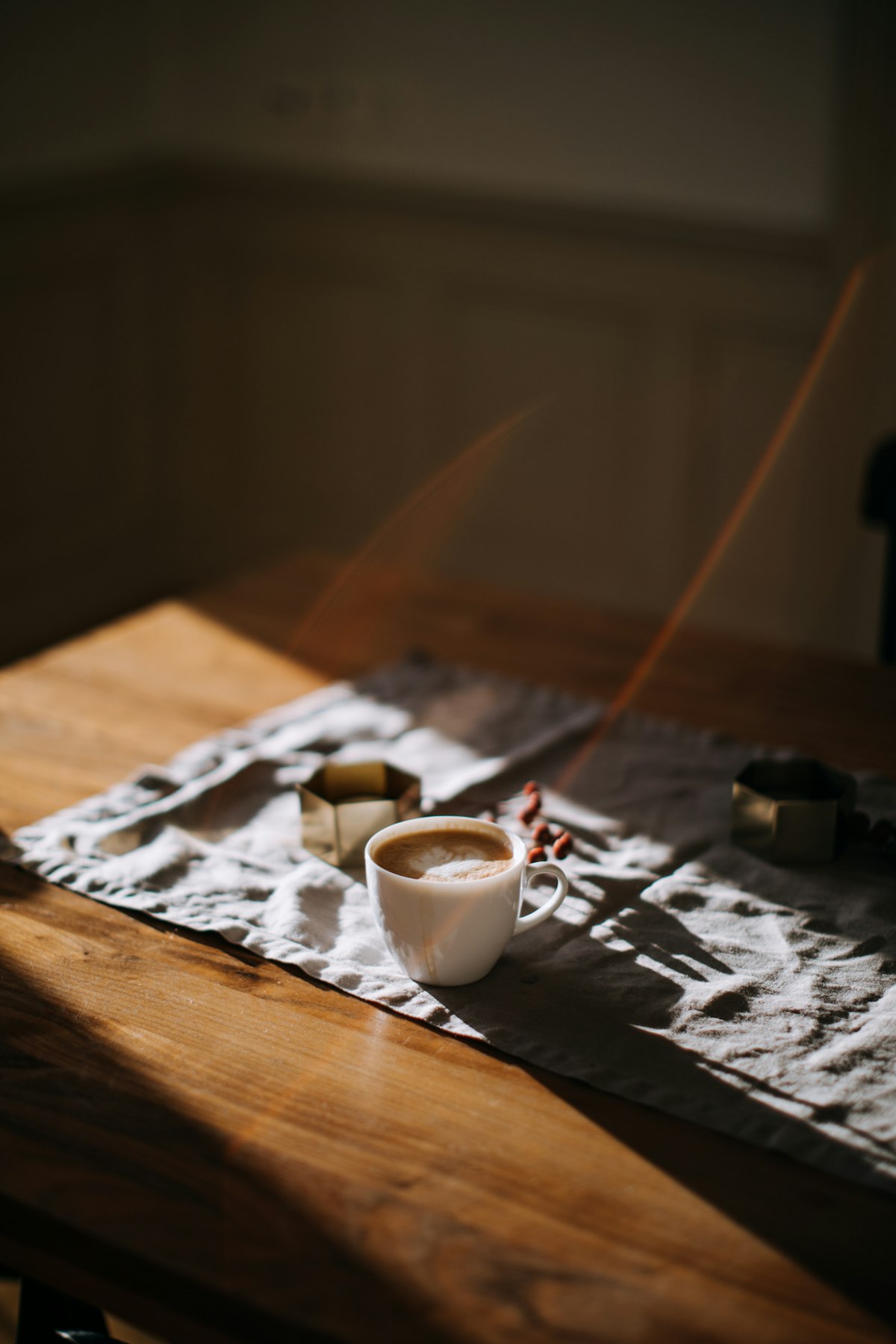
Alex’s latte had a perfect alibi, and the alibi was him. He’s a tax manager, which means his year has a stress season the way orchards have a harvest, every afternoon around four he ordered a large latte and called it survival, an extra shot in the bad weeks, empty cup back on the desk inside ten minutes. February through April genuinely is brutal. The latte shows up at 4 p.m. in May too, and September, and he’d have told you sincerely that caffeine had never once interfered with his sleep, because the man was unconscious within minutes of his head hitting the pillow at 11:30.
The story of Alex and stress season is the best argument I know for running a caffeine experiment properly, because it contains every way an experiment fails while feeling rigorous. The rules it eventually follows come from my guide to caffeine and sleep.
Key takeaways
- Falling asleep fast is the alibi caffeine lives behind; the real test is whether sleep stays deep and unbroken.
- Alex’s shape of night: drop off fast, surface at 2 or 3, wake feeling slept in a trench, and blame the most obvious villain, stress.
- The one-Friday experiment fails on four counts: one data point, no log, no control, and the worst possible week.
- The fix was moving the latte to 12:30 after his lunch walk, nothing else, and the second week told the truth.
- Stress and caffeine stack, which is exactly why stress season is the season to check your cutoff, not excuse it.
The shape of a night nobody reads
What Alex never saw was the shape of his nights. He’d drop off fast, surface at 2 or 3, roll over, and wake up feeling like he’d slept in a trench, and for three years he blamed the stress season for those sandpaper mornings, including the seven months of the year with no stress season anywhere in sight. That’s the detail worth sitting with: the trench mornings didn’t follow the calendar of the stress. They followed the calendar of the latte, which was every working day.
The mechanism hides in plain sight. Caffeine can lighten and fragment your sleep even on the nights you fall asleep without any trouble at all, so the person lying awake at 2 a.m. never once suspects the 3 p.m. espresso. Falling asleep fast isn’t the test. Staying down in deep, unbroken sleep is the test, and it’s the one the afternoon cup keeps failing. Alex was passing the visible exam and failing the real one, and there was no report card, because he wasn’t keeping one.
Stress season made the perfect cover story, because stress genuinely does wreck sleep, so every February confirmed the theory. The seven quiet months were explained away as residual exhaustion or simply not noticed, and the latte, ordered faithfully through both seasons, never varied enough to attract attention. A constant can’t be a variable, and a variable that never changes can never be caught.
The experiment that wasn’t
He even ran a few experiments of his own along the way, the informal kind, and this is the part I love, because Alex is all of us. He skipped the latte one frazzled Friday and slept badly anyway, so case closed, coffee was innocent, and back to 4 p.m. on Monday. What that Friday never controlled for was the week it sat inside, the wine with dinner, the way the Thursday latte was still paying out when he lay down. Case closed, again. One data point, badly kept, and the suspect walks free for years.
Count the failures, because they’re a checklist of how not to do this. One data point, when the guideline is two weeks. No log, so the Friday’s sleep was graded by feel, which memory distorts in every direction. No control, since the frazzled Friday came bundled with wine, indoor confinement, and a deadline, any of which could carry the blame. And the timing, an experiment launched inside the most extreme week of the year, when every variable was screaming at once.
The cruel part is that Alex felt rigorous. He’d done something, observed something, concluded something. That’s the seduction of the informal experiment: it produces the sensation of science without the structure, and the sensation is enough to keep a habit alive for a decade. The latte walked free on the strength of evidence that wouldn’t have convicted a sandwich.
The fix, and the four-word verdict
The experiment that worked was smaller, longer, and blander. His wife finally dared him into it, and the design was one move: take the same latte, same size, same everything, and move it to 12:30, right after his lunch walk. Nothing else changed. No new bedtime, no fewer shots, no sermon about willpower, just one variable relocated across the day.
The first week gave him nothing, and he took it as vindication, which is exactly what the first week gives almost everyone and almost never means. The second week the 2 a.m. surfacing stopped, the sandpaper mornings thinned out, and he reported back with the wounded tone of a man who has just learned the workload was innocent all along. His text was four words long. It was the latte.
I love that verdict for what it cost him: nothing. The latte survived. The order survived. The 12:30 slot, right after the walk, even made the afternoon better, because the caffeine now peaked during hours he was using his brain. The only casualty was a theory, and theories are cheap. Stress season stayed stressful. His nights just stopped paying for it twice.
The honest limits
First, your Alex may not have an Alex verdict. Some people move the afternoon cup, hold the line for two honest weeks, and feel no different, because their liver clears caffeine fast or because caffeine was never the main thief in their night. A null result is still a result, and it redirects effort to light, alcohol, or the room.
Second, the two-week design has its own requirements, and skipping any of them reopens Alex’s escape hatches: change nothing else, write down the time of your last caffeine every day, and don’t run the trial during your most extreme week if you can help it. The log is the difference between data and the Friday Incident.
Third, the medical note, and it belongs here specifically: if stress is genuinely wrecking your sleep for months, that’s worth a conversation with a doctor in its own right, regardless of what the latte is doing. The story is about ruling a suspect in or out, not about diagnosing the season itself.
Frequently asked questions
Who is Alex in the caffeine story?
A tax manager whose work year has a brutal season, who ordered a 4 p.m. latte daily with an extra shot in the bad weeks, slept within minutes of lying down, and spent three years blaming stress for sandpaper mornings that occurred year-round.
Why did caffeine keep its alibi for so long?
Because falling asleep fast was the only test Alex ran, and caffeine’s real damage is to sleep depth and continuity, which surfaces as 2 a.m. waking and morning exhaustion, both of which stress season conveniently explained.
What was wrong with Alex’s first experiment?
Everything that matters: one data point, no log, no control for wine or the stressful week, and a conclusion drawn from the worst possible Friday. It felt rigorous and proved nothing, which is how the latte walked free.
What actually fixed Alex’s sleep?
Moving the identical latte to 12:30 after his lunch walk and changing nothing else. The first week showed nothing, the second week the 2 a.m. surfacing stopped, and the four-word text said it was the latte.
What’s the lesson for running your own caffeine experiment?
One variable, held daily for two weeks, with a written log, and a well-chosen fortnight. A single skipped Friday is an anecdote wearing a lab coat, and the suspect deserves better prosecution than that.
The stress-day rules are in coffee on stressful days, when to cut back and how much caffeine is safe on a high stress day, and the bigger picture of a stress season that never ends is in chronic stress and sleep, the alarm that never resets. The full chapter is in Sleep, Finally.
This guide is educational, not medical advice. If sleep problems persist most nights for three months or more, a doctor is the right door.
Run the trial Alex finally ran, not the one he ran first: same cup, new hour, two weeks, one log. The verdict might be four words, and the suspect might turn out to be the one you drink every day without a thought.