Exercise, Naps & Sleep
After-Dinner Walks: the Habit That Deepens Sleep
By Nora Vale · February 13, 2026 · 7 min read
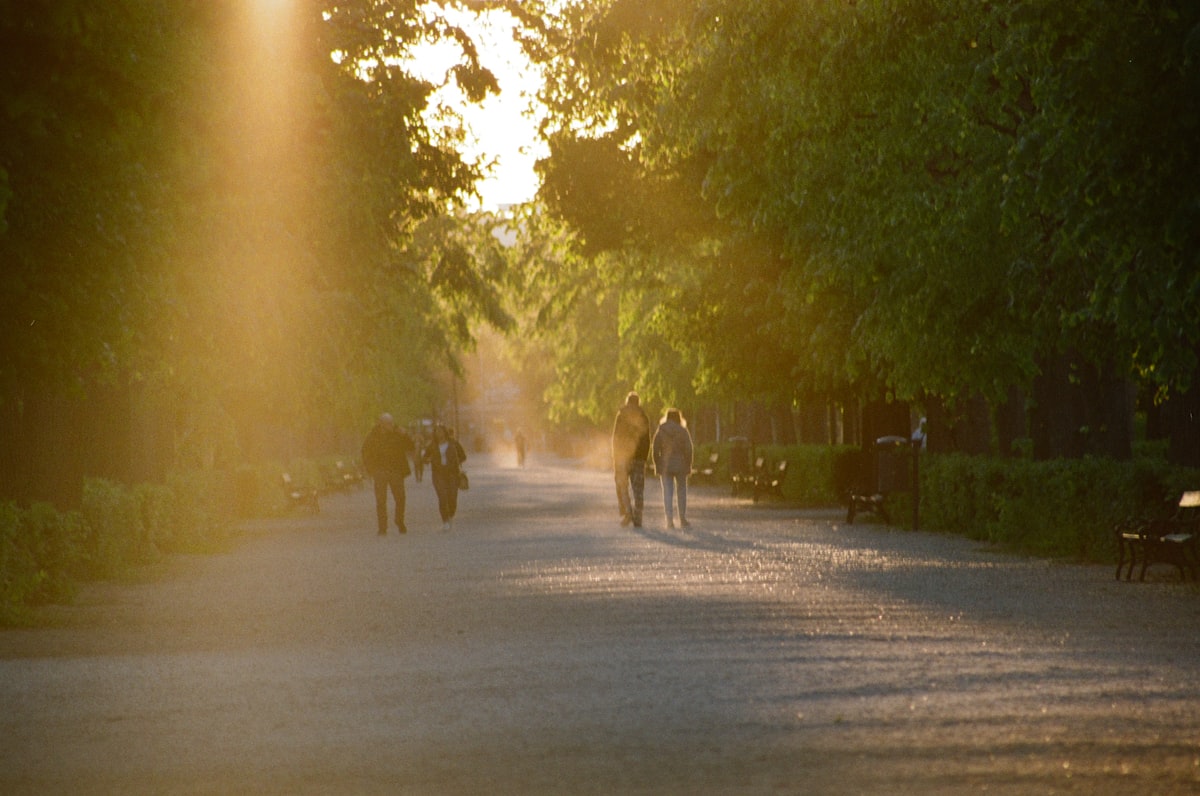
The most useful piece of sleep equipment in my house is a front door I already owned. Around seven each evening, my family and I walk to the corner and back, twenty minutes, nothing scenic, and the nights I skip it announce themselves by eleven. After-dinner walks earn their strange reputation honestly: three sleep problems solved by one unimpressive habit, and this post covers all three, plus the timing and the rainy-day rules. The whole movement chapter lives in my exercise and sleep guide.
Key takeaways
- After-dinner walks solve three problems in twenty pleasant minutes: leftover restlessness, slow digestion, and reflux pressure.
- Reflux is one of the sneakier causes of night wakings, and a full stomach lying down is what builds the pressure.
- An easy walk is gentle in exactly the right way: temperature up a little, then down, no hard-session alertness to pay off.
- The walk doubles as the answer to the seven o’clock fidgets, parking you away from the kitchen and the couch.
- Bad weather gets a vote, not a veto. A habit that shrinks rather than breaking is the only kind that survives a real life.
Three problems, one walk
The after-dinner walk deserves its reputation because it solves three problems in twenty pleasant minutes. First, it’s movement, so it spends some of the day’s leftover restlessness, the physical fidget that a sedentary evening leaves buzzing in the legs. Second, it aids digestion, which matters if you’ve shifted dinner earlier but still eat at a realistic human hour. Third, it blunts the reflux pressure a full stomach builds when you lie down, and reflux is one of the sneakier causes of night wakings. Three for one, and the total price is the bottom of your shoe.
The third one deserves a pause, because it’s the least obvious and the most underrated. If you wake at night with a cough, a sour taste, or a feeling like a knot in your throat, the culprit is often the timing of dinner rather than its content, and the stomach sets the alarm. A walk after eating moves the pressure in the right direction before you go horizontal. The fuller account of late meals and the nights they wreck is in eating late at night and sleep, and the dinner-timing rules are in best time to stop eating before bed.
Why the easy pace matters
An evening walk also clears the bar that the evening-exercise myth set, and it’s worth understanding why, because the myth is half right. Hard training does raise alertness and core temperature, which is why hard sessions want a buffer before bed. An easy walk is gentle in exactly the right way: it raises your temperature a little and lets it fall again, and it stirs up none of the alertness a hard session leaves behind. The fall is the part your brain reads as evening, so the stroll is quietly on the wind-down’s side of the ledger.
It also parks you away from the kitchen and the couch, which is where the wind-down wants you anyway. In my house it became the standing answer to the seven o’clock fidgets, that restless hour when everyone drifts toward snacks or screens and nobody drifts toward bed. We walk to the corner and back. It isn’t exercise in any inspiring sense. It’s a habit that quietly pays rent.
The seven o’clock slot
The timing question has a boring answer, which is that after dinner is the slot, whatever your clock says it is. The walk works because it sits between the day’s last obligation and the wind-down’s first act, and it converts dead time into both movement and a boundary. If your evenings currently collapse into screens, the walk is the cheapest possible intervention, since it removes you from the feed’s radius for twenty minutes and returns you to the sofa already half-descended into evening mode.
For anyone using the wind-down structure with its three slots, mind, body, room, the walk fills the body slot early and leaves the last hour free for slower things. That pairing is deliberate, and the full evening sequence is in how to wind down before bed. If you’d rather do gentle movement at the very end of the evening instead, stretching is the other legitimate body slot, and yoga before bed covers it.
Nina’s accidental fix
Nina trained for a half marathon in the only window she had, 8:40 at night after her kids went down, and lay in bed afterward listening to her own pulse like a metronome she never asked for. Her fix wasn’t quitting the run, it was moving it to 6:30 in the morning, which left the evening slot standing open and quiet. A walk after dinner stepped into it, first with the dog, then with whichever kid wanted company, twenty unremarkable minutes that ended with a body ready for bed instead of a body still negotiating.
Notice what she didn’t do. She didn’t pick the correct time according to the internet, and she didn’t mutilate her training schedule to satisfy a myth. She picked times that let both things exist, and her sleep sorted itself out around them. The evening slot she accidentally discovered is the one this post is about, and it needed no fitness, no gear, and no half marathon to work.
Rain, laps, and shrinking
Bad weather gets a vote, and it doesn’t get a veto. An umbrella exists. So do hallway laps, a mall loop, and the undignified but effective option of pacing while the kettle cools. The walk doesn’t need to be scenic to count. It needs to happen, and the version you’ll do in rain beats the version you’ll postpone for perfect weather.
That flexibility is the whole survival mechanism of the habit. A walk-sized habit shrinks on bad days instead of breaking, and a habit that shrinks rather than breaking is the only kind that survives an actual life. Miss a week entirely and nothing is ruined; the walk is a nightly choice, not a streak. The daylight you collect along the way is a bonus the morning dose doesn’t replace but the evening appreciates, and the deeper sleep benefits of regular movement are laid out in does exercise help you sleep.
One honest limit. A walk won’t outrun a 9 p.m. espresso or a phone in the bed, and it won’t fix nights that have been broken for months on their own. It spends restlessness and settles the stomach; it doesn’t govern the clock or the chemistry. Those dials live elsewhere in the book, and the walk is at its best as the habit that quietly holds down the evening while the others do their work.
Frequently asked questions
Do after-dinner walks actually improve sleep?
Yes, through three mechanisms at once. A walk after dinner spends leftover physical restlessness, helps digestion along, and blunts the reflux pressure a full stomach builds when you lie down, and reflux is one of the sneakier causes of night wakings. Twenty minutes, three problems, one habit.
Won’t exercising in the evening wake me up?
An easy walk is gentle in exactly the right way. It raises your temperature a little and lets it fall again, and it stirs up none of the alertness a hard session leaves behind. The evening-exercise myth applies to hard training, not to a stroll to the corner and back.
When should I take the walk after dinner?
Any time after the plates are cleared works, and it doubles as the standing answer to the early-evening fidgets, that restless hour when the house drifts toward snacks or screens. It parks you away from the kitchen and the couch, which is where the wind-down wants you anyway.
What if it rains or I miss a day?
Bad weather gets a vote, not a veto. Hallway laps, a mall loop, or pacing while the kettle cools all count, because the walk doesn’t need to be scenic, it needs to happen. The version you’ll do in rain beats the version you’ll postpone for perfect weather.
How long until after-dinner walks change my nights?
The digestion and reflux effects can show up within days, especially if late dinners have been waking you. The deeper sleep from accumulated movement usually takes a couple of weeks of regular walks. Keep it easy, keep it short, and let the habit shrink on bad days instead of breaking.
If you want the full movement chapter, walks, naps, and the myths between them, the book covers the system without a single gym membership.
This guide is educational, not medical advice. Persistent reflux or chest symptoms deserve a doctor, not a walking route.