Screens & Sleep
TV in the Bedroom: Keep It or Move It Out
By Nora Vale · November 21, 2025 · 7 min read
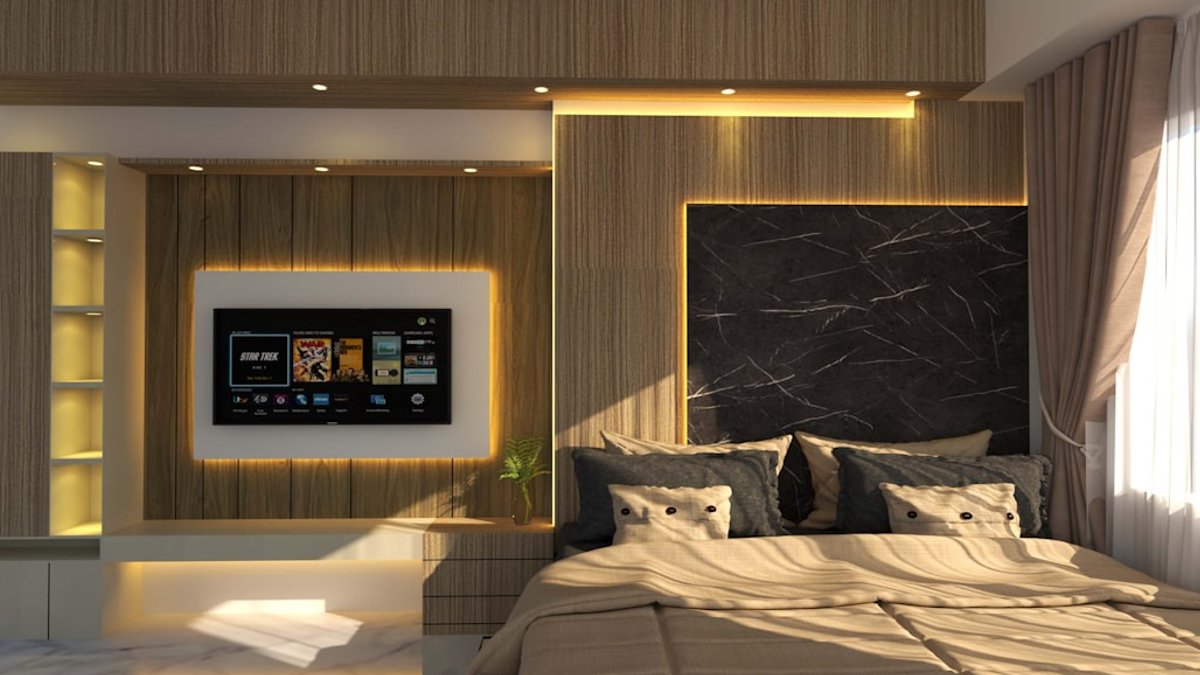
The television is the most defensible screen in your life, which is exactly why it’s worth a hard look. A show you chose, watched in the living room with the lights low, is passive content, and passive is the gentle end of the screen spectrum. But TV in the bedroom is a different arrangement, and it fails a test the living room never takes: the bedroom is where you’re supposed to stop being interesting to yourself for a while, and a television in that contest has one fair outcome. It isn’t sleep. The full frame is in my screens and sleep guide.
Key takeaways
- Passive TV is the gentle end of the screen spectrum. The bedroom is the problem, not the show.
- Auto-play is a setting, not weather, and turning it off takes under two minutes.
- Reruns can’t ambush you, because you already know who dug the hole.
- The couch TV drifts in and never leaves, and nobody decided any of it.
- Adults go first: a bedroom that means only sleep and clothes gets boring on purpose.
What the bedroom TV actually costs
The honest assessment starts with fairness. An hour of a calm cooking competition is not in the same weight class as forty-five minutes of the replies. The interactive stuff, the replying, posting, and refreshing, is what holds your mind in third gear, and a show you picked is closer to a warm bath than a workplace. If you’re going to watch at night anyway, watching is the right end of the menu.
The cost comes from where you watch and how the watching ends. The bedroom TV teaches the room that something is always playing, and “boring is the on-ramp to sleep,” so a room that never goes boring loses its best feature. Then there’s the ending, which the service now owns. One woman watched one episode of a thriller at ten, and when the credits rolled the service counted down from five and started the next one on its own. Three episodes later it was 12:40, and she was watching a man dig a hole in the woods at increased speed, no longer liking the show much, unable to say why she was still there.
Auto-play and the rerun loophole
The fix for the ending is cheap and immediate. “Auto-play is a setting, not weather. You can turn it off in under two minutes, tonight, for free.” The cliffhanger stapled to the end of every episode is the same design as the infinite scroll, a hook placed exactly where your decision used to be. She turned auto-play off, kept the show, and started finishing episodes on her own schedule. The first night she reached for the remote out of habit, found nothing queued, and read for twenty minutes instead.
The second trick she taught me without meaning to. Old episodes, shows you’ve already seen, documentaries about rivets: familiar stuff doesn’t carry a hook, because you already know who dug the hole. Producers save their best ambush for the unknown, and “a rerun can’t ambush you.” If you’re going to watch at night anyway, the rerun is the honest choice, and a rerun in the living room with auto-play off is about as gentle as screens get. The mechanics of the auto-play trap deserve their own read: auto-play traps: why one episode becomes four.
How the TV drifts in, and how it moves back out
Almost nobody decides to put a television in the bedroom. It drifts in. A television goes into the kids’ room for one sick week and never leaves. The adults in the same house keep a TV in their own bedroom justified as a lazy-Sunday thing. “Nobody decided any of this. It drifted in,” and that’s worth knowing, because it means the decision to reverse it is yours to make now, not a verdict on years of watching.
Reversing the drift works the way most family changes work, which means the adults go first. Kids ignore speeches and copy behavior, so the docking station goes in the hallway for everyone, chargers included, and the bedroom television quietly loses its excuse and moves back to the living room, where watching becomes something you choose instead of something that absorbs you. Expect about a week of complaints. Then nobody remembers, because rooms teach habits as surely as parents do. A bedroom that means only sleep and clothes gets boring on purpose, and that boredom is the whole prize.
One household handles the whole spectrum with a basket: at eight-thirty the basket comes out, every charger, tablet, and idle phone goes in, and the whole thing sits on a shelf by the door until morning. If the screen in your bedroom is actually a phone rather than a television, the same geography rule applies, and the setup is in should I charge my phone outside the bedroom.
The keep-it version, done honestly
If the television stays, keep it honestly. Auto-play off, tonight, two minutes. The couch where the couch is, the bedroom for sleep and clothes, for every screen and every person in the house. Pick the mellow end of the menu when you pick at all, and let reruns carry the late slots, because they can’t ambush you. And if you fall asleep to audio, a clock radio with a sleep timer covers that without a feed attached, since the trick is the timer, so it doesn’t talk until dawn.
The book behind this chapter, with the full evening protocol, is Sleep, Finally. If the TV stays, switch off auto-play tonight. If it goes, the living room misses it less than the bedroom ever did.
Frequently asked questions
Is TV in the bedroom really that bad?
It depends which TV and where. A show you chose, watched in the living room with the lights low, is passive content and the gentle end of the screen spectrum. The problem is the bedroom itself, which is where you’re supposed to stop being interesting to yourself for a while, and a television in that contest has one fair outcome.
What about falling asleep with the TV on?
It works right up until it doesn’t. The audio and light keep arriving after you’re out, and the habit teaches your brain that the bedroom is a place where something is always playing. A clock radio or audio with a sleep timer is the honest substitute, so it doesn’t talk until dawn.
Does auto-play matter that much?
Yes. Auto-play is a setting, not weather, and turning it off takes under two minutes. The countdown from five and the cliffhanger at the end of every episode are the same design as the infinite scroll, a hook placed exactly where your decision used to be.
How do I move the TV out without a household war?
Adults go first, the bedroom television quietly loses its excuse, and everyone in the house follows the same rule. Expect about a week of complaints. Then nobody remembers, because rooms teach habits as surely as parents do.
This guide is educational, not medical advice. If sleeplessness persists for weeks despite a calm bedroom, that’s a conversation for a doctor rather than a furniture rearrangement.