Screens & Sleep
The Docking Station: One Shelf That Fixes Evenings
By Nora Vale · November 28, 2025 · 7 min read
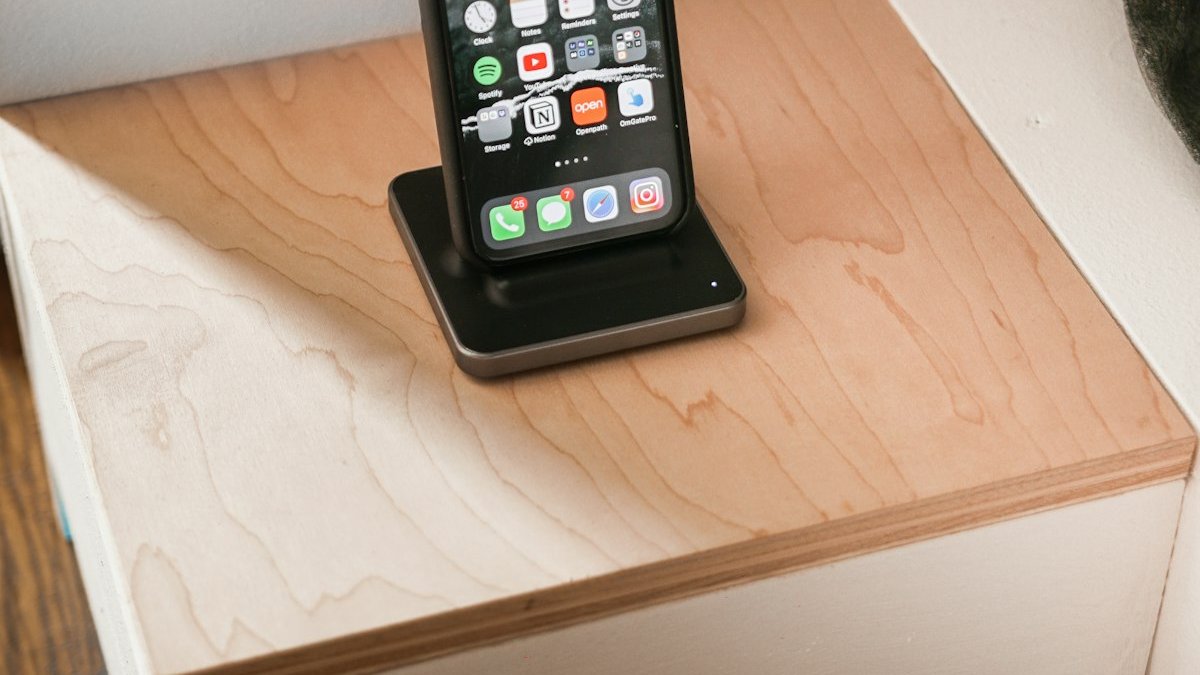
The fix I’m about to describe is so boring I nearly didn’t lead with it, and boring is why it works. One shelf. One charger. A ten-dollar alarm clock. The phone docks there every night when the wind-down starts, and the docking station shelf quietly fixes evenings without an app, a setting, or a single act of heroic willpower. “The highest-yield screen rule I know, the one that changed my nights more than any glasses, app, or setting, costs about ten dollars.” The full frame around it is in my screens and sleep guide.
Key takeaways
- One shelf, one charger, one ten-dollar clock. The phone gets a home, not a ban.
- Docking when the wind-down starts beats docking at 11 p.m., because the 11 p.m. version of you has no vote.
- One rule handles both thieves: light and job, moved in a single motion.
- Tell the house. A rule nobody explained reads as a mood.
- Around week two, the hand that closes on nothing at 3 a.m. is the whole trick.
What the shelf actually does
It helps to know why such a cheap move does so much. The phone in the bedroom is two thieves working together. One is light: “A phone is a small sun you hold about a foot from your face,” and it makes you less sleepy at exactly the hour sleepiness should arrive. The other is a job: a feed that asks your brain a question with every swipe, plus every notification that taps your shoulder at a time somebody else chose. Between them they eat the night from both ends.
Dock the phone and you’ve moved the light source out of pillow range and retired the job for the night, all in one motion, and “unlike most things sold for sleep this one never needs a firmware update.” One rule, both thieves. No gadget I ever bought came close, and I’ve bought several of the gadgets.
The timing detail that decides everything
The shelf works or fails on when the phone docks, not where. Mine goes on the kitchen counter, plugged in beside the fruit bowl, and it goes there when the wind-down starts, not later when I’m already in bed negotiating with myself. “That detail matters more than it looks. Decisions made at 11 p.m., phone already warm in your hand, resolve about as reliably as decisions to have one more drink.” Decide at nine where the phone sleeps, and the eleven o’clock version of you never gets a vote.
Morning-you buys the clock. Evening-you approves the docking. Midnight-you never gets a vote, which is the entire trick. If your evenings run late, the stair-step is legitimate: charger across the room first, then the hallway, then the kitchen. I’d rather see you take the stair-step than admire the complete version from the couch. The fuller argument for moving the phone out of the bedroom is in should I charge my phone outside the bedroom, and the alarm-clock excuse gets its own hearing in phone as alarm clock problem.
The objection that deserves a straight answer
The usual objection is the alarm clock, and it’s the last honest excuse the phone has. A phone that’s only an alarm is a phone that never gets checked, and nobody owns one of those. The alarm lives inside the casino, one unlock away from everything. A ten-dollar clock does one job. It can’t do anything else. If you fall asleep to audio, a clock radio with a sleep timer covers that too, with no feed attached.
One logistics note, learned the hard way in a house with other people in it: announce the change before it happens. My husband spent the first two evenings thinking I was angry at him, because I’d stopped arriving in bed trailing commentary from the internet, and he only relaxed when I explained that the phone now lived with the colander. “Tell the house. A rule nobody explained reads as a mood, and moods get negotiated with at midnight.” If kids and tablets are part of the household drift, a hallway basket that includes the parents looks like fairness, and one that spares only the parents looks like hypocrisy.
What the first two weeks feel like
The first few nights feel strange, like part of your hand is missing. You’ll reach for it around 10:15, out of pure reflex, and find a lamp. Sit with that. Then something quietly good happens: the bed gets boring, and “boring is the on-ramp to sleep.” A bedroom with no feed in it turns out to be a room where a tired person can finish the thought called sleeping, because nothing in it is asking questions.
Then the bonus that doesn’t show up until later. “Somewhere around week two of the kitchen-counter life, you’ll wake at some dark hour and reach out of habit, and your hand will close on nothing. That nothing is the whole trick, because the worst possible company at 3 a.m. is a feed.” The phone can’t whisper to you from the kitchen. Distance does what do-not-disturb never could.
The realistic score comes from a man who docked his: six nights out of seven, with the seventh a bad-news week that costs an hour, then a fresh start without treating it like a moral event. That’s the ceiling for most humans, and it’s a good ceiling. The book behind this chapter, with the full evening protocol, is Sleep, Finally. Pick the shelf tonight. It’s ten dollars and one decision made before dinner.
Frequently asked questions
What is a docking station shelf for phones?
It’s a fixed home for the phone outside the bedroom: one charger, one shelf, the same spot every night. The phone docks when the wind-down starts, not later, and a real alarm clock takes over the wake-up. The fix is boring on purpose, which is why it survives Tuesday.
Why does the shelf work better than an app?
Because it’s geography, not discipline. Dock the phone and you’ve moved the light source out of pillow range and retired the job for the night in one motion, and unlike most things sold for sleep it never needs a firmware update. No app can out-argue ten thousand engineers. A distance out-argues them once, permanently.
When should the phone dock each evening?
When the wind-down starts, not later while you’re already negotiating in bed. Decide at nine, because decisions made at 11 p.m. resolve about as reliably as decisions to have one more drink, and the eleven o’clock version of you never gets a vote.
Where should the shelf go?
Anywhere the reflex can’t reach: the kitchen counter next to the fruit bowl, a hallway shelf, another room with a closed door. The version that pays in full ends with the phone on a different floor, or at minimum a different room, and charging it across the room is an honest first step.
This guide is educational, not medical advice. If being reachable at night is a work requirement, the two-name lifeline version is the honest compromise, and persistent sleeplessness deserves a doctor rather than a shelf.