Screens & Sleep
Laptops in Bed: Why Working Late Backfires at Lights-Out
By Nora Vale · May 30, 2026 · 7 min read
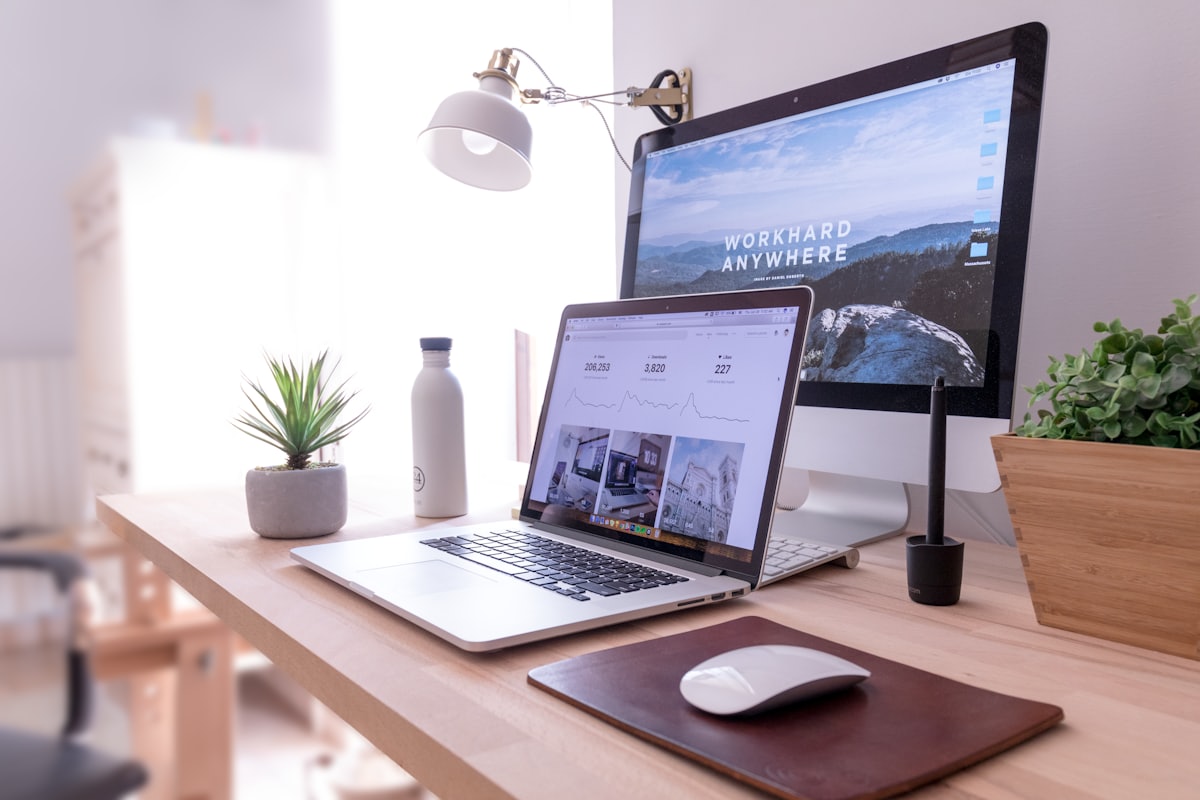
You close the laptop at 10:40 on a Tuesday and expect to be asleep by 11:15. The last two hours went to email, a group chat that turned needlessly sharp over dinner plans, and headlines nobody needed, and now you’re asking the same wired brain to go quiet on command. It won’t. The switch you’re reaching for doesn’t exist, and laptops in bed are the most common way people build that trap into their own mattress.
I ran that Tuesday for years, and the fix, when it finally arrived, wasn’t discipline or a blue-light filter. It was a geography problem, which is the friendliest kind, because geography doesn’t require willpower. The full screens chapter lives in my screens and sleep guide. This post stays on the laptop specifically: why the device in the bed backfires, and what to do with it instead.
Key takeaways
- The bed starts meaning whatever happens in it, and a bed that means email, chores, and episodes means none of them well.
- The light is the smaller thief. The inbox is the bigger one: every email assigns a small task with a small deadline.
- A closing ceremony at a fixed minute rebuilds the border the commute used to provide, in ninety seconds.
- Night mode treats the light and ignores the job; if the content wakes your mind up, the dimming is beside the point.
- Decide where the laptop sleeps earlier in the day. The eleven o’clock version of you never gets a vote.
The bed that learned three jobs
There’s a woman in the book whose bedroom was working three jobs, and her setup will look familiar to anyone who works from a studio, a shared flat, or a bed that doubles as an office. The desk held her work laptop and a stack of unfolded laundry. A drying rack stood in the corner, and most nights she watched television from under the duvet, laptop balanced on her knees until an episode ended and the next one started playing by itself. “So the bed meant email, chores, and episodes, and her brain had no idea which one it was being asked to do at 11 p.m.”
Her fix wasn’t a purchase or an installation. She moved the drying rack to the bathroom, shifted the desk to the living room wall, gave the television one rule, and “the laptop stopped coming to bed entirely.” The first few nights the bed felt oddly plain to her, like a hotel room with no luggage. Within about a week she was falling asleep faster, and the reason isn’t mystical: the bed started meaning one thing again, so lying down in it became a cue instead of a question. Rooms teach.
That’s the core argument against laptops in bed, and it’s stronger than any light argument. “The bedroom is where you’re supposed to stop being interesting to yourself for a while. That contest has one fair outcome. It isn’t sleep.” Send the competitor to another room, and the bedroom starts working again.
The inbox is a night shift with worse hours
Let’s be fair to the laptop’s hardware for a minute, because the light part of the story is real and gets most of the press. A phone or laptop screen is “a small sun you hold about a foot from your face,” and the research on bright, close-range light before bed is legitimate: in one widely cited experiment, tablet readers’ melatonin arrived about ninety minutes late, with groggier mornings riding along as a service charge.
But notice the dose in that finding, because the dose is the story: it came from hours of bright, close-range light held about a foot from the face, night after night, not from a last check of tomorrow’s weather. The bigger thief rides inside the device. “There’s a third piece I think of as the job. For plenty of adults the screen isn’t entertainment at all; it’s the inbox, the school group, the one client who emails at nine, the boss who just quickly needs an answer. Every one of those arrives on someone else’s timing, not yours, and each assigns you a small task with a small deadline attached. That’s not a light problem. That’s a night shift with worse hours.”
That’s why laptops in bed are worse than laptops on the couch at eight. The timing puts the tasks at the exact hour your mind should be handing them off, and “if the content wakes your mind up, it barely matters that the screen is dim.” Working late in bed means your brain carries the second shift under the covers, and the standing deadline revision doesn’t stop because the lid closed.
The closing ceremony: a border in ninety seconds
If you work where you live, or work from bed because the bed is where the evening happens, the fix has a name and a fixed minute. “Give the workday a closing ceremony the way a cash register gets closed out: laptop shut and slid into a drawer, tomorrow’s first task on a scrap of paper, the chair pushed in, done at a fixed minute. Remote work deleted the commute. The commute was never about the driving, it was about the border, and you can rebuild a border in ninety seconds.”
The scrap of paper is the load-bearing part, and it matters for the same reason the worry page does. Every loop you close at nine-thirty is a loop your sleeping brain doesn’t have to hold open. Tomorrow’s first task, written down, tells the mind the file lives somewhere it can trust, and a brain that trusts the file stops reopening it at midnight. Write it before the drawer, not after, because the point is handing the day its receipt while you’re still in day mode.
The timing detail is what makes it stick: the decision about where the laptop sleeps belongs to the morning or the afternoon, not to eleven at night. “Decisions made at 11 p.m., phone already warm in your hand, resolve about as reliably as decisions to have one more drink. Decide at nine where the phone sleeps, and the eleven o’clock version of you never gets a vote.” The laptop is the same animal. Give it a home that isn’t the bed, decided by a version of you that isn’t tired.
What goes in the gap, and the honest limits
The laptop leaves a job vacancy, and your evening will rehire something for the slot, so hire deliberately. “A boring, repeatable half hour isn’t a punishment after a long day; it’s the runway from chapter 1, the stretch where you stop being a person who processes things and start being a person who sleeps.” The mind gets one thing to hold: a paper book, a crossword, a dog-eared magazine about kayaks. Anything that isn’t a feed. “I can’t read at night, I fall asleep after two pages,” people tell me, which has always sounded like a report of success rather than failure.
For the screens you do keep at night, two questions sort the survivors: “can it end on its own, and does it come with a feed.” A show you chose, watched in the living room with the lights low, is passive content, the gentle end of the spectrum. The replying, posting, and refreshing is what holds your mind in third gear. An hour of a calm cooking competition is not in the same weight class as forty-five minutes of the replies.
Two honest edges. First, if the laptop is your only connection to an ailing parent, a partner on the road, or a work emergency that genuinely can’t wait, the simple rule loses to the thing the rule ignores, and the fix is a planned replacement, not a lecture: the good part of the chat moved earlier, a rule you actually keep beats a rule you admire. Second, if your nights stay broken after the device moves out, other thieves exist, and a doctor is the right door for the ones that live in the body rather than the bedroom. The feed will still exist at 7 a.m. Your sleep window won’t.
Frequently asked questions
Why does working on a laptop in bed keep me awake?
Because rooms teach, and the bed starts meaning whatever happens in it. A bed that means email, chores, and episodes gives your brain no cue at 11 p.m., so lying down becomes a question instead of a signal. On top of that, the work keeps your mind processing at the exact hour it should be handing off, and the inbox’s small tasks have small deadlines attached.
Is it the screen light or the work that hurts sleep?
Both, in that order of size. The light is real: hours of bright, close-range screen light delayed melatonin by about ninety minutes in the widely cited tablet study. But the bigger thief is content and job, the inbox that assigns tasks on someone else’s timing. If the content wakes your mind up, it barely matters that the screen is dim.
What is a closing ceremony for the workday?
Laptop shut and slid into a drawer, tomorrow’s first task on a scrap of paper, the chair pushed in, done at a fixed minute. It’s the border the commute used to provide, rebuilt in ninety seconds. The written task matters most: every loop you close before bed is a loop your sleeping brain doesn’t have to hold open.
Should I use my laptop in bed with night mode on?
Night mode addresses the smaller thief while the bigger one keeps working. The light matters, and dimming is worth the one free minute it costs. But the inbox, the school group, and the boss who just quickly needs an answer are arousal machines wearing a dimmer screen, and no night-mode setting hands back the forty-five minutes they eat.
How do I stop bringing my laptop to bed without willpower?
Decide earlier. Where the laptop sleeps is a decision for the morning or the afternoon, because decisions made at 11 p.m., device already warm, resolve about as reliably as decisions to have one more drink. Give it a drawer, a desk, or a shelf, put a boring book in the gap it leaves, and let geography do the work willpower never could.
This guide is educational, not medical advice. If sleep problems persist most nights for three months or more, a doctor is the right door.