Bedroom & Sleep Environment
How to Sleep Better in a College Dorm
By Nora Vale · July 13, 2025 · 7 min read
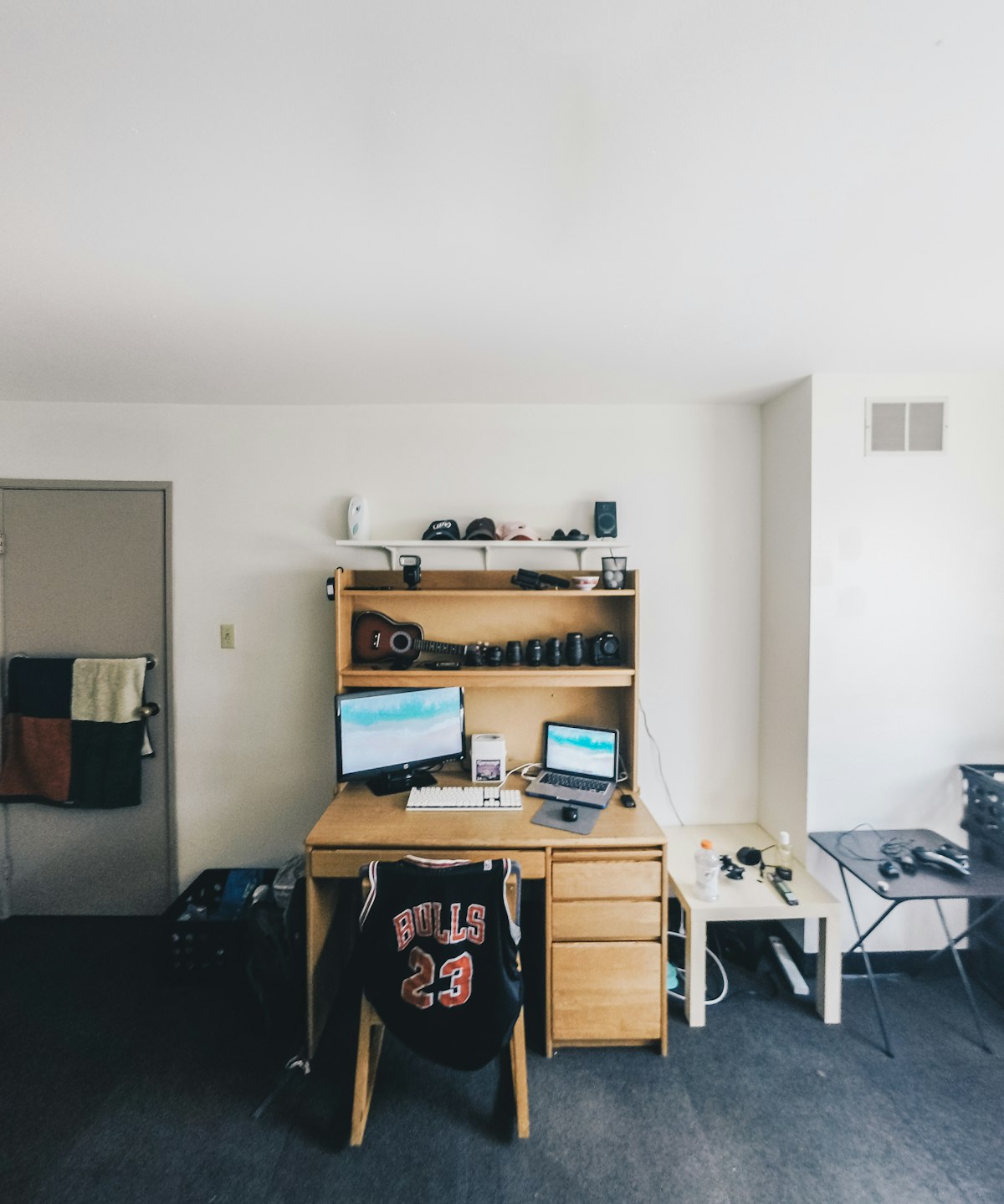
My dorm room had a mattress the county should have investigated, a roommate whose gaming headset leaked every gunshot, and a window facing the loading dock, and I still slept better in it by sophomore year than I had in my childhood bedroom. Not because the room improved. Because sleeping in a dorm is mostly a set of four dials, and the dorm controls almost none of them. You do. Here’s the version I’d hand my own kid, minus the tuition.
The full method behind this lives in the bedroom environment guide; this is it translated into cinderblock and outlet strips.
Key takeaways
- A dorm is a room like any other: light, temperature, bed, and noise are the four dials, and almost nothing that matters costs real money.
- Your half of the room: eye mask, foam earplugs worn correctly, a fan, tape over LEDs, and a lamp instead of the overhead after dinner.
- The bed is the boundary that matters. Study somewhere else, because rooms teach and the bed should mean one thing.
- Noise works by change, not volume: steady fan sound blurs hallway bursts better than hoping the corridor quiets down.
- A fixed wake time is the one schedule rule worth keeping, even after a bad night.
Start with what fits in a drawer
Everything below is tape, habit, a fan you may already own, and maybe a pillow. No gadgets, and no four-hundred-dollar “sleep sanctuary,” which is a phrase I would like to retire. The useful version of a bedroom is boring and cheap, and that goes double for a room you’ll vacate in May. A dorm kit costs about twenty dollars: electrical tape, a sleep mask, foam earplugs, and a cheap alarm clock so the phone can sleep somewhere that isn’t your pillow.
The phone matters more in a dorm than anywhere else, because it’s usually the clock, the feed, the alarm, and the last thing your face sees. Even face-down, it lights up when a message lands, and a dark room with a glowing rectangle on the nightstand isn’t a dark room, it’s a dim one with a notification habit. Dock it across the room or in a drawer. The world of your group chat will still exist at 7 a.m. Your sleep window won’t.
Dark: your half of the window
You can’t blackout a rental window with a deposit on the line, and you don’t need to. The cheap fix is what renters have always done: a dark blanket or a piece of blackout fabric pinned over the frame, or foil pressed flat against the glass, ugly and completely effective. If even that’s too committed, an eye mask covers most of the job, and a streetlight leaking through slatted blinds stops mattering the moment your eyes are covered.
Then the LEDs, yours at least. “Electrical tape over the router light, a folded sticky note on the clock face, a small square of masking tape over the television’s standby eye.” In a dorm this scales down to the mini fridge, the printer, the charging brick, and whatever glowing hub the building installed. Two dollars of tape, ten minutes. My own room’s seven glowing dots took me a year to connect to the fact that my brain never quite slid under, and you can do the arithmetic in one evening.
Cool: work the bedding, not the radiator
Most dorms give you one thermostat setting: the building’s. So run the dial you own, which is bedding. “Layering beats one heavy thing. A duvet and the room temperature are one system, and a heavier duvet widens the range of room temperatures you can sleep through comfortably.” Two lighter layers instead of the comforter your mother sent, because the building that pumps heat in October will also shut it off in April, and layers let you adjust at 2 a.m. without properly waking.
If the radiator clanks and surges, that’s a noise problem as much as a temperature one, and the fan below helps with both. And if your half of the room runs warm while your roommate runs cold, don’t fight the thermostat. Shed your side.
The bed and the boundary
The dorm mattress is genuinely bad, and the fix is cheap relative to tuition: a three-inch foam topper and the right pillow. The pillow is the gap-filler, and it’s where twenty dollars beats two thousand. Side sleepers need a thicker pillow, because there’s a real gap between shoulder and ear to fill. Back sleepers need medium or low. Stomach sleepers need the thinnest pillow made, or none at all. The test is simple: lying in your usual position, your ear should sit roughly in line with your shoulder.
The harder boundary isn’t physical. It’s what the bed is for. My friend Priya’s bedroom was working three jobs once, the desk holding her work laptop, a drying rack in the corner, television from under the duvet, and her brain had no idea which job it was being asked to do at 11 p.m. A dorm bed that hosts essays, episodes, and group chats acquires the same résumé. If the room is too small for a desk, the library and the common room are your desk. “The bed is for sleeping, and everything else in your life has somewhere better to happen, which is the entire method in one line.” In a dorm, “somewhere better” is usually one floor down.
Noise: the corridor problem
Dorm noise is the reason most students give up on sleep advice, so hear the actual mechanism before you surrender. “your brain doesn’t care much about steady sound; it cares about change.” A hallway hum fades into the background within minutes. The laughing burst outside your door at one in the morning is a change, and changes trigger brief arousals even on nights you don’t remember them.
You can’t quiet a corridor. You can blur it. A fan or a white noise track lays down a steady floor so every sudden noise stands out less against it, the way a candle stops looking bright at noon. Add foam earplugs worn the way almost nobody wears them: roll one into a thin cylinder, pull the top of your ear up and back with the opposite hand, insert, and hold until it expands. Most people who say earplugs don’t work for them were never taught this. It changes the math.
The schedule rule that outlasts the room
Here’s the part nobody wants in college: pick one wake time and keep it seven days. Not a dawn patrol, a survivable one, ten o’clock if that’s honest. “A rough night with a kept wake time costs you a single day, while a rough night plus a three-hour lie-in rearranges your body clock and can easily cost you the whole week.” The Thursday-to-Sunday sleep swing is why Monday mornings feel like jet lag, and the anchor that fixes it costs nothing.
Give it two weeks before you judge it. The first week will feel pointless, the way any conditioning does, and then the room starts meaning one thing, the mask and the fan become cues instead of chores, and falling asleep stops requiring an argument. If the problem turns out to be a mind that won’t shut down rather than the room, that has its own kit, starting with cognitive shuffle for sleep. And if you can’t fall asleep or stay asleep most nights for months despite all of it, that’s worth a health-center conversation, because there’s a well-studied treatment for exactly that pattern.
Frequently asked questions
How can I sleep better in a dorm with a roommate?
Control your half: eye mask, correctly worn foam earplugs, a fan for steady sound, tape over your own LEDs, and a lamp instead of the overhead after dinner. You don’t need matching schedules, just matching boundaries where the bed is concerned.
My dorm bed is uncomfortable. What actually helps?
A foam topper and the right pillow height. Side sleepers need thicker, back sleepers medium, stomach sleepers the thinnest made. Your ear should sit roughly in line with your shoulder in your usual position.
Should I study in bed to save space?
No. Rooms teach, and a bed that hosts essays and episodes starts meaning everything except sleep. The library is your desk; the bed keeps one job.
Doesn’t dorm noise make all of this pointless?
No, because noise is about change, not volume. A steady fan blurs hallway bursts before they reach you, and earplugs worn correctly cut what’s left. You can’t quiet the corridor, but you can make it boring.
If you’re moving in this week, start with the drawer kit and one wake time, and add the rest over a weekend. The whole system, worksheets included, is in Sleep, Finally.
This guide is educational, not medical advice. If sleep problems persist for months or wreck your days, see a doctor.