Bedroom & Sleep Environment
How to Make a Hotel Room Dark and Quiet
By Nora Vale · July 20, 2025 · 7 min read

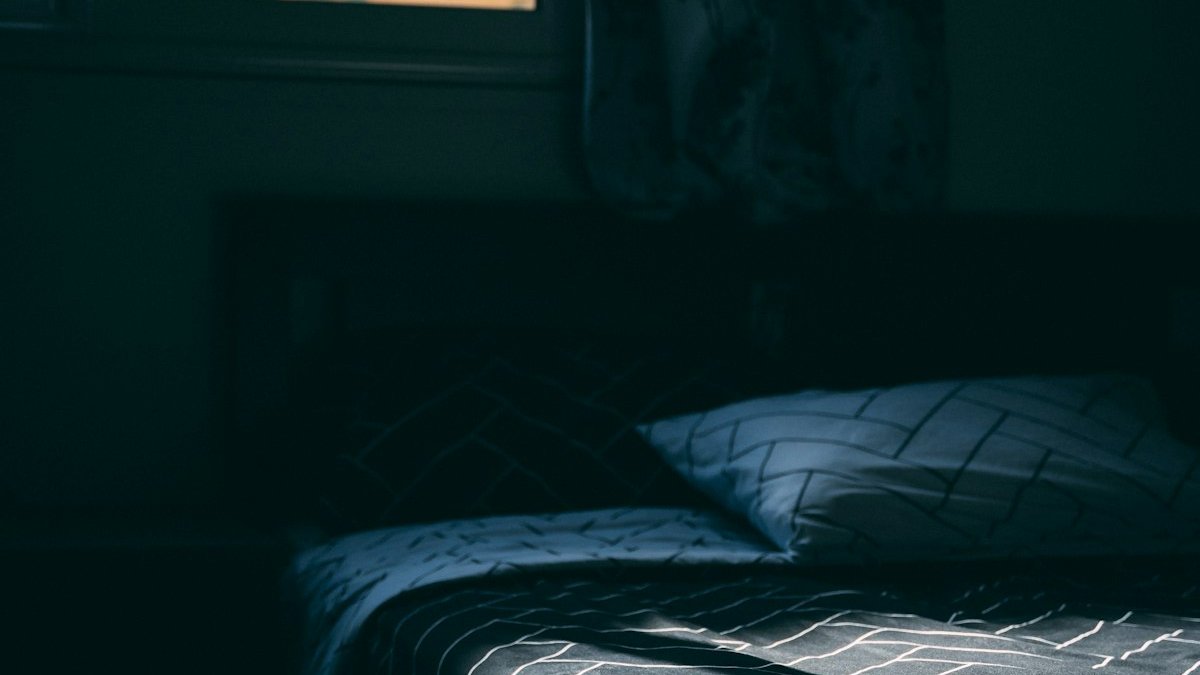
Every traveler knows the scene: it’s 11:30 in a city you flew into this morning, and the curtain has a half-inch gap that aims a streetlight directly at the pillow like it was designed by someone who hates sleepers. The ice machine thumps. The television’s standby eye glows at you from across the room. You have an 8 a.m. meeting.
I used to treat this as luck, and hotel room sleep as something that happened to other people. Then I met Tom, who drives long-haul and sleeps in a different hotel three or four nights a week, and who fixed all of it with a duffel bag that costs about twelve dollars. His approach, which is really just the bedroom chapter of the full bedroom sleep environment guide applied on the road, takes ten minutes at check-in. Here it is, step by step.
Key takeaways
- Hotel sleep is a setup problem: any room can be darkened and quieted in about ten minutes.
- A travel kit of earplugs, tape, binder clips, a dark shirt, and socks costs around $12.
- Seal the curtain gap first, kill the LEDs second, mask the noise third, cool the room last.
- Your brain cares about change in sound, not loudness, so steady masking beats silence-chasing.
- The same setup works in guest rooms, Airbnbs, and your own bedroom’s worst corners.
First: fight the light, because light is the loudest signal
Light is the one that wrecks you even with your eyes closed. Your retinas keep reporting illumination to the brain all night, and the brain takes every report at face value, because for most of human history a lit room meant daytime. Hotel rooms are LED craft projects: TV standby, phone charger brick, smoke detector, thermostat, the hallway light leaking under the door, and that curtain gap.
Work in this order. The curtain comes first, because it’s the biggest leak. Binder clips or a pants hanger will pull the curtain edges tight against the frame; a binder clip on the overlap, tensioned toward the wall, closes the half-inch of streetlight in ten seconds. The book’s own field kit is blunter: clip the curtain shut against the frame and the streetlight loses. Then the electronics: electrical tape over the router-style LEDs, a folded sticky note on the clock face, a small square of masking tape over the television’s standby eye. This costs about two dollars and takes ten minutes, and it’s the closest thing to free sleep improvement I know. Housekeeping will peel your tape off each day. Re-apply it. It’s thirty seconds.
If the room still glows, the dark t-shirt goes over the peephole or the smoke detector, and the kit’s sleep mask covers anything you missed. A mask costs less than most people’s monthly snack budget and works on business trips forever.
Second: mask the noise instead of chasing silence
Here’s the part I had backwards for years: your brain doesn’t care much about steady sound; it cares about change. A highway hum fades into the background within minutes, but a sudden burst, a door slam, the ice machine, the elevator chime, sets off a brief arousal in the brain even on nights you never consciously surface. This is why the quietest room on the block can sleep worse than the room with a steady fan in it. The fan is doing masking work.
So the move isn’t finding a quiet hotel, which is mostly a rumor. It’s giving the room a steady sound floor: a fan app on a dimmed phone across the room, a white noise track at conversation level or below, left on all night. Its job is masking bursts, not serenading you to sleep. Foam earplugs carry the rest, and most people wear them wrong, so it’s worth knowing the trick: roll one into a tight cylinder, pull the top of your ear up and back with the opposite hand, insert, and hold until it expands. A plug rated around 30 decibels delivers roughly half of that in the real world, which still turns a snore into a rumor. If the HVAC rattles instead of hums, turning it to a steady fan setting usually helps more than turning it off.
Third: cool the room before you go down to dinner
Hotel thermostats drift warm overnight, and the front desk has stopped caring. To fall asleep, your core temperature needs to drop, a warm room blocks the drop, and a cool room invites it. So the move happens at check-in: set the thermostat to around 65, open the window if the season allows, and ask housekeeping to leave your settings alone. If the thermostat ignores you entirely, which Tom says happens more often than not, warm socks and an extra blanket are the answer rather than a war with a wall unit. Warm feet actually help; the heat escaping through them drags your core temperature down.
The kit, in one bag
The whole thing fits in a Ziploc: foam earplugs, a roll of masking tape, two binder clips, a dark t-shirt, warm socks. Twelve dollars once, and it travels for years. Ten minutes of setup, any room. Tape the LED, clip the curtain shut against the frame, plugs in, socks on, and a thermostat that ignores him gets answered with an extra blanket instead. He told me the kit turned hotels from something he endured into something he sleeps in.
That last line is the whole philosophy, and it’s worth writing on the bag itself: a room doesn’t have to be yours to work. It just has to stop arguing. The same four rules, dark, cool, quiet, steady, apply to the guest room at the in-laws’ and to your own bedroom, where the taped-over router probably still glows. If you want to run the full audit at home, how dark should a bedroom be sets the standard, and how to mask street noise in a bedroom handles the home version of the traffic problem. Frequent travelers who sleep in their own beds badly will recognize half of this from a traveler’s guide to bedtime routines in hotels, which pairs the room setup with the evening routine.
What a setup can’t fix
One honest limit: the kit fixes the room, not the jet lag, the 9 p.m. espresso, or the two glasses of wine at the client dinner. If you’re wide awake at 3 a.m. in a perfectly dark, cool, masked room, the room wasn’t the thief. That’s the day deciding the night, and no amount of tape reaches it. Fix the room because it’s cheap and it removes one whole category of problem. Don’t expect it to carry the whole suitcase.
Frequently asked questions
How do I make a hotel room dark enough for sleep?
Close the curtain gap with binder clips or a hanger, tape over the LED dots with masking tape or a sticky note, and hang a dark shirt over any glowing peephole or smoke detector. Ten minutes covers most rooms.
What should I pack for better hotel room sleep?
Foam earplugs, a roll of masking tape, two binder clips, a dark t-shirt, and warm socks. It’s about twelve dollars total and fits in a toiletry bag.
How do I deal with noise in a hotel room?
Mask it rather than fight it. Steady sound from a fan app or a white noise track at conversation level hides the bursts that actually wake you, and foam earplugs carry the rest.
Does the temperature of a hotel room matter?
It matters as much as at home. Cool it down at check-in, since many hotel thermostats drift warm overnight, and ask housekeeping not to change your settings. Warm socks beat wrestling with a thermostat that ignores you.
Do the setup tonight if you’re in a hotel: curtain clipped, LEDs taped, plugs in, thermostat down, fan app on. Ten minutes, and the room stops arguing. The full bedroom system, with the home-audit checklist, is in Sleep, Finally.
This guide is educational, not medical advice. If sleep problems persist for months or wreck your days, see a doctor.