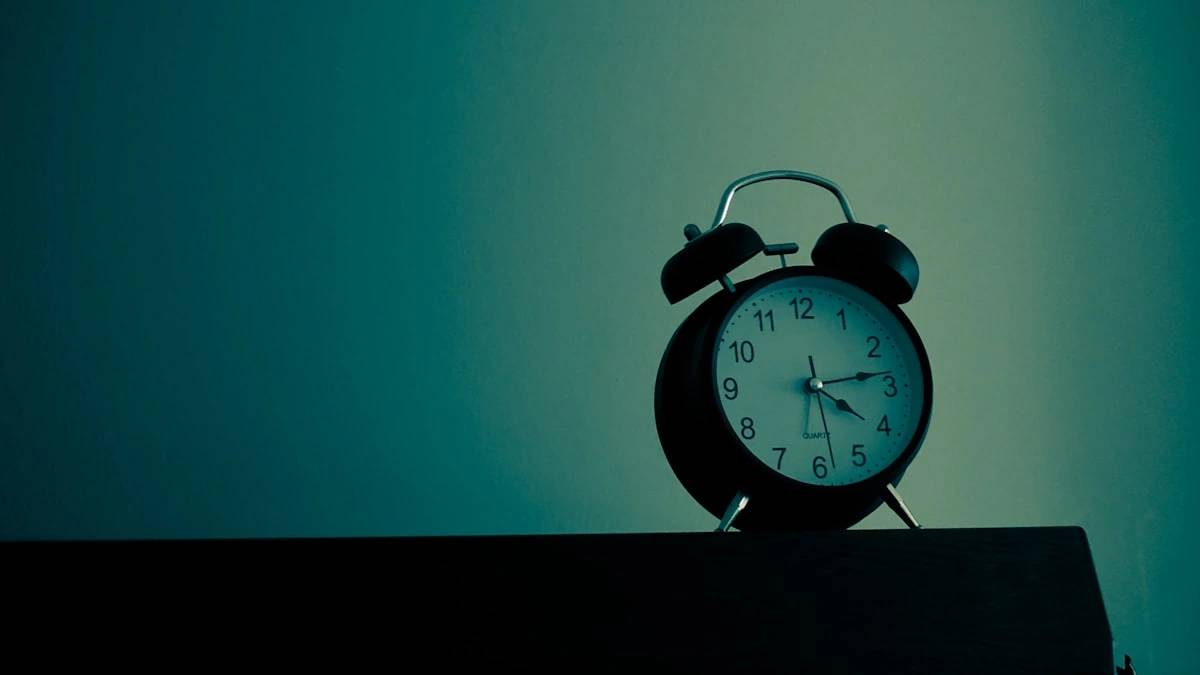
Waking Up at 3 A.M.
How to Fall Back Asleep After a Nightmare
By Nora Vale · January 16, 2026 · 7 min read

The dream ends and you’re upright before you’re awake, heart going like you ran here from somewhere, and the room takes a moment to confirm it’s the room. After a nightmare, the hardest part isn’t the dream, it’s the twenty minutes to two hours that follow, when your body is still convinced the danger is on the premises and the bed has become the last place you want to be. Here’s the sequence that gets you back down, and the reason it works. The fuller night-waking playbook is in my guide to waking up at 3am.
Key takeaways
- A nightmare delivers a genuine physiological alarm: elevated heart rate, adrenaline, a threat system that needs minutes to stand down, not a decision to calm down.
- First move is orientation, not sleep: where you are, what the room is, what time of life it is. The body checks before the mind believes.
- Long exhales are the fastest lever you own, because the exhale is the brake pedal of the nervous system.
- If the alarm won’t drop after fifteen to twenty minutes, get up, sit dim, do something boring, and return only when real sleepiness arrives.
- Frequent nightmares, sleep avoidance, or trauma-linked dreams are professional-conversation territory, not private failures.
What a nightmare actually does to your body
The wake-up from a nightmare isn’t the ordinary 3 a.m. surfacing with better special effects. It’s a full alarm event: your heart rate and breathing spike, stress chemistry pours in, and your threat-detection system, which has been running the dream, comes online in the waking world and starts scanning the dark corner by the closet. Whatever your philosophy about dreams, the body’s part is not negotiable and not voluntary. You didn’t choose the adrenaline, and you can’t apologize it away.
Timing makes it worse. Nightmares live mostly in REM sleep, which clusters in the early morning hours, and that’s the shallow part of the night, the lightest sleep you get, the part where returning to depth is hardest even after an uneventful wake-up. So the nightmare wakes you at the worst possible hour, in the highest possible state, and hands you a bed it just used as a film set. The bed now has a reputation, and your body files that association faster than your mind can overrule it.
This is worth saying plainly because it changes the goal. The task after a nightmare is not “go back to sleep now.” The task is standing the alarm down, after which sleep will re-collect you on its own. Reversing the order is how twenty bad minutes become a watching-the-ceiling night.
The first five minutes: down, not out
Start with orientation, the most underrated move in the whole sequence. Feel the sheets, name the room, note the light from the window, tell yourself the date if you need to. The dream was convincing precisely because your sleeping brain believed its own production, and the waking brain needs a few seconds of physical evidence before it signs off on reality. Hands on the mattress, feet on the sheet, the ordinary weight of the duvet. This is boring and it works.
Then run the breath, because the long exhale is the one lever that reaches the alarm directly. Slow breathing in, and out longer, and again, is the fastest route your body has from mobilized to settled; it’s the same mechanism the wind-down tools use, aimed at a body that’s already standing. Six or eight rounds, no counting Olympics, no ambition. If you want the fuller version of that tool, breathing exercises for sleep walks through it.
Two things to refuse in these first minutes, both documented troublemakers in ordinary night-wakings and worse here. Don’t check the clock, because the time check converts fear into arithmetic and arithmetic is arousal; the hours remaining will be revealed to you eventually, and knowing them while wired only spends the night twice. And don’t rewatch the dream. The mind will want to review it, check whether the intruder in the hall was the coat rack, run the ending differently. That’s rehearsal, and rehearsal makes the next performance more likely, not less.
If twenty minutes pass and you’re still wired
The same rule that governs ordinary night-wakings governs the nightmare version, with one adjustment. If, by your rough estimate, fifteen to twenty minutes have passed and your body is still anywhere near alarm level, get up. Not as a punishment and not as defeat, but because lying wired in a bed you’re starting to resent teaches the bed the wrong lesson. Go to another room or a chair, keep the lights low, and give yourself something genuinely boring: a paper book under the dimmest lamp, folding laundry, the crossword in pencil. Return to bed only when real sleepiness arrives, eyes closing on their own, and if it takes an hour, it takes an hour.
The nightmare-specific adjustment is that the return should be gentle rather than dutiful. You’re not getting back in bed to prove anything to the dream. If the bed still feels loaded when you’re sleepy again, remake it, turn the pillow, open a window a crack, any small act that says this is the room again, not the set. What you’re managing is the association, and small deliberate acts of normalcy are how associations get rewritten.
One honest note about the night after a nightmare: it’s often fine, and the second night is where the dread lives. You’ll be slightly braced at bedtime, listening for the dream, and the bracing itself is light sleeplessness of the ordinary kind. Treat the second night exactly like any other night, same time, same routine, no special measures, and the dread usually finds nothing to attach to.
When nightmares stop being an occasional weather event
Most people get a nightmare cluster now and then, a stressful fortnight expressed at 4 a.m., and the sequence above handles it. The line worth knowing: nightmares several times a week for months, dreams you start organizing your evening around avoiding, or nightmares following a frightening experience you lived through, are professional-conversation territory. Nightmare disorder is real, recognized, and treatable, and trauma-linked nightmares in particular respond to specific, well-studied therapies, which is a fact worth having before the nights start shrinking on their own.
There’s no shame arithmetic in any direction here. One bad dream a month doesn’t make you fragile, and recurring nightmares don’t make you broken; both are just the threat system doing its loud work at hours when nobody hired it. If the pattern is persistent, chronic insomnia treatment and what is cbt-i cover the first-line treatments for the insomnia that often follows, and a doctor or therapist can point you at the nightmare-specific options.
The wider system for nights that won’t hold is in Sleep, Finally. Tonight’s version, if you’re reading this at 3:40 after a bad one: feet on the floor, name the room, eight slow breaths, and let the return to bed be boring rather than brave.
This guide is educational, not medical advice. Recurring nightmares, especially after trauma, deserve care from a professional who treats them every week, and asking for that care is the competent move, not the dramatic one.
Frequently asked questions
Why is it so hard to fall back asleep after a nightmare?
A nightmare hands you a full wake-up with your heart rate up and your threat system switched on, often in the shallow REM-heavy part of the night when returning to sleep is hardest anyway. Your body is chemically ready for danger, and the bed, seconds ago the setting of the dream, briefly feels like part of the threat.
What should I do right after waking from a nightmare?
Orient first: notice the room, feel the sheets, remind yourself where and when you are. Slow the breath with long exhales, and if the alarm won’t come down after what feels like fifteen or twenty minutes, get up and sit somewhere dim with something boring until real sleepiness returns. Don’t stay in bed rehearsing the dream.
Should I check the clock after a nightmare?
It’s the most common move and the least helpful. The time check starts arithmetic, how many hours until the alarm, and arithmetic is arousal. You’ll find out how much time is left soon enough, and knowing it while you’re still wired only turns one bad hour into two.
When are frequent nightmares a reason to see someone?
If nightmares happen several times a week for months, if you start avoiding sleep, or if they follow a frightening experience, that’s worth a professional conversation. Nightmare disorder is a recognized, treatable condition, and recurring trauma-related nightmares respond to specific therapies.