Bedroom & Sleep Environment
Dorm Room Sleep: Blocking Light and Noise Cheaply
By Nora Vale · July 6, 2025 · 7 min read
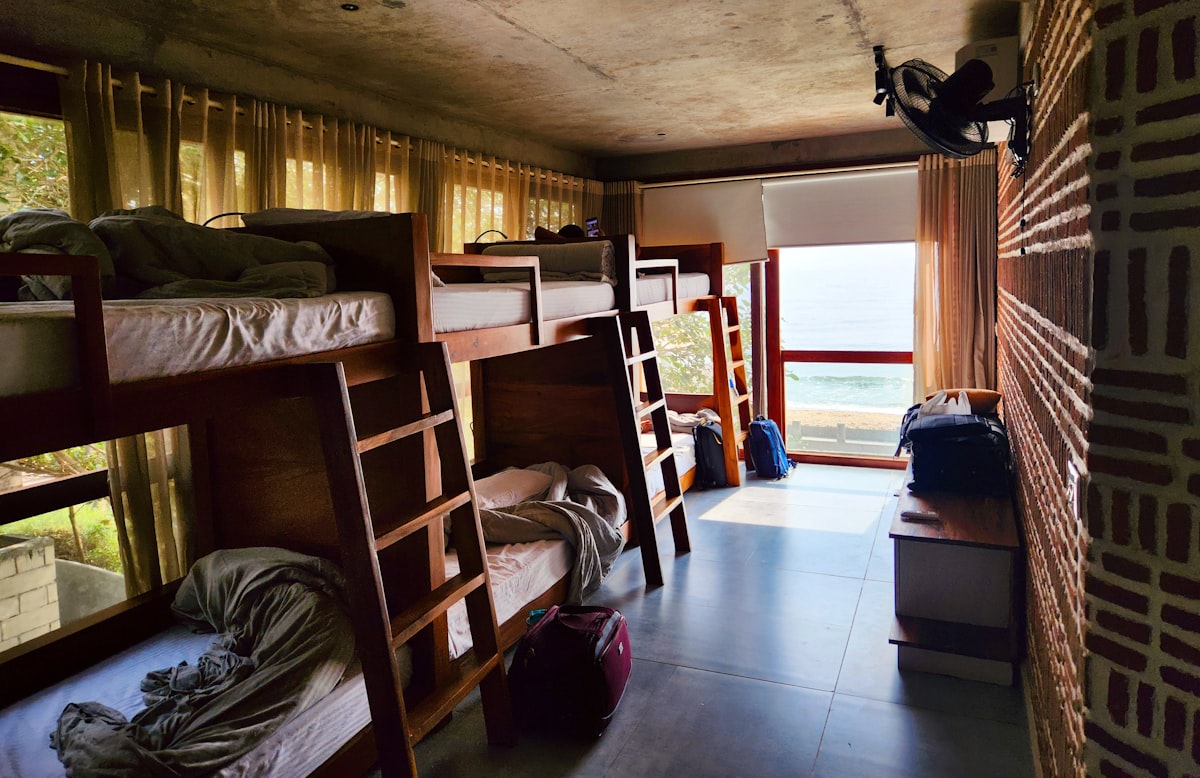
My dorm room had a hallway on one side, a parking lot on the other, and a fire door that closed like a verdict every ninety minutes. I spent that first semester blaming the roommate, the building, and my own light-sleeper nature, and it took a ten-dollar shopping trip to fix what actually needed fixing. Dorm room sleep is one of the most solvable problems in this whole cluster, because the fixes are cheap and the room is small. The four-dial system behind them lives in my bedroom sleep environment guide.
Key takeaways
- Run the raised-arm test first: you cannot fix darkness you have not measured.
- Two dollars of electrical tape beats fifty dollars of blackout curtains for the LEDs that actually keep you half-awake.
- Noise is about change, not volume, so masking with a fan works where blocking cannot.
- Earplugs worn the right way roughly double their rating, and most people wear them wrong.
- A perfect room with a 2 a.m. coffee habit still loses. Fix the room, then check the day.
First, measure the dark
Start with the test, because it takes five minutes and settles every argument about whether the room is fine. Stand in your room with the lights off at your usual bedtime, give your eyes five minutes to adapt, then hold your hand up in front of your face. “If you can see it clearly, there’s too much light; if you can only find it by waving, you’re close.” That is the whole standard, and it beats any argument, because your eyes keep adapting for about twenty minutes, which is why a room that seemed fine when you walked in can still be bright enough to matter by midnight.
Dorm rooms fail this test in predictable places: the router or mini-fridge LED, the printer’s power light, the streetlight through a thin roller shade, the roommate’s laptop charging across the room, your own phone face-up on the nightstand. “The commonly cited sweet spot is 65 to 68°F” applies to temperature, not light, but the spirit is the same: there is a workable range, and most dorms are outside it.
I ran this test the week after my worst finals and found four light sources I had simply stopped seeing. My brain had not stopped seeing any of them. That is the trap.
Two dollars of tape
The cheapest fixes come first, because they carry most of the weight. “Electrical tape over the router light, a folded sticky note on the clock face, a small square of masking tape over the television’s standby eye. This costs about two dollars and takes ten minutes, and it’s the closest thing to free sleep improvement I know.” In a dorm, the same move covers the mini-fridge, the printer, the power strip, and the smoke detector’s green blink, which you leave alone and work around.
For the window, no drilling required: a dark blanket or a black shirt pinned over the worst glass, binder clips holding a towel against the frame, foil if the streetlight is aggressive and the aesthetic standards are low. Mine stayed up for two years and “nobody saw it except me,” which is the entire audience that matters in a bedroom at midnight. Guests do not judge your dorm room at 2 a.m. They are not there.
The phone deserves its own line, because in a shared room it is usually the brightest thing within reach. It charges outside arm’s reach or lives in a drawer, and a cheap alarm clock takes over the wake-up job. Should I charge my phone outside the bedroom makes the full case, and the short version is that a phone on the pillow is a feed with a delay on it.
Noise: mask it, don’t block it
Now the hallway, the parking lot, and the fire door, and here the strategy inverts from what most people expect. “your brain doesn’t care much about steady sound; it cares about change.” You cannot silence a dorm building, and you do not need to, because your brain adapts to constant noise in minutes and never adapts to sudden changes. The door slam wakes you. The hum does not.
So the move is masking. “A fan or a white noise machine lays down a steady floor of sound so every sudden noise stands out less against it, the way a candle stops looking bright at noon.” A box fan from the hardware store does the job as well as any gadget, running all night at conversation level or below. The evidence that white noise improves sleep itself is thin, and a 2021 review in the journal Sleep Medicine Reviews called the findings inconclusive, but the downside risk is close to zero, which makes it the best bet on the board.
If your hallway noise is a roommate rather than a building, the same rule applies with different diplomacy: a lamp instead of the overhead after eleven is one sentence, and how to sleep with a snoring partner has the kinder scripts for the harder versions.
Earplugs, worn correctly
The plugs earn their two dollars only when they fit, and most people were never taught the fit. “Roll one between your fingers into a thin cylinder, reach over your head with the opposite hand to pull the ear up and back, insert the plug, and hold it in place while it expands.” A plug rated around thirty decibels of reduction delivers roughly half of that in real-world conditions, which still brings a slammed door down toward a rumor, and worn wrong it delivers almost nothing, which is why so many people declare earplugs useless after one bad attempt.
The combination is the point: fan plus well-fitted plugs carries most people through dorm noise, hallway traffic, and the neighbor’s Thursday. Steady floor below, sudden bursts blurred, and the room finally stops arguing with your body.
What the room can’t fix
The honest limits, because a dorm is not a monastery. A dark, quiet room will not beat a 9 p.m. energy drink, and how long before bed should I stop drinking coffee covers the line your caffeine needs to respect. It will not beat a 2 a.m. screen habit either, and the bed that becomes a browsing station stops meaning sleep, which is the argument why scrolling keeps you awake makes in full.
One warning about perfectionism in a shared room: you control your half. The roommate’s desk lamp is a conversation, not a conquest, and the masking approach exists precisely because you cannot renovate a room you share. “So the room is necessary, not sufficient. It sets the floor, and the rest of the book builds on that floor.” Set your floor cheaply, protect it kindly, and let the day’s habits do the rest.
Tonight’s version takes fifteen minutes and two dollars: run the raised-arm test, tape what blinks, pin a shirt over the worst window, point a fan at the wall, roll two plugs in properly. “you can’t switch a brain off like a lamp, but you can walk it down, and the walk can be short, dull, and repeated.” The room is where the walk starts. The full four-dial system is in Sleep, Finally.
Frequently asked questions
How can I make a dorm room dark enough to sleep?
Start with the raised-arm test: lights off, five minutes for your eyes to adapt, then hold your hand in front of your face. If you can see it clearly, too much light is reporting to your brain. Fix the leaks with electrical tape over LEDs, a towel over the window seam, and a dark shirt pinned over the brightest glass.
How do I block noise in a dorm cheaply?
Mask it instead of blocking it. Your brain adapts to steady sound in minutes but never to sudden changes, so a fan or a white noise app at conversation level hides door slams and hallway laughter better than silence ever could. Foam earplugs add real reduction when they are rolled thin and inserted properly.
What is the right way to wear foam earplugs?
Roll one between your fingers into a thin cylinder, reach over your head with the opposite hand to pull the ear up and back, insert the plug, and hold it in place while it expands. Most people who think they cannot wear earplugs were never taught this, and it roughly doubles the noise reduction.
What if my roommate stays up late?
Handle the light with a sleep mask and the noise with a fan and plugs, because you control your side of the room and not their calendar. Then have the plain conversation about a quiet window and a lamp instead of the overhead, which is kinder than three nights of sighing.
This guide is educational, not medical advice. If sleep trouble persists most nights for three months or more, that pattern has a name and a treatment, and a doctor is the right door.