Screens & Sleep
Do E-Readers Help You Sleep: What the Evidence Shows
By Nora Vale · July 5, 2026 · 7 min read
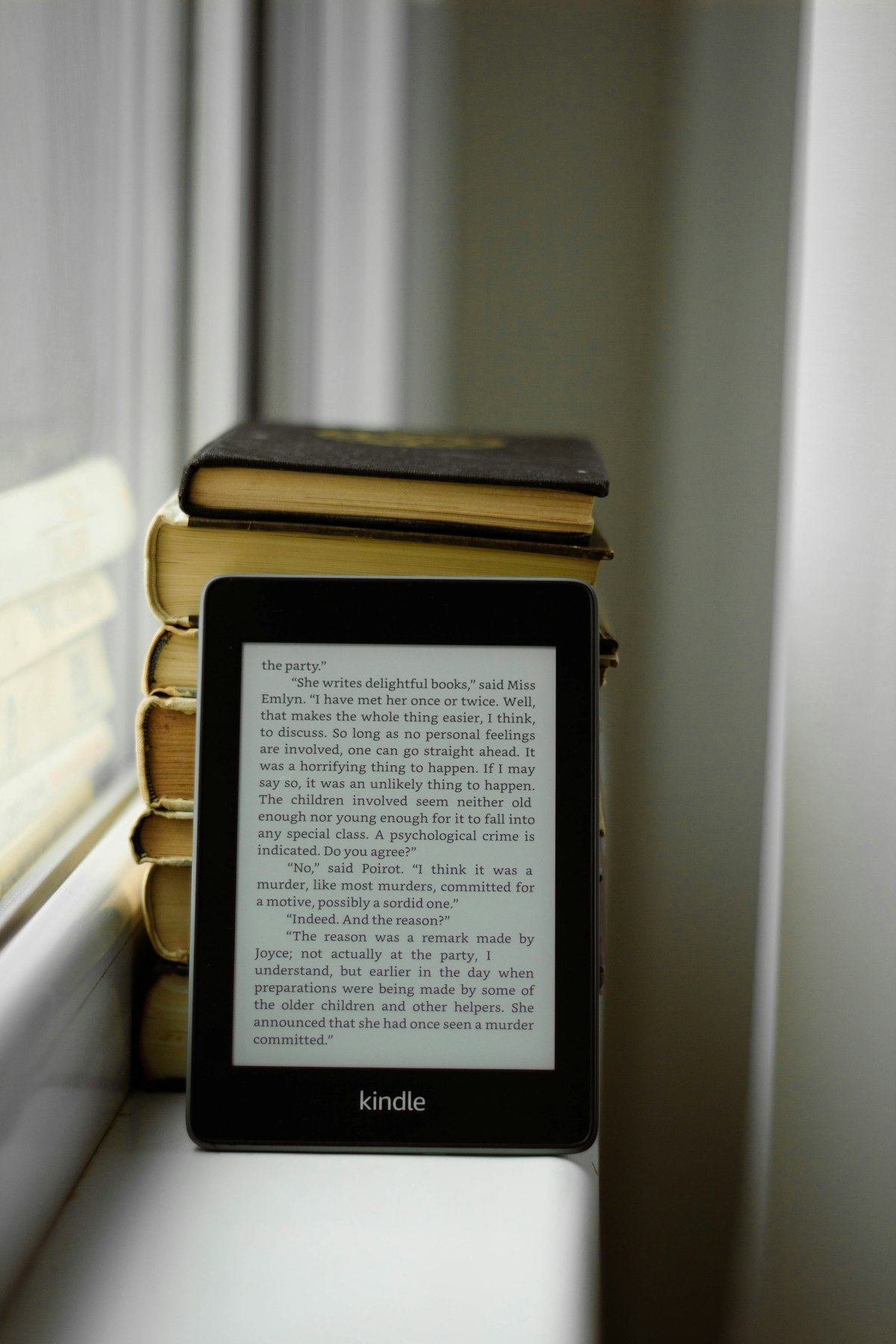
My tablet years and my e-reader years had one thing in common: I was reading in both of them. What differed was where the device’s loyalties lay. The tablet wanted to hand me the book and then everything else, the recommendations, the notification, the email banner sliding in over chapter nine. The e-reader just sat there being a page that glows faintly. If you’re asking whether e-readers help you sleep, the honest answer has three parts, and I’ll give you all three: what e-ink actually does, what the bigger screen-thief problem is, and the two-question test that settles every device debate in your wind-down. The wider case lives in the screens and sleep guide.
Key takeaways
- E-ink readers with a low front light behave enough like paper to make a fair stand-in, and the page doesn’t ping.
- The backlit tablet and the phone are the problem children, and the bigger problem is the feed one swipe away, not the light itself.
- The two-question test: can it end on its own, and does it come with a feed. Yes and no, in that order, means it can probably stay.
- Reading before bed helps by giving the mind a boring job with an obvious end, which is what a tired brain actually wants.
- Audio with a sleep timer passes the same test, and the library supplies the books for free.
What the evidence says about e-ink and paper
Start with the part that surprises people, which is how narrow the real light problem turned out to be. The famous studies linking evening screens to delayed melatonin used tablets held close to the face for hours at high brightness, and the Brigham and Women’s Hospital experiment everyone quotes found tablet readers’ melatonin arrived about ninety minutes late, after hours of bright, close-range light, not after one chapter at low setting. Light from ordinary evening screens has a real but modest effect on most adults. So when researchers and clinicians rank bedroom screens, the honest hierarchy is short: “Paper is the gold standard, and an e-ink reader with the front light kept low behaves enough like paper to make a fair stand-in. The backlit tablet and the phone are the problem children.”
Why does e-ink behave better? It isn’t a light source pointed into your eyes the way a backlit display is; it’s a reflective surface lit from the front, closer to reading a page under a small lamp than staring at a small sun. “A phone is a small sun you hold about a foot from your face,” and the e-reader mostly isn’t. Keep the front light low, bright enough to read without squinting, dim enough not to argue with the dusk your body is trying to have indoors.
But here’s the piece I’d argue matters more than any photometrics, and it’s why reading helps sleep in any format. A book gives your mind a job that is absorbing enough to crowd out the day and boring enough not to wake you up, and it ends on its own. Sleep researchers’ advice about content comes down to that shape, and a tired brain left with nothing asking questions will walk itself toward sleep. My own wind-down’s final slot is twenty pages of a paperback with a cracked spine, and I’d defend it over any gadget on the shelf.
The feed is the real thief, not the glow
Now the honest hierarchy of the problem, because the light conversation has been eating the whole budget for a decade. The phone in bed is two thieves working together: the light, which is the smaller one, and the content, which does the real damage. “If the content wakes your mind up, it barely matters that the screen is dim, and if the feed eats forty-five minutes, no night-mode setting hands them back.” I bought blue-light glasses once. They did roughly nothing, went in a drawer, and the phone went to the kitchen. Only one of those two moves ever helped.
This is exactly where the e-reader earns its keep, because its lack of features is the feature. An e-reader has no notifications. It can’t show you a senator’s reply or a clip of the game you missed. It cannot, structurally, open the arcade. The same book on a phone is a different night entirely, because the phone displaying a book has an entire casino one swipe away, and at 10:40 you know exactly which one wins. Tyler’s story is the canonical version: he got into bed at 10:50 to check the weather for a morning run, and at 11:37 he was staring at the ceiling doing the math on six hours of sleep, with no memory of most of the previous forty-five minutes.
So the practical rule I’d actually draw is about feeds rather than photons: nothing with an infinite scroll in the final hour, even dimmed, even in a warm sepia glow. An e-reader sits on the right side of that line forever. If you want the full argument about the two thieves, blue light and sleep what’s true handles the light half, and why scrolling keeps you awake handles the thief who does the real damage.
The two-question test for every device
Here’s the tool I use now for any screen habit I’m reluctant to give up, and it settles the e-reader question along with the rest. Two questions: can it end on its own, and does it come with a feed. If the answers are yes and no, in that order, it can probably stay. An e-reader passes both, a chapter ends and nothing reloads behind it. Audio passes too: a familiar-voiced podcast or audiobook at low volume has carried me to sleep more nights than I can count, and the trick is the sleep timer, so it doesn’t talk until dawn. A phone fails on the second question by design, no matter what it’s displaying.
The honest setup, then, if you’re building a wind-down: real book or basic e-reader with a low front light for the final slot, audio with a timer as the alternate, and the phone docked wherever the phone sleeps now. The library supplies the books for free, which makes this the cheapest sleep intervention I know that also works in hotels. One honest limit before I close: a good e-reader won’t rescue a bad night on its own, because reading is one slot in a routine, not a switch. If your problem is the 3 a.m. wake rather than the 10:40 scroll, the piece on how to fall back asleep at night is the one that matters, and should I charge my phone outside the bedroom is the ten-dollar version of the whole fix.
Frequently asked questions
Do e-readers help you sleep?
E-ink readers with the front light kept low behave enough like paper to make a fair stand-in, and the page doesn’t ping. Reading before bed helps by giving the mind a dull, ending-on-its-own job, and an e-reader delivers that without the feed.
Is reading on a tablet or phone worse than an e-reader?
Yes, and the light is only half the reason. A phone displaying a book has an entire arcade one swipe away, and at 10:40 you know exactly which one wins. The feed, not the photons, is the bigger thief.
Should the front light be on or off on an e-reader?
Keep it low. A dim front light lets you read without the brightness that argues with your melatonin, and it avoids the eye strain of reading in true darkness, which can keep you up for the wrong reasons.
What’s the two-question test for any screen habit at night?
Can it end on its own, and does it come with a feed. If the answers are yes and no, in that order, it can probably stay. An e-reader passes. A phone fails on the second question by design.
Twenty pages, front light low, timer set if it talks. The feed will still exist at 7 a.m. Your sleep window won’t.
This guide is educational, not medical advice. If sleep problems persist for months or arrive with symptoms you can’t explain, a doctor is the right door.