Screens & Sleep
Charging Your Phone Outside the Bedroom: How to Start
By Nora Vale · June 25, 2026 · 7 min read
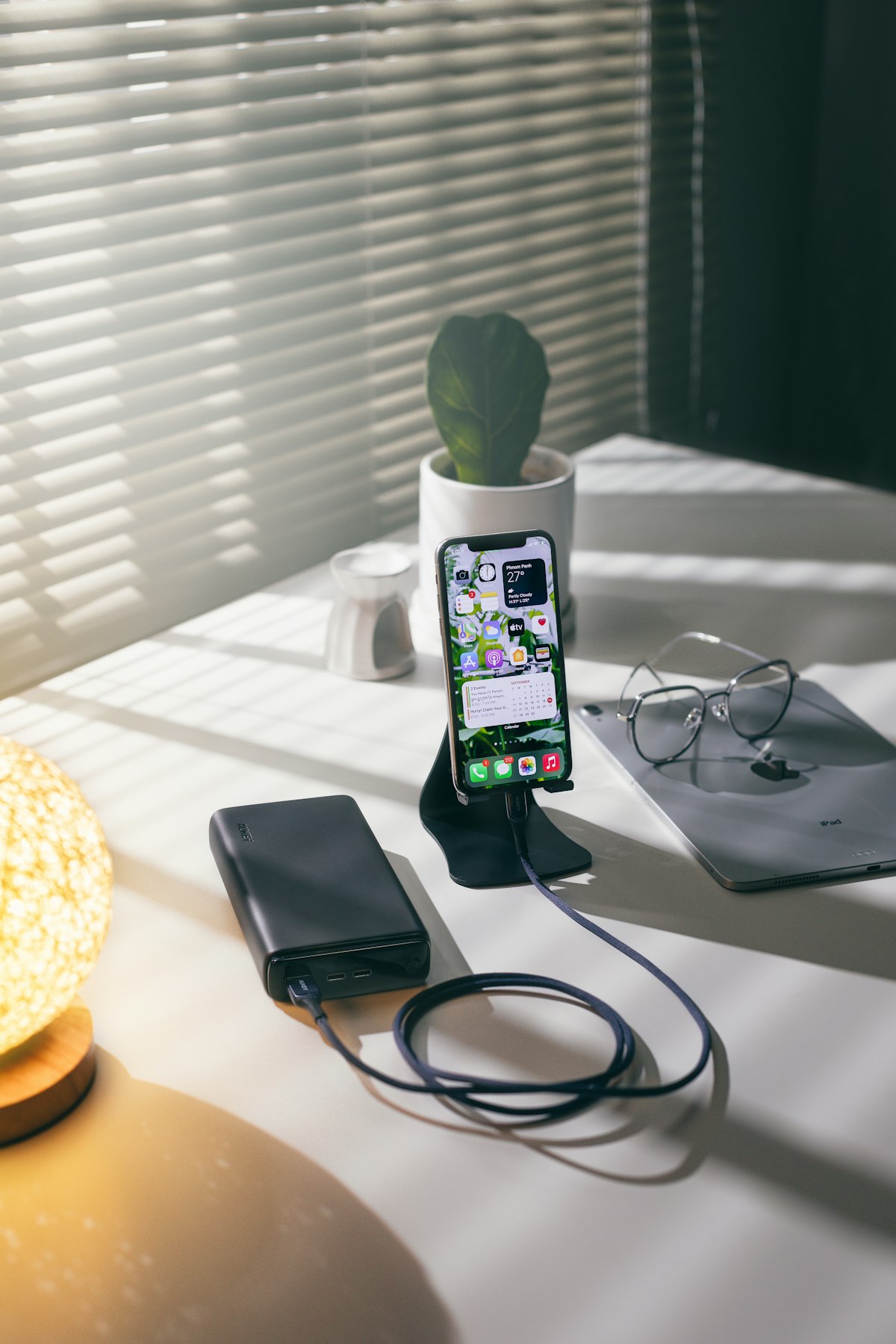
Here’s the rule that changed my nights more than any glasses, app, or setting, and it costs about ten dollars: the phone charges in the kitchen, and an alarm clock does the one job the phone was actually needed for. The hard part isn’t the hardware. It’s the start, so this is the phone outside bedroom start guide, first-week edition. The bigger case for the move lives in the screens and sleep guide, and this piece is the mechanics of night one.
Key takeaways
- The phone is two thieves in one: a light aimed at your face and a job that follows you to bed, and docking retires both at once.
- Buy a ten-dollar alarm clock first, because the alarm objection is the whole case for the phone’s bedroom residency.
- Decide the move in the morning, not at 11 p.m., because the eleven-o’clock version of you doesn’t get a vote.
- Tell the house. A rule nobody explained reads as a mood.
- The habit-empty reach lasts about four nights, and a planned replacement beats willpower every time.
Why the dock works when night mode doesn’t
The rule works because it solves two problems with one motion. The phone is “a small sun you hold about a foot from your face,” which matters in the shallow half of the night, and it’s a job: a feed that asks your brain a question with every swipe, notifications that are someone else’s tap on the shoulder, an inbox that turns bedtime into a night shift with worse hours. Move the phone across the house and you’ve moved the light source out of pillow range and retired the job for the night, and unlike most sleep products, the dock never needs a firmware update.
Night mode and blue-light glasses, by comparison, treat the smaller thief and wave the bigger one through the front door. I bought the glasses; they did roughly nothing, and they went to a drawer while the phone went to the kitchen. Only one of those two purchases ever helped, and the one that helped was free apart from the alarm clock.
The research behind the light half is real, but it’s honest about dose: a 2015 Brigham and Women’s Hospital study found tablet readers’ melatonin arrived about ninety minutes late, after hours of bright, close-range light, not after one glance at a weather forecast. The content and the minutes are the bigger theft, and the dock is the only move that closes both doors at once.
Night one, in order
Do the setup in daylight, because the decision belongs to the version of you that’s rested. First, the alarm clock: ten dollars, or free if there’s one in a drawer, and it’s the keystone, because “the phone is my alarm” is the objection every other step dies on. Second, pick the phone’s new home: kitchen counter, hallway shelf, somewhere it can be reached for a genuine emergency but not reached horizontally. Third, pick the hour it moves, and tie it to something that already happens, like the dishes going in the rack, so the dock becomes part of an existing evening instead of a new project.
Then tell the house. My own first two phone-free evenings confused my husband into thinking I was angry with him, because the comments-from-the-internet that usually arrived beside me in bed had stopped, and nobody had explained why. A rule nobody explained reads as a mood. One sentence at dinner fixes it, and it matters more in families: a basket in the hallway at a set hour works, adults included, because a rule that spares the parents smells like hypocrisy from another zip code.
Expect the empty hand. Somewhere in the first nights you’ll reach out of habit and close your fingers on nothing, and that nothing is the whole trick. The reach dies in about four nights, and the gap it leaves is best filled in advance: a paper book on the nightstand, ten slow breaths, tomorrow’s clothes over a chair. “The feed will still exist at 7 a.m. Your sleep window won’t.”
When the bare rule doesn’t fit your life
The honest version of this rule admits its exceptions, because a rule you keep beats a rule you admire. If the phone is your evening connection to the world, an aging parent, a partner who travels, a group chat that only gets good after ten, the bare dock will lose to reality, and it should, because it solved the wrong problem. The replacement is planned, not improvised: move the good part of the conversation earlier and say so out loud, let exactly two names through after a set hour, and put the phone in the hallway with the ringer up, close enough for an emergency, far enough that the feed needs shoes.
I keep one exception myself, for a friend who works nights, and the arrangement has survived for years without eating my sleep. That’s the shape of a good rule: simple enough to keep, honest about where it bends, and decided by the rested version of you before the evening asks.
The honest limits
A docked phone will not fix a 4 p.m. coffee, a wrecked wake time, or a mind that’s been told there’s a fire since breakfast, and if your sleep problem lives in the day, this move will feel like rearranging deck chairs for a week before you figure that out. The first nights can also run longer, because whatever the feed was doing for your last hour, sedation or entertainment or both, now needs a replacement, and the replacement is a habit like any other, ugly for about a fortnight. And if the phone is genuinely the least of your evening problems, keep the dock anyway, because it’s the cheapest piece of the whole system, and cheap pieces that work are how floors get built.
Frequently asked questions
How do I start keeping my phone outside the bedroom?
Buy a ten-dollar alarm clock, decide on the move in the morning rather than at 11 p.m., and dock the phone in the kitchen or hallway tonight. Tell the house what you’re doing, because a rule nobody explained reads as a mood. Keep it there every night for a week before you judge it.
Why should the phone charge outside the bedroom at all?
Because the phone is two thieves working together: a light source aimed at your face during the shallow half of the night, and a job, a feed engineered to be more interesting than sleep. Docking removes both in one motion, and it’s the single highest-yield screen rule in the book it came from.
What about needing the phone as an alarm?
That’s the objection the whole rule rests on, and it dissolves for ten dollars. A dedicated alarm clock does the one job you actually need overnight, and the phone does everything else better from another room. The alarm was never the reason the phone slept six inches from your pillow.
What if I reach for the phone out of habit?
You will, for about four nights, and the empty hand is the whole trick. The reach fades on its own; the gap it leaves is best filled on purpose with something that ends on its own, a paper book, a magazine, ten slow breaths, rather than willpower.
My family uses phones in their rooms. Can one rule cover everyone?
It can, and it works better that way. A basket in the hallway at a set hour, adults first, because a rule that spares the parents smells like hypocrisy from another zip code. Most kids hated it for four days and stopped noticing by the second week.
This article is educational, not medical advice. It doesn’t diagnose or treat anything, and a clinician should have the last word on persistent sleep problems.
The dock is one move in the complete thirty-day reset. If you want the whole system, it’s in the book.