Morning Light & Sleep
Best Light Therapy Lamps for Dark Winter Mornings
By Nora Vale · March 21, 2025 · 7 min read
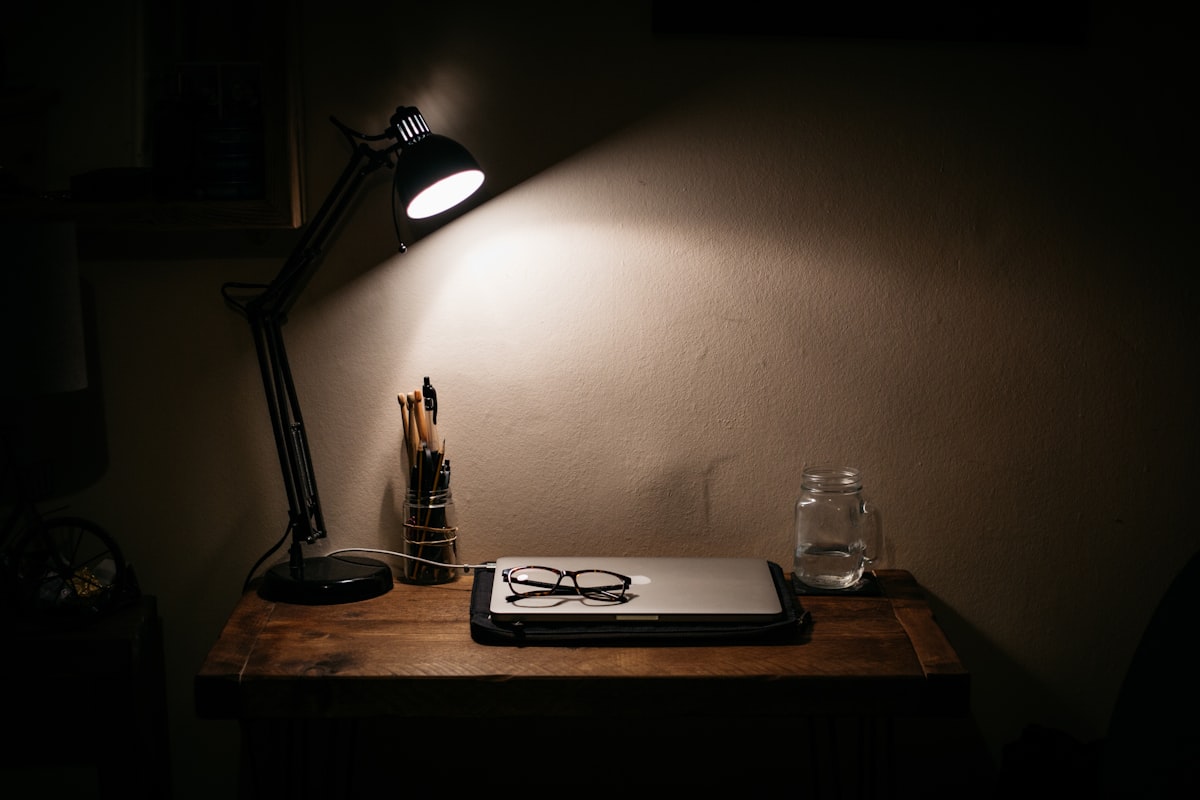
I resisted buying one for two winters, partly because I’m suspicious of anything with a plug that promises what the sky gives away free, and partly because the book I keep quoting promised me no gadgets. The book also admits something the winter aisle will never tell you: depending on where you live, the sun may not bother showing up until well after your alarm, and any routine that quietly requires a 7 a.m. sunrise won’t survive contact with a real January. So this is my honest take on the best light therapy lamps for dark winter mornings, written by someone who still walks to the corner first.
The short version: a lamp is the backup plan, the sky is the headliner. If your mornings are so dark or your schedule so cramped that the outdoor dose has become theoretical, a good light box is a legitimate tool for a genuine winter low, and the full picture of how this all works lives in my guide to morning light and sleep.
Key takeaways
- A light therapy lamp is a winter supplement, not a replacement for outdoor light, because even a gray sky out-delivers any lamp by a wide margin.
- Brightness at your eye level and the measured distance matter more than design, price, or the biggest number on the box.
- Timing rules are identical to the outdoor recipe: first waking hour, 10 to 30 minutes, roughly the same time every morning.
- If you have an eye condition or light-triggered migraines, the purchase conversation belongs with your eye doctor first.
- The sky is still free. Start with what’s overhead before you buy anything with a plug.
Why the winter aisle exists at all
Here’s the arithmetic that makes lamps reasonable instead of lazy. A comfortably lit living room runs about 100 to 500 lux, while an overcast day outside starts around 1,000 and full sun runs 50,000 to 100,000. Even the grayest January sky is still ten to a hundred times brighter than your kitchen with every bulb burning, which is why the outdoor dose works in minutes while indoor light works, at best, in hours of half-measures.
Winter breaks the recipe from the timing end. Before sunrise, the outdoor sky is still dramatically brighter than your house, so a brief trip out at 6:40 still counts, but some mornings the alarm and the sunrise live in different zip codes, and the clock sits there un-wound. That’s the gap the lamp fills: bright indoor light on waking isn’t the real thing, and it beats nothing, though nothing is what most houses are currently serving in December.
The researchers behind the 2022 international consensus on daylight put a number on the whole day, not just the morning: eyes should get the equivalent of at least 250 lux of daylight-quality light across waking hours, and less than 10 in the three hours before bed. A lamp that helps you hit the first number on a black-ice morning is doing real work. It just doesn’t get credit for the sky.
What actually matters in the specs
Forget the design awards and the Scandinavian wood trim. Three things separate a useful light box from an expensive nightlight.
First, brightness at eye level, at a distance you’ll actually live with. The classic 10,000 lux rating is measured at a specific distance, often around 16 inches, and brightness collapses fast with every step back, the same physics that makes the light beside a window less than 1 percent of what falls on the other side of the pane. A lamp claiming 10,000 lux from four feet away is selling you the number, not the dose. Check where the manufacturer measured, then measure where your chair sits.
Second, the light should be white and broad-spectrum, not the blue-heavy kind sold for other purposes, and it should have a smooth, even surface rather than visible LED dots, because dots force you to sit closer and stare harder than you’d want for half an hour.
Third, adjustability: a stand that angles the panel down toward your eyes rather than straight into them, because the signal rides in on ordinary ambient vision. You don’t need to face the sun outdoors and you don’t need to stare at a lamp either. You should be reading, eating, answering email, letting the thing do its work at the edge of your attention.
Where the lamp fits in the morning
The timing rules don’t change just because the light source does. The dose still belongs in your first waking hour, the same window where light does the heavy lifting for that evening’s melatonin rise, and consistency still matters as much as brightness. Ten to thirty minutes beside your breakfast, at roughly the same time each morning, is the shape of it.
My own winter stack, for the record, keeps the lamp as the understudy. I take the coffee out the front door within ten minutes of waking even in December, because pre-dawn twilight beats kitchen bulbs by a wide margin. On the coldest or iciest mornings, when the walk to the corner is genuinely a bad idea, the lamp gets the shift. Breakfast by the brightest window comes next, all the house lamps on, and then five minutes of real sun whenever it clears the rooftops. The lamp is one instrument in that arrangement, not the whole band.
There’s a useful test after two weeks, the same one the outdoor habit gets. Give it a fair trial, watch the log rather than your memory, and if nothing in how fast you fall asleep or how the mornings feel has moved, you’re allowed to close the notebook. Some clocks need the daylight more than others, and the experiment owes you a verdict either way.
The honest limits
The first limit is the one the book keeps repeating: light won’t knock you out at bedtime, not on night one and not ever. A lamp shifts the timing of your clock, and timing changes show up over days and weeks, which is exactly why most light boxes end up as coat racks by February. Nothing dramatic happens on Tuesday, and people quit before the trend arrives.
The second limit is medical, and I mean it without hedging. Bright light boxes are legitimate tools, and they’re also the one corner of this whole topic where the conversation with a doctor should come before the purchase, especially if you have an eye condition, light-triggered migraines, or a history that makes bright light a real question. Winter lows severe enough to search for lamps are also worth describing to a professional, not just to a checkout page.
And the third limit is modesty about what the lamp is. On the darkest mornings, lower the bar rather than upgrading the gadget: keep the wake time steady, switch on every lamp you own, take whatever the sky is offering, and let the steady wake time carry the schedule until the light comes back. The wake time, not the wattage, is the frame that holds the whole picture up.
Frequently asked questions
What should I look for in a light therapy lamp?
Brightness at eye level at a realistic distance, a broad white light surface without visible LED dots, and an adjustable angle that lets the light arrive sideways rather than straight on. The 2022 consensus target of at least 250 lux of daylight-quality light across the day is a better north star than any single box number.
Do light therapy lamps work as well as going outside?
No. Even a gray December sky out-delivers your living room by a factor of ten or more, and a lamp lives indoors with the ceilings. Treat it as the backup for mornings when the sky isn’t reachable, and the outdoor dose as the standard it’s backing up.
When should I use a light therapy lamp?
In the first waking hour, for 10 to 30 minutes, at roughly the same time every morning. Staple it to breakfast or the first email of the day, and let it run in your peripheral vision rather than as something you stare into.
Can a light therapy lamp cause side effects?
Headaches and eye strain happen for some people, and anyone with an eye condition, light-triggered migraines, or a relevant psychiatric history should clear the purchase with a doctor first. Those conversations are the responsible version of the winter aisle.
Do I need a 10,000 lux lamp?
The 10,000 lux figure is the standard tested output, but only at the manufacturer’s measured distance, so read the fine print and match it to where you’ll actually sit. A dimmer lamp used close and consistently beats a bright one across the room.
If your winter routine needs companions, the broader tactics live in winter mornings and sleep, the pre-dawn version in getting morning light before the sun rises, and the gray-sky math in what still works on overcast days. The habit behind all of it is how to build a morning light habit that sticks. The full chapter behind the science is in Sleep, Finally.
This guide is educational, not medical advice. If sleep problems persist most nights for three months or more, a doctor is the right door.
Before you fill a cart, give the free version its two weeks: coffee in hand, out the door, ten minutes, gray sky included. Then decide whether the lamp is the missing piece or just the December understudy it should be.