Bedroom & Sleep Environment
Bedroom Setup for Better Sleep: 4 Dials That Matter
By Nora Vale · May 23, 2025 · 7 min read
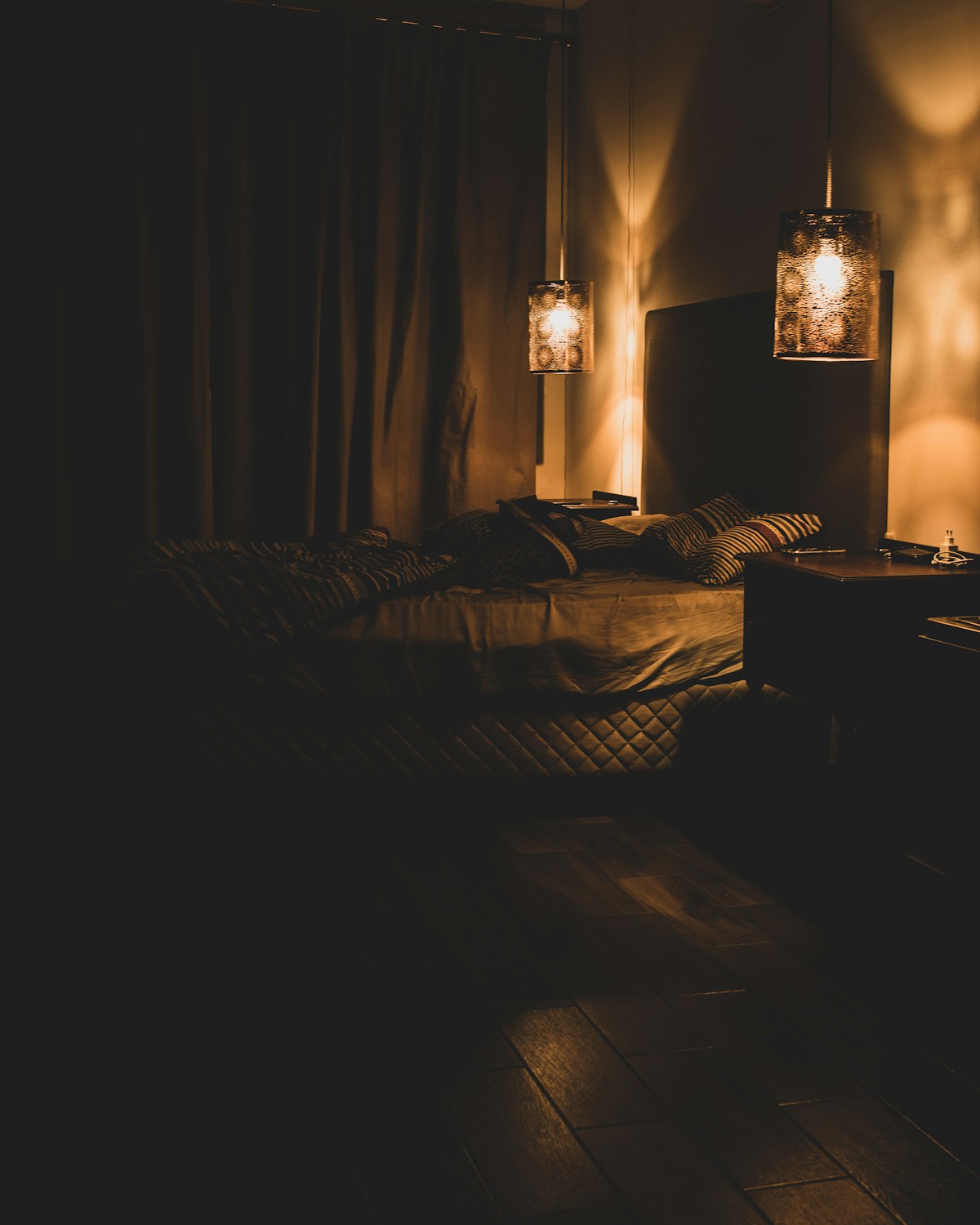
I spent a bad winter counting pinpricks. Router star, clock face, television standby eye, two charger bricks, smoke detector. Seven small lights in a room that looked perfectly normal by day, which is exactly why it took me another year of lying awake to connect those pinpricks to the fact that my brain never quite slid under. Nothing about my bedroom setup for better sleep looked wrong. It just wasn’t working, quietly, every night.
Here’s the good news that saved me a fortune: the useful version of a bedroom is boring and cheap, the same way the wind-down in chapter 1 was boring and cheap, and for the same reason: biology doesn’t care what looks good; it cares what’s true. This post walks the four dials in order. The longer version, including the hotel-room kit, lives in the bedroom sleep environment guide.
Key takeaways
- Four dials control almost everything: light, temperature, bed, and noise.
- Dark means hand-test dark, not lights-off-with-seven-LEDs dark.
- Cool beats cozy: your core temperature has to drop for sleep to start.
- The mattress is one dial of four and the most expensive one. Be skeptical of it first.
- Noise is about change, not volume. Mask steady, block sudden.
Dial one: light, all of it
Your retinas report illumination to the brain all night, whether you’re consciously looking or not. A LED dot the size of a lentil is a conversation your brain keeps having at 2 a.m. So the bar is stricter than “lights off.” The test: sit in your darkened bedroom for five minutes, then raise your hand in front of your face. If you can see it clearly, there’s too much light. Shadows are fine. Shapes are not.
The fixes are embarrassingly inexpensive. Electrical tape over the router light, a folded sticky note on the clock face, a small square of masking tape over the television’s standby eye. My husband thought the taped router looked ridiculous for about a week, and then he stopped noticing it, the same way you stop noticing everything once the room is actually dark. Guests don’t grade your bedroom at midnight. They aren’t there. If streetlight comes through the window, the deeper version is in my post on why your bedroom should be dark, and the phone on the nightstand deserves its own verdict, which I give in should I charge my phone outside the bedroom.
Dial two: temperature, working backwards from intuition
This dial runs opposite to what feels cozy. Your core temperature needs to fall one to two degrees Fahrenheit for your brain to make the call that night has begun. A warm room blocks that call. The commonly cited sweet spot is 65 to 68°F, and the Sleep Foundation’s workable range runs wider, from 60 to 68, which tells you the truth about the number: it’s a starting point, not a law.
Two moves pay off fastest. Drop the thermostat two degrees cooler than your current setting and log a week of nights before judging it. And use heat earlier, not later: warm water pulls blood toward the skin, and once you get out, all that heat escapes through your hands and feet, dragging your core temperature down, which is exactly the signal you wanted. That’s why a shower one to two hours before bed helps while one right before bed can work against you; the timing version is in does a warm shower before bed help. For layered bedding, one foot out of the covers beats a thermostat war with a partner every time.
Dial three: the bed, last on purpose
The mattress industry would like you to believe the bed is destiny. It isn’t. It’s one dial of four, and the most expensive one, so let’s be skeptical here first. What the evidence supports is unglamorous: middle-firm beats extra-firm for most people, and what your body notices more than price tags is whether your spine holds neutral.
The pillow is the gap-filler, and it’s where twenty dollars beats two thousand. The test takes two minutes in your usual sleeping position: your ear should line up with your shoulder. Side sleepers generally need a thicker pillow, back sleepers a medium one, stomach sleepers the thinnest thing you own. When to replace the big purchase, with actual signs rather than marketing timelines, is its own post: when to replace your mattress.
Dial four: noise, which is about change
Here’s the part that surprised me: your brain doesn’t care much about steady sound; it cares about change. A fan hums for an hour and your brain files it as furniture. A car door at 3 a.m. gets a full alert. That’s why the advice is masking, not silence. A fan or white noise machine at conversation level or quieter, running all night, flattens the sudden changes your brain would otherwise catalogue. The full rundown is in white noise for sleep.
For a snoring partner, earplugs beat elbows: roll the foam into a thin cylinder, pull your ear up and back with the opposite hand, insert, and hold until it expands. One honest caveat belongs here, because I’d rather say it than bury it. Snoring with pauses, ten or twenty seconds of silence followed by a gasp, isn’t a bedroom problem. That’s a signs of sleep apnea conversation with a doctor, and no fan fixes it.
What a perfect room cannot do
The room is necessary, not sufficient. It sets the floor, and the rest of the book builds on that floor. I learned that the embarrassing way: after taping every light and dropping the thermostat, some nights I still lay wide awake doing ceiling arithmetic, because the 4 p.m. coffee and the 9 p.m. wine and the mind that wouldn’t close its tabs were doing their own work. A perfect room with a chaotic life gives you a nicer place to lie awake in.
So treat this as the floor and audit the other floors in their own order: the evening ramp in how to wind down before bed, and the 3 a.m. wakeups that a room alone never explains in why do I wake up at 3am every night. One dial at a time, one week of logging each. That’s the whole method.
Frequently asked questions
What is the best bedroom setup for better sleep?
Four dials: darkness you can verify with the hand test, a room in the 60 to 68°F range, a mattress-and-pillow pairing that keeps your spine neutral, and steady masking sound if sudden noise reaches you. None of it needs to be expensive, and the order I’d spend in is tape, fan, pillow, mattress.
How dark is dark enough?
After five minutes in the dark, your raised hand should be a shadow, not a shape. LED standby lights, streetlight edges, and glowing chargers all count against you, and electrical tape plus a blackout solution for the window handles most rooms in under an hour.
What temperature should a bedroom be?
Start at 65 to 68°F and experiment toward the lower end, especially if you run hot. The goal is the drop in your core temperature, which is also why a warm shower one to two hours before bed helps rather than hurts.
Do I need a new mattress for better sleep?
Usually not. The bed is one dial of four, middle-firm tends to beat extra-firm, and a correctly fitted pillow often fixes what a new mattress was bought for. Check the mattress last, after light, temperature, and noise are handled.
What about noise I can’t control?
Mask it rather than fight it. Steady sound at conversation level trains the brain to file the environment as furniture, and foam earplugs handle the rest. If the noise is a partner’s snoring with pauses and gasps, book the doctor before buying anything else.
The cheap kit, including the $12 travel version, is in Sleep, Finally. Tape one LED tonight. Start with the smallest light in the room.
This guide is educational, not medical advice. If you consistently sleep poorly despite a well-set room, or a partner’s breathing stops and starts at night, a doctor is the right next step.